
Like many people, I don’t have a garden but I’m making the most of what I have by trying to regrow food I buy at the supermarket in whatever I can plant it in. I was a complete beginner when I started this process and I've learned a lot about regrowing supermarket food in the past year. Here's my story so far….
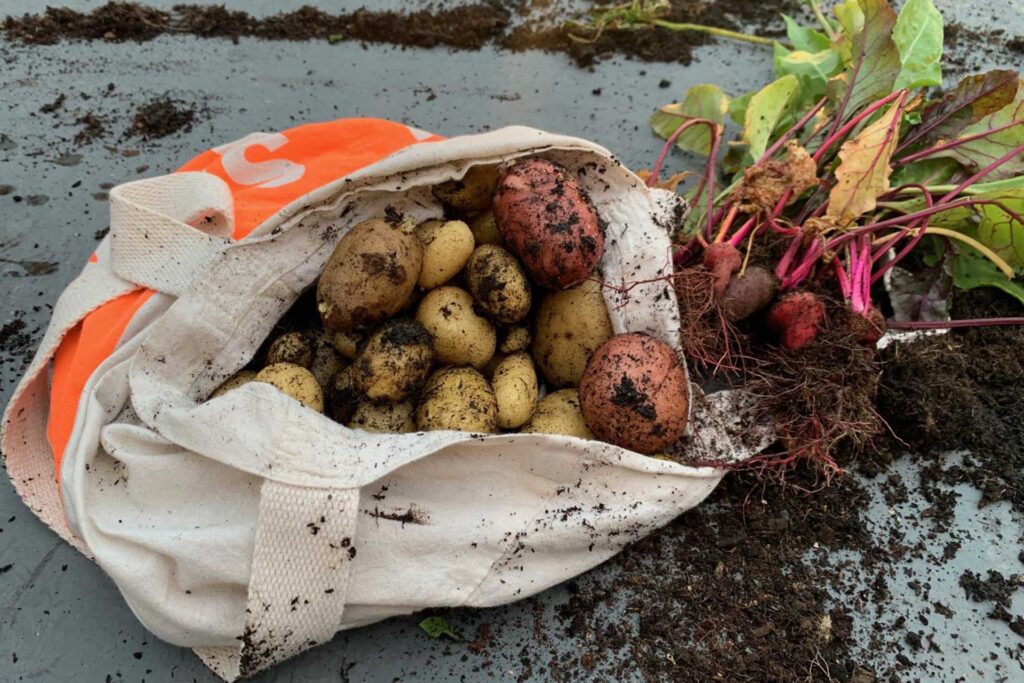
Regrowing supermarket food has been more or less a case of just winging it and seeing what happens for me.
As someone without a garden, learning to regrow vegetables from scraps is a great step in the right direction to becoming more self sufficient in my own food production. I don't expect to feed myself entirely from this but it's nice to know that at least some of your food is provided by you.
Throughout this process some veggies have done well, some have totally flopped. Keep in mind I have zero gardening experience and I offer no ‘expert' advice. This is just what I've observed. If you know more about any of this then please contact me or add a comment below – I'm happy to be corrected!
I'll summarise my initial points before going into it a bit deeper further down the page.
Vegetables That Are Easy To Regrow From Supermarket Veg:
- Potatoes! I didn’t buy seed potatoes. I just put some old supermarket ones in a pot. In smaller pots you get smaller potatoes and the soil can dry out quick. I’ve found the best way so far is to use the hessian bags for life you get from the supermarket. Once the shoots come out and are maybe 2-3 inches tall you can bury them (just leaving the top leaves exposed) for another layer of potatoes.
- Spring onions. Again, bought from Lidl. Used for cooking then put the old bulb but in some fresh soil. They drink a lot of water and grow super quick, super easy. I have them in pots in my kitchen windowsill.
- Lettuce. Supermarket again. I buy the ones with soil and roots still on, replanted after taking the leaves. My windowsill is too sunny so they started to grow up like little trees. I’ve since learned this is bolting which makes the leaves go bitter as they try to go to seed. Seb has a good article about growing lettuce all year round over here if you want to know more about it.
- Beetroot. Bought as seedlings. Fairly low maintenance but definitely need big pots or bags otherwise the beets are tiny. You can chop off leaves and eat them as the plant grows.
- Sage. Low maintenance, grows well in a pot.
- Swiss Chard. Again, can bolt with too much sun but easy to grow if you offer just partial sun. (I've found it's best to give one plant it's own pot for healthy, productive results.)
Vegetables (also fruits & herbs) That Are Not So Easy To Grow From Supermarket Scraps:
- Basil. Everyone says basil is easy but I’ve found it to be quite delicate and a lot of work for something that isn’t exactly filling. Still trying but I don’t spend too much time on it. *See later edit on post for update.*
- Chives. Been told that repotting them to a bigger pot will help so will try.
- Strawberries. Had one strawberry, it was great but from four plants I’m hoping for more. Just wanted to try them and might get more yet.
- San Marzano tomatoes. Not hard to grow, I squeezed one Lidl tomato into a pot and got about 40 seedlings. Best in a big pot or hessian bag. Feeding regularly but they’ve been going since early April. Easy to grow but not a quick crop.
So to round up, if you’re totally new to growing and want a very easy place to start I’d recommend potatoes, spring onions and lettuce (or similar things like chard, pak choi, rocket.) If you don’t want to grow from seed just plant used veg leftovers from your supermarket shop.
It’s a good way to get started and learning about growing. If you'd like to read more about what I learned after a full season, keep reading below.
Extra Tips For Regrowing Supermarket Food After A Full Season Doing It
After a full season of trying to regrow vegetables from supermarket bought starter veg (basically from normal vegetables you buy from the supermarket then plant to try and grow some more), I've learned some important lessons.
So here's my update. (You might notice some of my opinions contradict those from months prior. This is because of lessons I've learned along the way.)
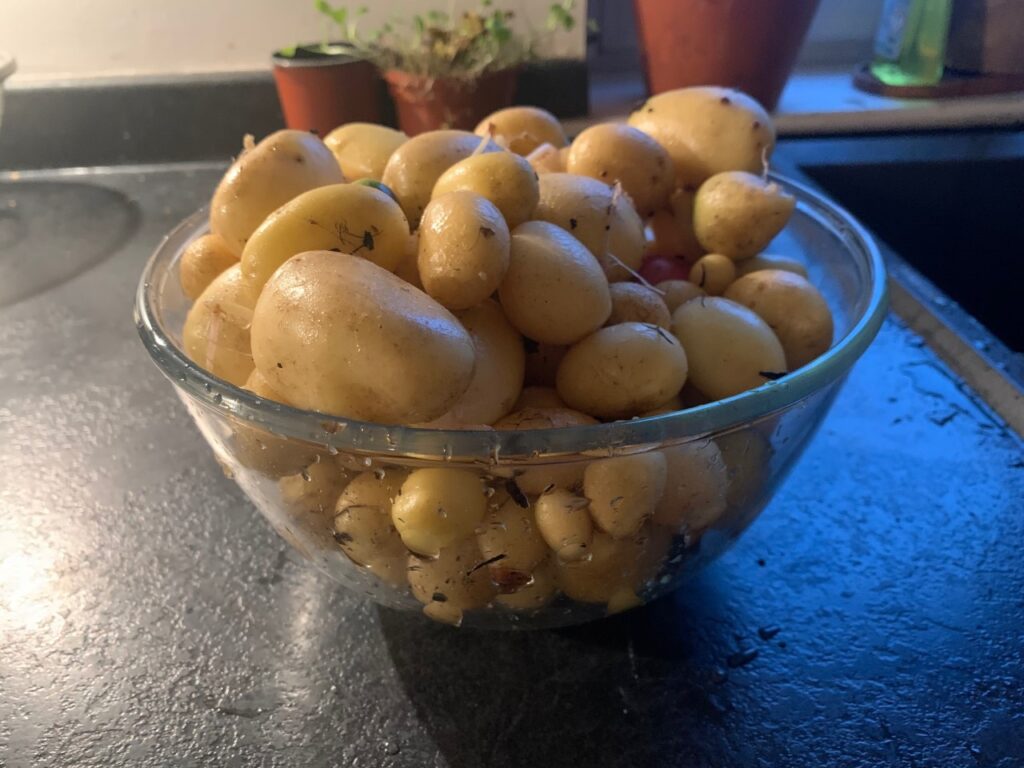
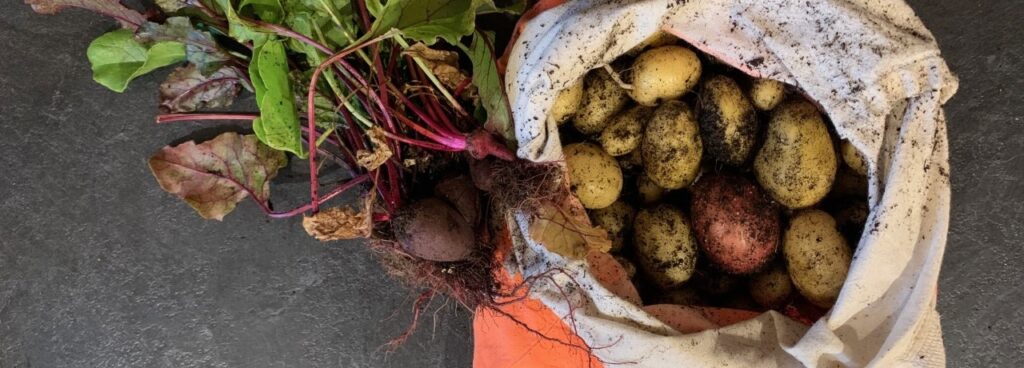
This is my first batch of tatties (potatoes) which were all just supermarket bought ones which had started to sprout. I also had a go at beetroot which came out fairly small as you can see from the main picture up above.
Although the beetroot were small, they were very low maintenance. Thirsty but they were left outside and able to endure harsh winds.
From just a handful I was surprised to find that I actually got quite a lot of potatoes. Granted they are quite small and I think this is down to using small pots. The small ones all came from my smaller pots and the larger ones came from larger pots so, lesson learned there.
My next batch which should be ready in a month or so are growing in hessian sacks and hessian ‘bag for life' shopping bags. Hoping for bigger returns with them.
I have several other things growing and I've made plenty of mistakes.
My Advice To Myself If I Were To Start Regrowing Supermarket Vegetables Again Now
If I was to give advice from my now self to my early 2022 self here's what I'd say….
- If you don't have a lot of space, don't try to grow too many different things. Focus on a couple of easy, basic, high yielding crops like potatoes and carrots and then maybe grow a couple of more adventurous veggies like beans or peas. On top of that maybe some leafy veg like chard or lettuce.
- Don't grow lots of things in small pots. This results in limited growth. Instead, pick a handful of things and give them their own pots with plenty of space and soil to enable the plants to establish good, strong roots. Better to have two strong chard plants than five or six spindly weak ones. Small pots can be used for herbs like mint, basil etc but give chard, beans, tomatoes, peas etc more soil and space. By all means start seedlings in small pots but have bigger ones on hand to transfer to when the time is right.
- Tomatoes are thirsty and again, small pots give you thin plants. Resist the temptation to cram lots of plants together when they're small. Hessian bags are great but give a tomato plant a bag to itself. Once it grows a bit pack in more soil to make the plant more stable and gain stronger roots. I feel like I have a million pots with a million things and it's been great to learn but I now wish I'd just gotten five or six big pots and focussed on a few things.
- Make sure to check what needs sun and what doesn't need it so much. My lettuce and Pak Choi have bolted from getting too much sun on the windowsill. Beetroot is very thirsty and needs plenty of room to get big.
My top easy growers:
- Potatoes (low maintenance but need space to grow big.)
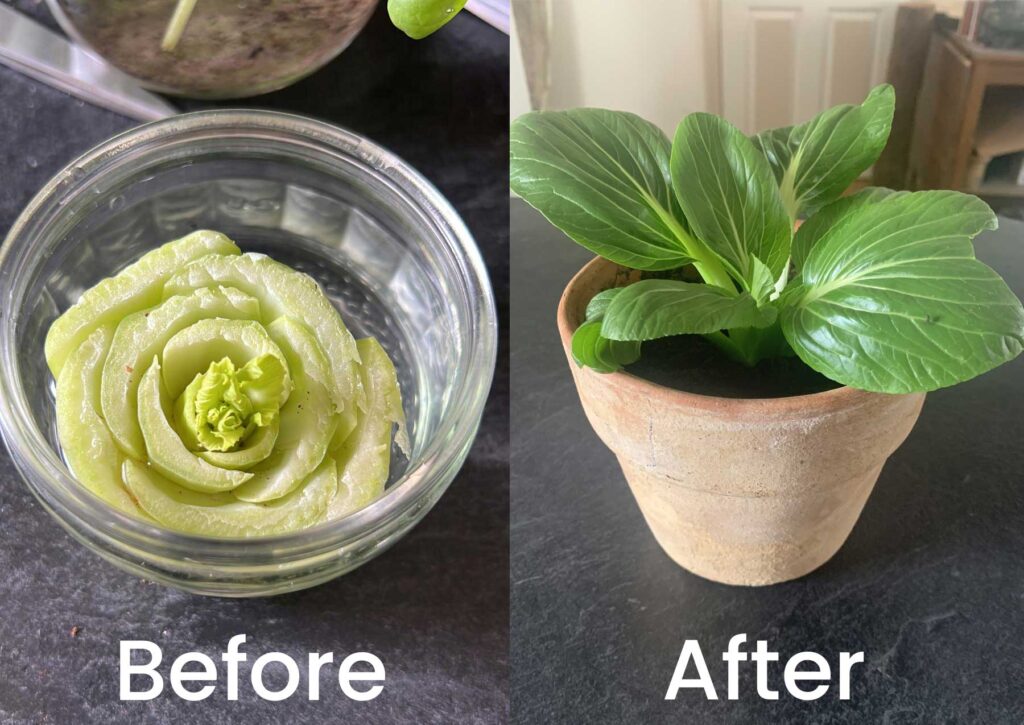
- Pak Choi (cut leaves as they grow and new ones will grow in several times.)
- Carrots
- Lettuce (avoid too much sun or it will tend to bolt.)
Fast & easy growers:
- Microgreens (can grow in a tiny pot, 5-10 days but don't grow back after cutting and seeds are expensive.)
- Basil. You might notice that earlier in this post I was struggling with basil, this is because there were always too many plants in one small pot. Take supermarket Basil and root some cuttings. Supermarket bought are always too crammed so thin them out and repot cuttings after they have roots. If you try to separate you will likely damage roots. I learned a lot from Pam Greer at Sidewalk Shoes about rooting basil here!
- Lettuce. Try different types but it seems most can be cut and will grow back. Avoid too much direct sun so they don't bolt.
- Spring onions. As mentioned when I started this journey and I'm sticking to my guns, spring onions grow fast and easy. Just replant the roots from trimmed onions and keep them happy in a pot. You can cut and they will come back several times.
Vegetables I've Tried To Regrow So Far:
- Potatoes
- Peruvian Andes potatoes (tricky)
- Strawberries
- Greenshaft beans
- Bugatti beans
- Carrots
- Peas
- Beetroot
- Swiss chard
- Rainbow chard
- Sage
- Basil
- Chives
- Parsley
- Rosemary
- Lettuce
- Pak choi
- Mint
- Microgreens
- Rocket
- San Marzano tomatoes
- Aloe vera
There are probably a few others that I can't remember also.
Final thoughts on regrowing food from supermarket Scraps
Please note, I wrote this article as someone who started to grow veg only at the start of 2022 with zero experience.
I'm no gardening expert and don't take my advice to be correct. I'm simply sharing my observations from what I've tried. All I hope is that maybe someone reading this who also has no experience or knowledge might take some inspiration from it. Feel free to comment with any questions.
So anyway, bottom line is, even if you have never grown a thing in your life and you don't have a garden…….for sure, you can grow potatoes. And that's better than growing nothing at all. 😄
Beat The Reset
If you enjoyed this guide, subscribe to my newsletter to receive more content like this, lots of positive news stories and some practical solutions to help you beat the reset.





I used to grow quite a lot of basil (and yeah, it’s not food exactly) by pinching off a mother plant just above the second set of leaves. This should give you a decent length of stem plus the top set of leaves. Remove all but one pair of those leaves, chuck them on a pizza or whatever. Do this a half dozen or so times.
I’d then get a glass, stretch a few laccy bands across from the open lip to the base, forming a kind of a grid with maybe eight or nine apertures. Fill the glass with water then pop your cuttings into the gaps. The leaves should stop the cutting from falling through the gaps. Place the glass on a warm spot and keep topping up the water.
You should see the leaves start to grow and small hairlike roots on the bottom of the stems. Allow this process to develop until each cutting has a proper hairy set of roots and you can then plant four or five, no more, in a suitable pot with soil and/or compost. Watch out for compost mites though.
I was able to get about three generations out of one 99p bunch of basil by making babies from the second generation. Eventually mummy plant gets woody and dies off.
Planting from seed never quite took but blundering ahead and experimenting is the only way ahead really.
Good luck with your next crops.