The Gwich'in people in Alaska have an ancient tradition of drinking the sap of the birch tree for spiritual guidance and healing. In this guide, I'll show you how you can tap into the wisdom of the ancients by harvesting silver birch sap on your own with a few simple tools.

Tapping a silver birch tree for its sap is an ancient practice that has been used for centuries to nourish and heal the body naturally. It is a practice that serves to remind us of the innate wisdom inherent in the natural world and the abundant resources it offers to all who are in need.
As with all things, there is an art to tapping silver birch for sap that relies heavily on the cyclical nature of the seasons. Tree sap only runs in spring, usually early spring, when the trees are pulling sap up from the earth and into every branch, before leaves or buds start to form.
If you tap too early, you won't get any. If you tap too late, you won't get any.
But if you get it right, you'll have yourself a fresh, nutritious drink that is brimming with natural health properties and, just perhaps, some ancient spiritual wisdom to boot.
In this guide, I'm going to share everything I know about harvesting silver birch sap including how to identify silver birch, when the best time to tap for sap is, how to tap and how to harvest, store and preserve the sap.
Enjoy!

What Is Silver Birch Sap?
Silver birch sap is a tree sap found in the Silver Birch tree in the spring, after the frosts and before the first leaves start to bud. It is a clear mineral-rich water, or food source, for the tree and is used by the tree to send energy to every branch and bud during spring. You could even think of it as tree blood.
Tree sap has always been used by indigenous peoples for centuries to nourish and heal their bodies. It was revered for its ability to provide hydration and nutrition during long, harsh winters. It was also used as a tonic to support the immune system and treat various common ailments.
Historical Medicinal Benefits of Birch Tree Sap
Birch sap has many health benefits and has been used for medicinal purposes for centuries. It is rich in vitamins, minerals, and antioxidants and is a natural diuretic and anti-inflammatory. It has also been used to treat kidney stones, arthritis, and skin conditions.
I've compiled a list of countries showing what the most common historical medicinal use of Birch sap was and when the best time to harvest silver birch sap is in each country.
| Country | Most Common Historical Medicinal Use | Best Time to Harvest |
|---|---|---|
| Argentina | Anti-inflammatory | Late Winter/Early Spring |
| Australia | Detoxification | Late Winter/Early Spring |
| Brazil | Antioxidant | Late Winter/Early Spring |
| Canada | Anti-rheumatic | Early Spring |
| China | Anti-fatigue | Early Spring |
| France | Skin care | Early Spring |
| Germany | Liver support | Early Spring |
| India | Anti-arthritic | Early Spring |
| Indonesia | Detoxification | Late Winter/Early Spring |
| Italy | Digestive health | Early Spring |
| Japan | Anti-fatigue | Early Spring |
| Mexico | Anti-inflammatory | Late Winter/Early Spring |
| Russia | Immune system support | Early Spring |
| Saudi Arabia | Anti-inflammatory | Late Winter/Early Spring |
| South Africa | Immune system support | Late Winter/Early Spring |
| South Korea | Detoxification | Early Spring |
| Turkey | Digestive health | Early Spring |
| United Kingdom | Kidney support | Early Spring |
| United States | Anti-inflammatory | Late Winter/Early Spring |
Other Uses of Birch Tree Sap
Hydration and medicinal uses weren't the only ways indigenous peoples used birch sap though.
Birch sap was also used to preserve food by fermenting it to make a natural form of alcohol. The alcohol was was used as a preservative for meats and vegetables.
Fermented sap was also used as a sweet seasoning or to add flavour to a dish.
And probably my favourite birch sap folk tale; the Gwich'in people in Alaska are said to have a tradition of drinking the sap of the birch tree, which they believe has healing properties and can provide spiritual guidance. They revere the sweet liquid so much that they even use it in ceremonies.
So yes, tapping a silver birch tree for its sap is not only a way to connect with nature, but also a way to nourish ourselves physically and spiritually and preserve food in an ancient, natural way.
How To Identify A Silver Birch Tree
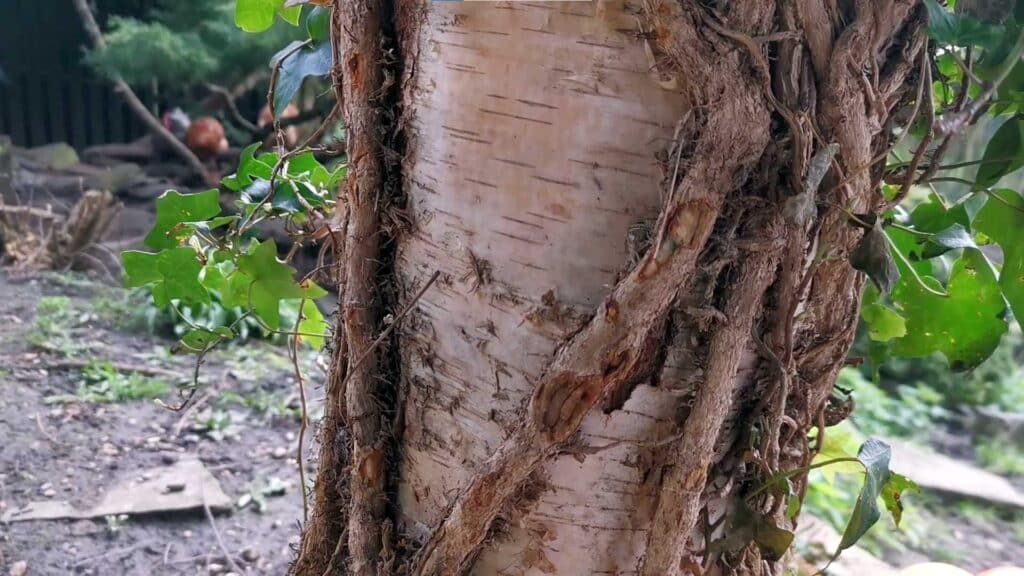
Before you begin your tapping, you need to identify the correct type of tree. Silver birch trees are one of the easiest types of trees to spot and can be identified by their distinctive white bark with black markings, triangular-shaped leaves, and drooping branches.
In spring of course, when you'll be doing your tapping, there won't (shouldn't) be any leaves on the tree yet but there should be some catkins. Catkins are long conical buds hanging at the end of the branches.
Silver birch typically grows in cooler climates and can often be found near streams, rivers, or other bodies of water.
When Is The Best Time To Tap A Silver Birch Tree For Sap
The best (and only) time to tap a silver birch tree for sap is in early spring, usually around late March to early April, before the leaves start to emerge. It is a very tight window of opportunity and you have to rely on your intuition a bit. As a guide, think after the frosts but before the first leaves are budding.
This happens because the sap begins to flow as the tree thaws and leaves it's seasonal hibernation behind after the winter months, and before it uses up all the excess energy it is soaking up from the earth to produce new growth. The exact timing will vary depending on the climate and location.
Please refer to my table above to get an idea when to tap your trees.
What Tools Do You Need For Harvesting Silver Birch Sap
Tapping a silver birch tree is not difficult. The most difficult part is getting your timing right but as for tools, you can make do with some basics but here is my ideal list of tapping tools:
- A hand auger, sharp knife or drill. I prefer a hand auger like this one.
- A spile or tap (a small, metal or plastic device used to direct the sap into a container)
- A collection container (a clean, food-grade plastic or metal container with a lid)
How To Tap A Silver Birch Tree
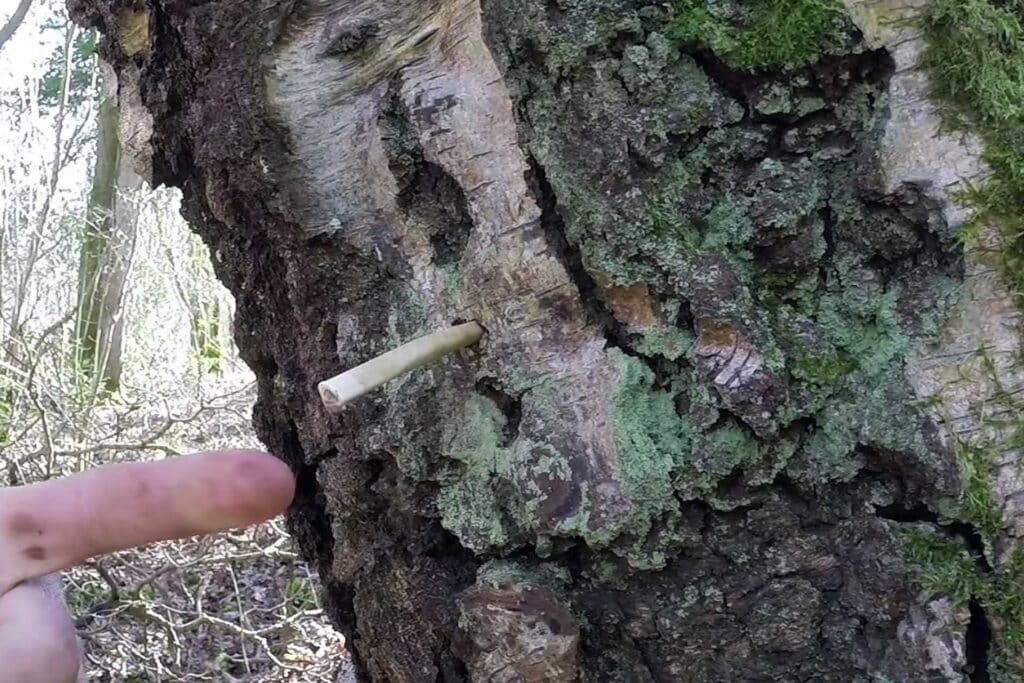
The actual process of harvesting silver birch sap is pretty straightforward. The difficult part is finding the tree and getting your timing right but once you've nailed those two, here's what you need to do next:
- Choose a tree that is at least 8 inches (20 cm) in diameter and make sure it's healthy and not showing signs of disease or damage. A good way to assess the vitality of a tree is to see if there are any polypores growing on it.
- Select a spot on the trunk that is at least 3 feet (1 meter) from the ground and faces the sun. This will help the sap flow more easily.
- Use your hand auger, knife or drill to make a hole about 2 inches (5 cm) deep and at a slight upward angle into the tree. The hole should be just big enough to fit the spile or tap snugly.
- Insert the spile or tap into the hole, making sure it is secure and pointing downward. Do not tap it in as far as it will go or you will plug the sap.
- Hang the collection container from the spile or tap using a hook or wire or run your pipe to your container.
- Wait for the sap to start flowing. If you've picked the right time, you should see sap flowing almost immediately.
- Check the collection container regularly and empty it as needed. Birch sap can spoil quickly, so it's important to store it in a cool place or refrigerate it until you're ready to use it.
Once harvested, silver birch sap can be consumed as a drink or used as a sweetener in recipes. It can also be boiled down to create a syrup or concentrate that can be used as any other syrup is used.
Respect The Tree By Helping It Heal
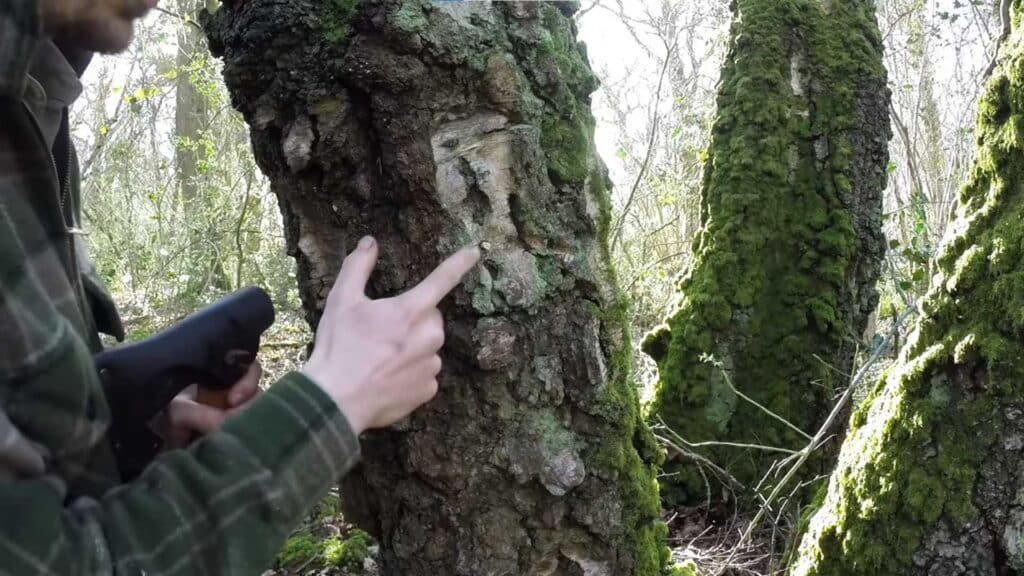
Once you've harvested your sap from the silver birch tree, you should give your thanks to the tree by helping it heal. You can do this by cutting a small branch from the tree itself about the same width as the hole you drilled, strip it of bark and then hammer it into the hole.
Plugging the hole after harvesting helps to prevent insects, bacteria, and other contaminants from entering the tree and causing damage. Here's how to properly plug the hole:
- Take a small piece of sterilized dowel or twig (from the same tree) and whittle it down to fit snugly into the hole you harvested from.
- Dip the end of the dowel or twig in natural tree resin or melted beeswax to create a seal over the hole.
- Gently tap the dowel or twig into the hole with a hammer or mallet until it is flush with the surface of the tree.
Plugging the hole not only helps to protect the tree from damage and disease, but it also allows the tree to continue to produce sap in the future.
Whilst trees are very resilient and tough, if the hole is left unplugged, it can cause the tree to become stressed and weaken over time, which can impact its ability to produce sap and other problems.
How Much Sap Should You Harvest From A Silver Birch?
In addition to plugging the hole, it's important to be mindful of how much sap you harvest from a single tree. Wise ancestors teach that you should never harvest more than 10% of the sap from a single tree each season.
You can gauge how much you've harvested by working out the total season length and then calculating 10% of that time from there. For example, if the season lasts 4 weeks, (28 days), only harvest for 3 full days.
Never tap from the same tree in consecutive seasons. Allow 3 seasons for a tree to heal.

How To Store And Preserve Silver Birch Sap
After you have harvested the sap from the silver birch tree, it's important to move it to your storage location as quickly as possible to retain it's flavour and nutrient quality.
Because it is so full of nutrients and is a living liquid, birch sap spoils quickly if left at room temperature. You can slow down this spoilage by putting it in the fridge but even then, your sap will only keep for about 7 days before it starts to ferment.
Therefore, to preserve and store your freshly harvested silver birch sap, you can do one of three things:
- Freeze it: Simply put it in the freezer in an airtight container and let it freeze. When you want to reuse it, let it thaw out slowly and don't rush it.
- Can it: Birch sap can be canned like other fruits and should be heated to a temperature of about 80-85 ° C then poured into glass bottles or cans. After pouring into the jars, the sealed containers should be further pasteurized for 15–20 minutes at 90 ° C. Once complete, the jars can be stored safely for 6-8 months.
- Boil it down into a syrup: like maple syrup, birch syrup can be created by boiling down the birch sap to about 25% of it's original volume. So, if you had 10 litres of sap, boil it down to 2.5 litres of syrup. You can store this in a glass container at room temperature indefinitely. It shouldn't be eaten in syrup form (it's very sweet) but should be diluted to 1 part syrup, 3 parts water.
Just One More Thing About Harvesting Silver Birch Sap
As I wrote this guide, I tried not to be too wistful about the process but honestly, I found it hard not to feel grateful, thankful even, for the wonderful abundance this place we live in affords us.
In wrapping up this piece, I am joyfully reminded of a passage from the Tao Te Ching: “Nature does not hurry, yet everything is accomplished.” Indeed, it is.
The art of harvesting silver birch sap is no exception. It requires patience, attention, and a deep respect for the natural world.
Yet still, nature offers us her bounty; without judgement.
Perhaps then, there is a deeper lesson to be learned here?
In a world where we are almost completely reliant on everything we consume being delivered to us on trucks from faraway places, tapping into the natural resources that surround us is a powerful act of self sufficiency and empowerment.
In doing this, we are taking a small but significant step towards reclaiming our connection to the earth and the wisdom of our ancestors.