Testing soil type without a kit is possible using this old, almost forgotten method my elderly neighbour taught me a few years back.

When you start thinking about becoming more self sufficient, you look for low-tech or cost-effective ways to do things.
One thing I'd been wanting to do for ages was to test my soil type without a kit (because soil testing kits cost money) but I never knew it was possible until my elderly neighbour shared his old method for testing soil type without a kit a few years back.
He was a fantastic, old-style gardener and his garden was always full of fruit and vegetables.
It turns out, he told me, the composition of the soil affects how well things grow.
When plants are grown in soil types that complement their growth pattern, you end up with fantastic food – an essential requirement if you're looking to become more self sufficient with food.
When I told my neighbour I was going to buy a soil testing kit, he gasped and told me in no uncertain terms, “You don't need to do any of that!” and, after a little pause to catch his breath, “all you need to do is this…” he continued, and then proceeded to tell me how he'd been testing soil type without a kit for years.
And now, I'm going to show you.


Why Do You Need To Know What Type Of Soil You Have?
Soil is, without a doubt, the most vital component of your garden and, in pursuing a garden that can grow enough food to feed your family in tough times, you should allow yourself to be guided by the wisdom of nature – and of your elderly neighbours!
Like all life in this realm, soil is a living entity; part and parcel of the breathing whole that undergoes constant change and understanding it's composition is essential.
What makes soil special though, regardless of its current state, is that soil can be enhanced with regular care.
A bit like your spirit, actually. It can always be refined, purified and strengthened.
In order to strengthen it though, you first need to know it.
The carving at the entrance to Apollo's Temple at Delphi guides us as to how: “Know Thyself.”
Likewise: know thy soil.
Testing Soil Type Without A Kit

Here's how you can begin testing soil type without a kit:
- Take a quarter cup of soil from your garden and combine it with a pint of water in a glass fruit jar.
- Secure the jar with a lid or cap; then give it a good shake.
- Allow the mixture to settle for a few minutes, and then shake it again.
- Leave the jar undisturbed for about five to seven days.
During this time, the soil will separate into distinct layers, while the water becomes clear.
Take a closer look at these layers.
At the bottom, you'll find the heaviest particles, which resemble coarse sand or small rocks.
Above that layer, you'll discover fine sand, followed by silt, and finally clay.
Additionally, you might notice bits of organic matter floating on top of the water.
Based on the proportions of these layers, you can classify the soil type.
Classifying Soil Type
If the sediment is composed of half sand, it is referred to as light sandy soil.
When it contains more than half silt, but with minimal clay, we call it heavy silt soil.
A soil is labelled as clay soil when it consists of over one-fourth clay and a significant amount of silt.
However, if the layers consist of about two-fifths sand, two-fifths silt, and the remaining clay, we have what's known as good loam, which is considered the ideal soil.
Advantages & Disadvantages Of Different Types Of Soil
We test our soil because different types of soil have advantages and disadvantages that either benefit or hinder your plants.
Vegetables that like quick draining soil, for example, such as carrots or beetroot would benefit from being planted in sandier soils whereas vegetables that have shallow roots like lettuce or beans would grow well in clay soils.
Knowing the composition of your soil allows you to choose the best growing spot for your food or amend your soil to suit your plans for the following year.
Light Sandy Soil
- A light sandy soil is easy to work with and warms up quickly in the spring, but it doesn't retain moisture or nutrients for long. As a result, it requires more frequent watering and fertilisation. Adding organic matter like peat moss, compost, leaf mould, or sawdust can help improve its water and nutrient retention capacity.
Heavy Clay Soil
- On the other hand, heavy clay or silt soils warm up slowly in the spring and tend to retain water, leading to poor drainage. These soils easily compact and should not be worked when wet, as they form hard clumps. By incorporating organic matter like chicken manure compost, we can make them lighter and more porous, improving their overall structure. Additionally, the addition of coarse sand, not the lightweight variety, but denser sand, can also be beneficial.
Nutrients: Identify Soil Deficiency By Looking At Your Plants
As well as soil composition, you also need to understand what nutrients are present.
An experienced and simple way you can adopt when testing soil without a kit is to simply look at your plants and observe how they look and behave.
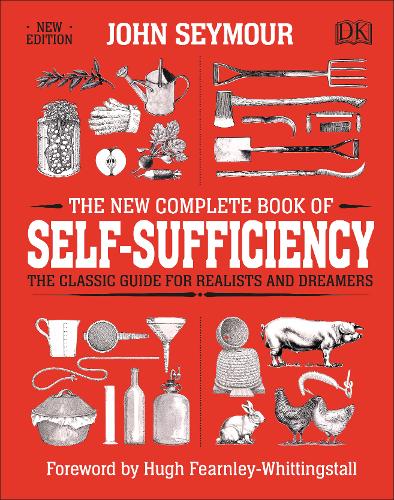
In his book, The New Self Sufficient Gardener, John Seymour shares a handy table for identifying soil deficiencies by looking at your plants.
| Symptom | Element Deficiency |
|---|---|
| Leaves appear chlorotic (pale green or yellow colour); older leaves turn yellow at the tips; leaf margins remain green but yellowing occurs down the midribs. | Nitrogen |
| Plants are stunted and dark green in colour; older leaves develop a purple hue. | Phosphorous |
| Unnatural shortening ofplant internodes (areas of stem between the nodes, or swellings in the case of grass or sweet corn); leaf tips turn yellow and appear scorched. | Potassium |
| Older leaves turn yellow and then develop whitish stripes between the leaf veins. | Magnesium |
| New leaves develop whitish areas at the base on each side of the midrib; internodes appear shortened. | Zinc |
| Plants develop general chlorosis of the leaves. | Sulphur |
| Mottled effect on new leaves; in apples, a spotty chlorosis appears between the lateral leaf veins, and the chlorotic areas die, leaving holes. | Manganese |
| Brassica plants particularly show cupping, an inward curling of the leaves, and the leaf tips become wrinkled. | Molybdenum |
| Root crops, especially turnips and swedes, turn grey and mushy at their centres. | Boron |
Based on how your plants look and what nutrients they appear to be missing, you can amend as required using whatever soil amendment you choose.
I wrote a guide about the self sufficient way to amend and improve your soil if you're interested in that side of things.

Wait! Before You Go, I have A Question For You: Is Soil Alive?
The number one thing to keep in mind when testing soil without a kit is that soil is alive.
And no matter the stage of life, you can always add vigour to it by caring for it with love, respecting it and all the things it grants you and adding what it needs to stay healthy.
Help it and it will help you.
Which brings me to the most profound piece of forgotten wisdom I learnt from my neighbour; practicality and spirituality are intertwined with nature.
Caring for the land with intentional practice will enrich your spirit beyond my ability to write.