
All you need to know about dehydrating food for long term storage so that you can make what you grow (and buy) last longer, waste less food, reduce your expenses and become more self sufficient.

I started dehydrating food a few years ago in an effort to better prepare my family for a shock to the supply chain.
In that time, I've learnt a thing or two about using food dehydrators including what fruits are best to dehydrate, what vegetables are best to dehydrate and how best to store dehydrated food to make it last longer.
I remember resisting the idea for years initially, thinking that the costs of running a dehydrator would make it too expensive to do. After doing the maths and pitting them against our current backdrop of potential hyperinflation, the numbers work; and the benefits of dehydrating food for long term storage far outweigh the downsides.
If you're new to dehydrating food and you want to learn how to get started, this guide is for you. I'll share everything I know about the process to help you hit the ground running.
Because time, as you know, is of the essence.

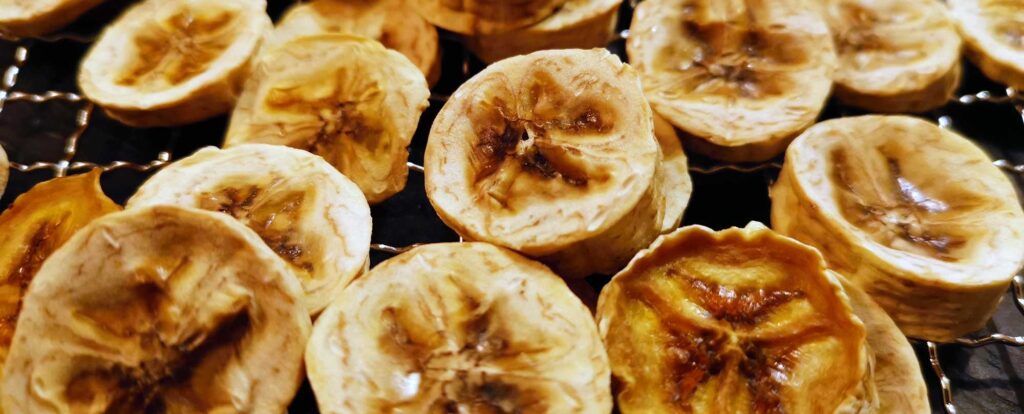
What is food dehydration?
Food dehydration is a preservation technique that has been used for thousands of years to make food last longer. It's a simple process whereby low heat and continuous airflow remove water from produce.
You can dehydrate food in any number of ways. I always prefer to go back as far as I can with any solution – to a time before our complete reliance on technology & energy – to find methods that our ancestors used that we can bring back now and work my way up from there.
The truth is, the two elements of good food dehydration are free and plentiful; heat and air. The problem, of course, is your location.
If you are fortunate enough to live in a hotter climate, you can dehydrate food in your garden by leaving it out on drying racks. If you live in a more temperate climate, like I do here in the UK, you'll need to restrict your drying to summer months only or use an electric food dehydrator.
5 Different Methods of Dehydrating Food
In short, the five main devices you can use to dehydrate food are:
- Drying trays
- Drying cabinets
- Ovens
- Electric food dehydrators
- Solar food dehydrators
As I mainly use an electric food dehydrator, this guide will focus around that method the most.
Why should you dehydrate food?
The most obvious reason to dehydrate your food is to make it last longer. By dehydrating food and removing water, you severely hinder the growth of micro-organisms such as bacteria, yeasts and moulds.
Although there is always a chance for moisture to seep into any storage containers, if dried correctly, dehydrated foods will not spoil. You can reduce the chance of spoilage by conditioning your dehydrated foods properly.
Dehydrating food preserves the food's natural nutritional values. Things like sugars, calories, proteins, fibre and carbohydrates will remain in dried food. So too will essential fatty acids, minerals, enzymes, antioxidants and most vitamins.
Compared to it's fresh counterparts, weight for weight, dehydrated food packs more calories. If you're tight on space or planning to bug-out somewhere, dried food will give you more calories than fresh food in less space at less weight.
Save money by wasting less. By dehydrating any leftover fruits or vegetables at the end of the week, you waste less and stock up your supplies in the process.

The best food dehydrator for dehydrating food quickly
I've tried two electric food dehydrators over the past few years; an electriq 6 tray dehydrator (known as Corsori in the US) and a biochef 6 tray dehydrator and honestly, I was happy with both and still use both. I only bought two because I was dehydrating more food every week and the 2nd one happened to be available at a better price because it was a refurbished model.
Discount Offer as at: September 2023
Vitality 4 Life (BioChef) are offering 30% discount on food dehydrators today. Grab one whilst you can!
I'm not sure there is much difference between models other than size and style but there are some essential prerequisites that you simply must have when choosing your dehydrator:
- You need to be able to control the temperature. Some foods dry quicker than others and as you build your notebook of dehydrated food recipes, you'll see there's a big difference between say, bananas and strawberries. Sometimes it doesn't pay to put them all in the same batch but this depends on your own preference for crunchiness.
- You need a timer. Again, like the temperature, a timer is essential because some things take less time. I usually dry my apples over a 10 hour period for maximum crunchiness but if I want the same crunchiness in my bananas I have to dry them for a little longer.
- Removable drying trays are a must! When I dehydrate food, particularly moist fruit like mangoes, strawberries and apples, they sometimes leave a sticky residue on the drying trays/racks. It's essential that you can remove these and, depending on your inclination to hand-wash or put them in a dishwasher, you'll also need trays that are dishwasher friendly.
What temperature for dehydrating food?
It took me ages to figure out the right temperature for dehydrating food. Every time I tried, I made a note of what fruit/veg I was dehydrating, the temperature I dried it at and for how long it was dried.
It took a while, but I've got a pretty good grip on it now and I'll share my times here for you. These all dry to create crispy snacks – reduce time by an hour to two hours to create a more chewy end result.
| Food | Temperature | Time |
|---|---|---|
| Apples | 65c | 10 hours |
| Bananas | 55c | 12 hours |
| Pears | 60c | 10 hours |
| Strawberries | 55c | 11 hours |
| Mango | 55c | 10 hours |
| – | ||
| Salad Leaves (Spinach, Kale, Rocket etc.) | 50c | 6 hours |
| – | ||
| Vegetables | 50c | 8 hours |
| – | ||
| Meat | 65c | 6 hours |
How much does it cost to dehydrate food?
One of the reasons I put off dehydrating food for so long was because I was worried about how much it would cost to do it.
After a while, food preservation for the long term became a higher priority for me than the cost of electricity, so I went ahead and did the maths.
To correctly work out how much your dehydrator is going to cost you to run, you need to have:
- The dehydrator wattage (The electriq dehydrator is rated at 650w for eg.)
- How long you plan to run the dehydrator for
- Your cost of electricity per kwh
The calculation is simple from here:
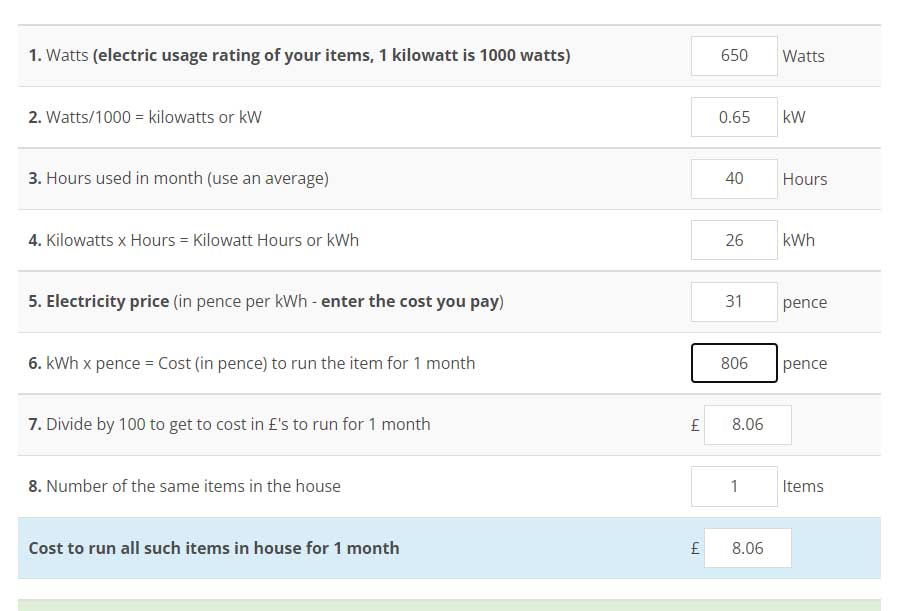
(Power (kW) x Time (hours) x Rate (£)
My cost:
(650w / .65kw) x 40 hours p/month x 30.66p
=
£8.06 p/month
If you're too busy to calculate all of that yourself, you could use the running cost calculator here.
Pro tip:
Also remember that most electricity suppliers have a peak tariff and an off-peak tariff. Make sure you do the bulk of your food dehydrating during off-peak hours to save money.
Which foods can you dehydrate?
You can pretty much dry almost all foods, with a few exceptions. At this point it's probably easier to list what you can't dehydrate than what you can.
The main reason you should avoid dehydrating foods is because of their fat content. Fat goes rancid quickly and prevents safe long term storage.
You can dehydrate everything except:
- Foods high in fat content (fatty cuts of meat, nuts, avocado)
- Juices
- Dairy (cheese, butter, milk)
Prepare food properly before dehydrating
For the best taste/drying time, you should slice your food to between ¼ inch to ½ inch thick. Sometimes you might want to explore with thicker slices but this will increase your drying time.
Before dehydrating food, you should prepare it properly with a natural preservative or acid. For example, some fruits lose their colour and go brown during drying.
If you don't want that to happen, you should pre-treat your fruit with ascorbic or citric acid (I use orange juice, although that can affect the flavour).
Other foods will last longer with a bit of honey as a pre-treatment. I dehydrate food primarily for taste and long term storage, so my preparations focus around that area.
The generally accepted types of food preparation when dehydrating are:
- Ascorbic Acid – for keeping colour in fruits
- Fruit Juice – for keeping colour in fruits
- Honey Solution – for long term storage of fruits
- Blanching – for retaining colour in vegetables
There is a very comprehensive list of which pre-treatment works best over at dehydrator blog.
As I only tend to use either orange juice straight from the carton or a honey dip solution, I'll give a brief summary of that here.
Store Dehydrated Food Longer: Honey Dip Solution Recipe
- Mix 100g (1/2 cup) sugar and 350ml (1½ cups) boiling water until sugar is dissolved.
- Let it cool until it turns lukewarm before adding 120ml (½ cup) honey.
- Stir gently.
- Soak the prepared fruit slices for 3 to 5 minutes.
- Drain well and arrange the dipped slices on the drying trays.
What are the best fruits to dehydrate?
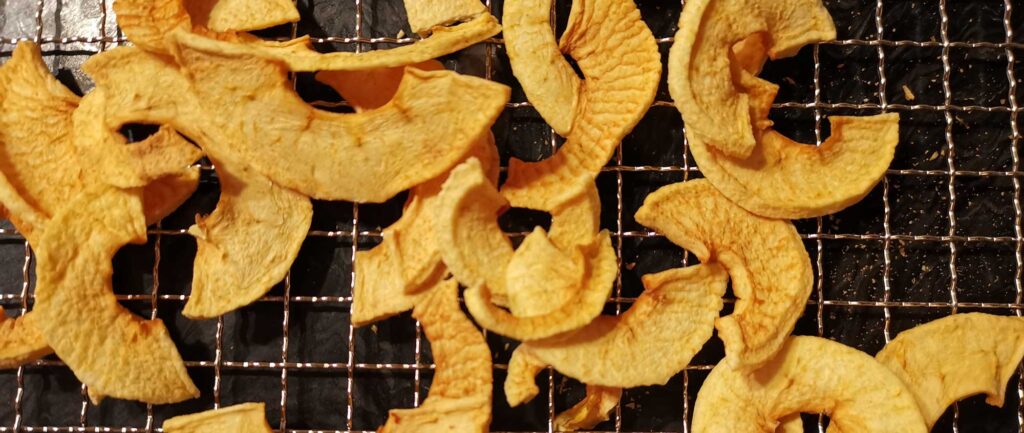
I've tried a lot of fruit in my dehydrating but I always come back to these 5 – probably because these are the fruits that my family eat the most.
- Apples
- Pears
- Bananas
- Mangoes
- Strawberries
I do dehydrate other fruits as well as and when we have them like berries (when we're not making jam out of them) but I don't go out of my way to dehydrate much other fruit.
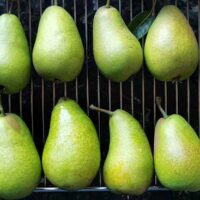
Pears are absolutely divine when dehydrated so they're not crunchy but still have a little chew to them.
What are the best vegetables for dehydration?
I can only speak to my own experience here but we have a list of favourite vegetables we dehydrate in our house.
Our list is based on what we enjoy eating the most. There are a couple of other considerations too like what produce I grow more of in our greenhouse; but generally speaking we like to dehydrate what we like to eat.
My top vegetables to dehydrate when dehydrating food:
- Potatoes
- Broccoli
- Cauliflower
- Tomatoes
- Peppers
Before we had the dehydrator I would regularly end up throwing out vegetables that had gone soggy or mouldy because we hadn't used them up. Now we do a dehydration day every week, where we round up the last week's unused produce and dry it all together (where possible).
Dehydrated vegetables will store for up to a year if sealed and stored correctly. They can be added to soups or rehydrated for meals as and when you need them.

Can you dehydrate meat?
Yes, you can dehydrate meat however the process is different to dehydrating fruit or vegetables.
With fruit and veg, you can simply wash, slice and pre-treat before putting in the dehydrator but with meat, you have to cook the meat to a safe temperature first to kill off harmful bacteria.
According to the USDA, you should “cook all food to these minimum internal temperatures as measured with a food thermometer before removing food from the heat source.”
| Product | Minimum Internal Temperature & Rest Time |
|---|---|
| Beef, Pork, Veal & Lamb Steaks, chops, roasts | 145 °F (62.8 °C) and allow to rest for at least 3 minutes |
| Ground Meats | 160 °F (71.1 °C) |
| Ground Poultry | 165 °F |
| Ham, fresh or smoked (uncooked) | 145 °F (62.8 °C) and allow to rest for at least 3 minutes |
| Fully Cooked Ham (to reheat) | Reheat cooked hams packaged in USDA-inspected plants to 140 °F (60 °C) and all others to 165 °F (73.9 °C). |
| All Poultry (breasts, whole bird, legs, thighs, wings, ground poultry, giblets, and stuffing) | 165 °F (73.9 °C) |
| Eggs | 160 °F (71.1 °C) |
| Fish & Shellfish | 145 °F (62.8 °C) |
| Leftovers | 165 °F (73.9 °C) |
| Casseroles | 165 °F (73.9 °C) |
Once your meat is cooked according to the safe temperatures above, you can remove the meat from the heat and immediately place on a kitchen towel to blot out any excess moisture and fat.
Once all fat and moisture has been blotted out, you can cut your meat into small strips, chunks or pieces before spreading evenly on your dehydrator racks like you would any other food.
How to condition dehydrated foods before storage
‘Conditioning' is a term I hadn't heard in the context of food dehydrating until one of my first batches of dried fruit went mouldy.
In searching for the reason why, I came across conditioning. Conditioning is a very simple process you can do to your dehydrated foods (fruits usually, but can be used for vegetables and meat too) to ensure that no moisture gets trapped in your storage containers (or jars) before you pack them away for the long haul.
You need to do it because sometimes, even though you have dehydrated your food properly, some moisture will remain. This usually happens due to an uneven spread or uneven slices.
6 Simple steps to condition your dehydrated foods:
- Remove your food from the drying racks as normal and leave to cool to room temperature.
- Once cooled, place in clear airtight storage jars; making sure to fill up no more than 2/3 of the glass.
- Let your food sit for a week, making sure to shake the jar and check on it every day for signs of condensation or mould.
- If you see any condensation, put the food back into the dehydrator for a few hours.
- If you see any mould, throw the whole batch out.
- If you see neither condensation nor mould after a week of shaking each day, your batch is good and can be stored away.

How to store dehydrated food for the long term
The most important factors in storing dehydrated food for the long term are:
- That jars/containers are kept below 60f (15c)
- That no oxygen can get into the jars/containers
- That no light (or very little light) can get in
All of these problems can spoil food more quickly. For eg. did you know that food stored at 60f (15c) has twice the shelf life of food stored at 80f (26c)?
Fortunately, these problems are easy to solve by storing your dehydrated food in a pantry, garage or root cellar with a low temperature and low light in an airtight container or jar.
I use mason jars where possible, but also save any glass jars we buy from the store for things like jam, sauces etc.
I've also heard it said that vacuum sealing the dried foods adds even more shelf life although it's not a method I've tried myself.
It's also not what our ancestors would have done!
Yes, I know, they wouldn't have used dehydrators either and would have dried foods in the sun, on rocks or over a smoking fire but until the UK actually gets some hot sun, I have to make do with what I have.
And so do you.
If my content helps in any way and you'd like to say thanks, please consider buying me a coffee 🙏





Thanks for this. I’m concentrating on food like rice and beans at the moment, as well as water purification, but this is so obvious I can’t believe I didn’t think of it before. 👍
Hello Lars,
Dried foods are also essential, for sure! Keep doing that.
The biggest benefit to come from dehydrating for me is that we’re wasting virtually nothing now.
We do a dehydration day every week and it all gets stored away. Some of the dried fruits barely make it the week though because they taste so good!
My dehydrator has arrived and I’m about to start with apples. Do you just dip them in orange juice from a carton? If using lemon, I assume you can water it down?
I appreciate your help.
L
Hi Lars, Yes! That’s all I do.
And yes, you can water down lemons although I’m not sure on the ratios.
Let me know how it goes and what you dehydrate.
Hi Seb, I tried to buy you a coffee but despite doing the process several times it failed. If you have PayPal I can do it that way. Send me your PayPal details to larsnewbould@googlemail.com and I’ll get onto it.
I’m just making another batch of apples because it turns out my son (10) loves them and grabs a handful on his way to school every day.
What about fresh pineapple? Do you have a suggestion for temperature and time? Would it need ascorbic acid first? I love my little machine, from Cooks Professional. It hums away in the background. Son is really into it, keeps suggesting new fruits to do.
👍L.
Hello Lars,
It’s great your 10 yr old loves them! I must admit, they are a favourite here also.
I’ve never actually tried pineapple myself.
Like anything, temp/time depends on how thick you cut the slices and how chewy/crispy you want them.
I’d go with 55c for 10 hours as a start for slices 2/3s of a cm thick. That should be chewy.
As for buy me a coffee, thanks for letting me know!
If you really want to support me you could always buy something from the supply store or send crypto! I don’t do paypal.
Apologies if this comes up twice. Posted earlier but don’t see my message. I bought a coupla things from your online store (love the eclectic choice of products, BTW 🤣). Grow pots and cucumber seeds. Is it too late to grow cucumbers this year?
Trying courgettes now, uniformly sliced with my purpose bought Japanese mandolin.
Cheers,
Lars
Ah! Thank you for your order lars.
Hahah! Yes, it is an eclectic mix. I buy stuff I use/need in bulk and list the rest for sale.
No, you can still plant cucumbers. I would start them off indoors though to give them a good start.
I grow mine in a greenhouse so that would help also.
Pineapple is delicious. Took about 16 hours at 65% and still remains chewy. The problem is getting good, sweet pineapples in the first place. One was fabulous, which delivered an explosion of sweet pineapple loveliness, and another was a bit meh. I’m wondering whether your sugar and honey dip pre-dehydration adds sweetness of taste? Just wondering if you think it’s a good idea to transform less sweet pineapples. Shall find out. 👍
Will it hurt to store dehydrated to store these item in the garage or it it hot for these items such as potatoes. pasta, or any other items
A garage will be fine for storing properly dehydrated foods although I’d keep a record of temperatures and batch dates etc. to track how each batch performs throughout the year.
A really good guide, well laid out, very easily followed. The biggest relief to me in reading this was that I felt I could do it despite my misgivings! Surprised at the cost of electricity, thought it would be much higher! I was also a little surprised to find you in the UK!!
Hello Richard,
I originally wrote this guide about 2 years ago so the electricity price should be revisited for 2024!
That being said, the calculation is the same so it’s still useful.
And dehydrating leftover fruit and veg is still better than throwing it away!