How many chickens do you need to be self sufficient? The answer falls into two distinct categories:
- how many you need if you want to be self sufficient in eggs and
- how many you need if you want to be self sufficient in meat.
I've been keeping chickens in my garden for over 3 years now and, at the moment at least, I don't plan to eat any of them any time soon.
I primarily keep our chickens for eggs. We have 4 and they provide us with 3 eggs a day (on average) which is more than enough for our family of 4 to be self sufficient in egg production with some to spare.
Like most things about self sufficiency though, context matters.
How many chickens you'll need to be self sufficient depends on how many people are in your family, how many eggs they eat per day and whether or not you want only eggs or only meat or both.
Although I've not kept chickens for meat yet; I do plan to in the future and, as a consequence, have spent a lot of time researching it.
I’ve also watched a lot of Joel Salatin videos and am a proud owner of his bestselling book on keeping chickens for meat; Pastured Poultry Profits, which I've read cover to cover a couple of times.
All of this gives me plenty of experience and insight to help you figure out how many chickens you need to be self sufficient for your situation.
Let's get into it.

How many chickens do you need to be self sufficient in egg production?
If you're a family of 4 and you each eat 1 egg per day, you'll need 1460 eggs per year. The average chicken lays about 250 eggs per year so you'd need 6 chickens to be comfortably self sufficient.
We don't eat an egg a day in my family so 4 chickens is fine for us however in a real food shortage situation, I'd be wanting to keep at least 6 chickens.
It's worth noting that different breeds lay eggs more frequently than others.
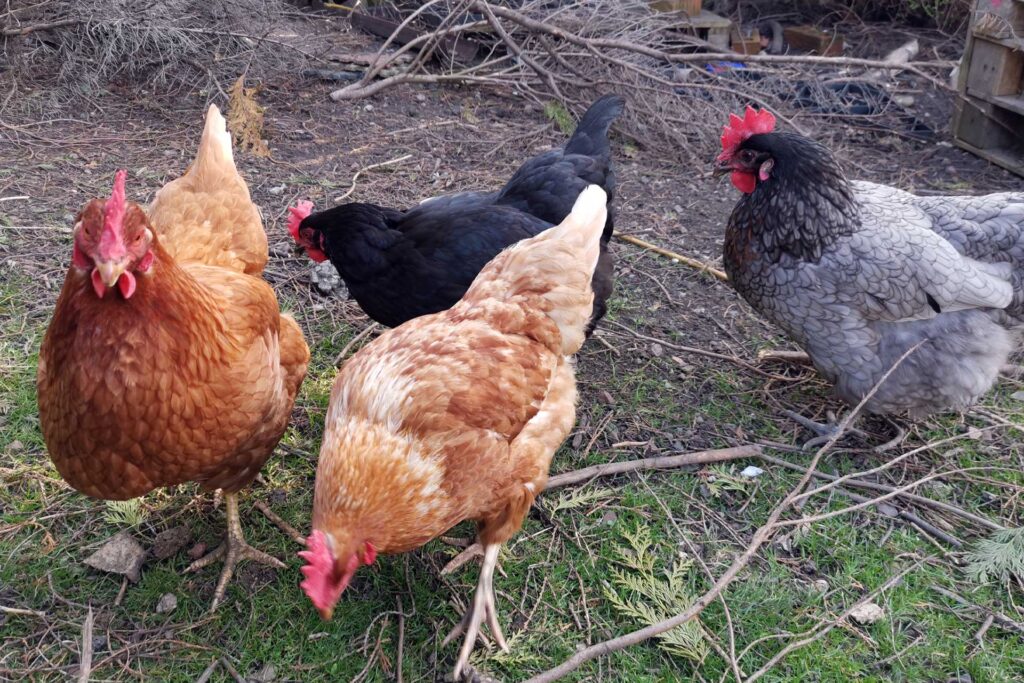
I have 4 chickens; 2 Gingernut Rangers, 1 Blue Haze and 1 Pied Suffolk.
Which chicken breed lays the most eggs?
The Gingernut Rangers are my most prolific egg layers. They lay an egg almost every day. Gingernut Rangers are a cross between Rhode Island Reds and Light Sussex.
In the three years that I have been keeping them, they have laid regularly throughout the summer and only seem to slow down in the darkest of the winter months.
But even then, they still seem to lay at least one egg every other day. I should probably say that I bought my chickens when they were 16 weeks old so they are still very young (going into their 3rd year as I write this).
I've been told that as the chickens grow older the frequency at which they lay eggs reduces.
My all-black Pied Suffolk, Midnight, is also a prolific egg layer.
Finally, my Blue Haze, Azula, is a good layer but not as regular as the others. Both Azula and Midnight lay white-shelled eggs whilst the Gingernut Rangers lay the more traditional brownie beige-coloured eggs.

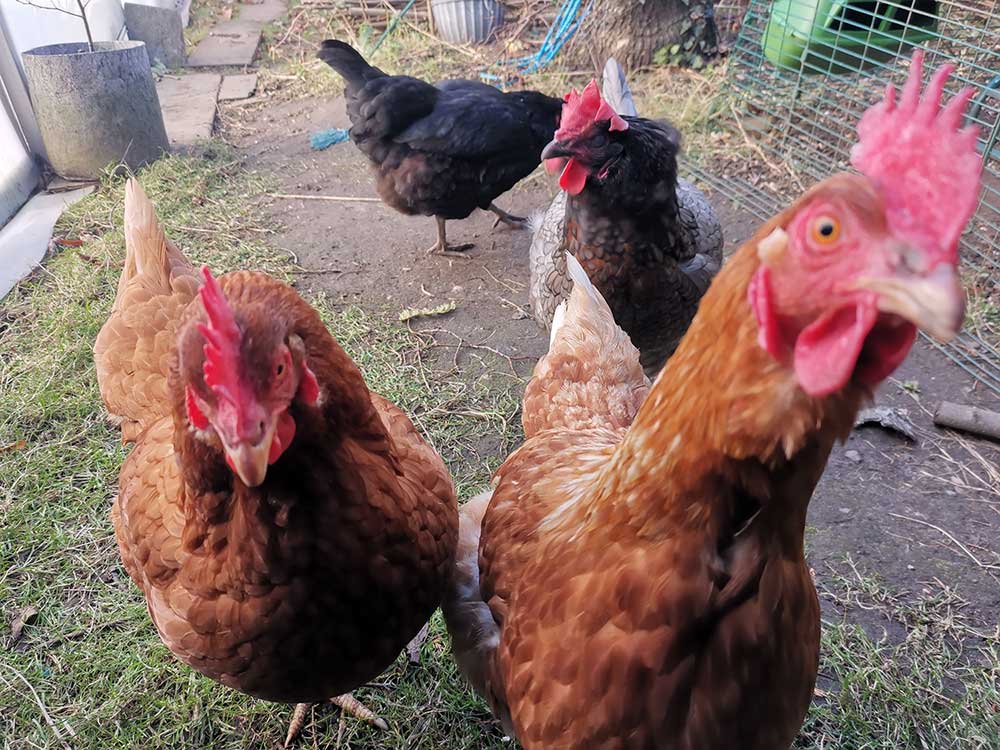

On average, we get 3 eggs per day over the course of the year. That's over 20 eggs per week – which is more than enough for what we need at the moment.
We give our excess to family.
Chicken & Egg Caveat
There is a caveat though.
In a true supply chain crisis, 3 eggs per day maybe enough for a single adult but would not be enough for a family of four. In the recent food self sufficiency guide I wrote, I break down how many calories an adult needs per day to survive.
In that guide, I created a number of calorie tables that show how many calories each type of food provides. From those tables you can see that a single egg provides about 120 calories per serving.
An adult needs at least 1000 calories per day just to keep basic bodily functions working properly. Anything less and the body enters starvation mode.
You could say then, from this viewpoint we would need at least double the amount of chickens we currently keep to be fully self sufficient in egg production in the event of a supply chain crisis.
If that were the case, I'd need a bigger coop, something like the Eglu Cube, which can house 8 – 10 chickens. Come to think of it…It's probably going to be my next purchase.
As things currently stand though, we've not bought eggs from a supermarket or grocers for over 2 years.
We do however buy chicken feed in bulk every few months.
How many chickens do you need to be self sufficient in meat production?
As I wrote in the introduction, I don't have any first hand experience keeping chickens for meat yet but I have researched the topic of keeping chickens for meat extensively because it is something I plan to do in the near future.
Joel Salatin’s book Pastured Poultry Profits has been a big guiding light in that research. The Rodale Institute also have a great starting point too if you're looking to start a small-scale poultry project.
Assuming that you are part of a small family of four, you might eat around 2 whole chickens per week. If you eat more or less; then adjust the calculation to suit.
From here then the basic planning number is simple; 2 chickens per week means you're going to need 104 chickens per year.
You could probably get away with less than that if you got really good at using every single element of the chicken (bone broth, anyone?).
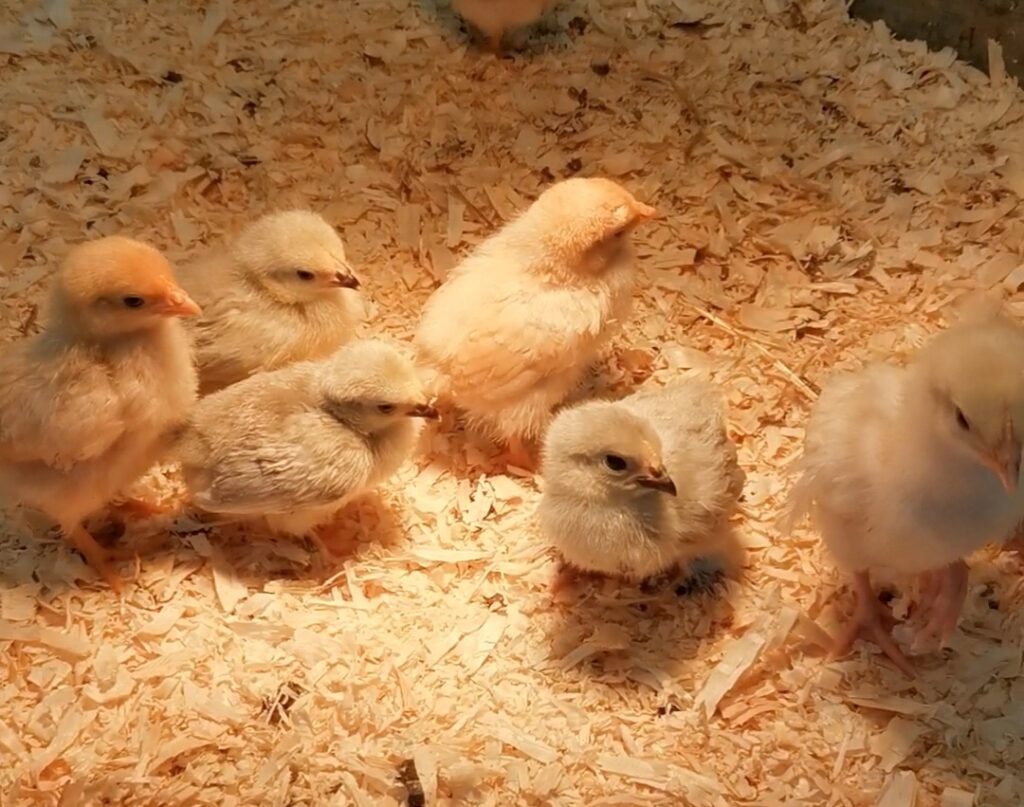
Raising chickens for meat
Believe it or not chickens are seasonal. Everyone is familiar with the idea of the chirping spring chickens, yellow and fluffy, at the dawn of a new spring season.
Chickens can then hatch throughout the summer but slow down or stop in winter. So, basically, you have 3 seasons in the year to work with.
Meat chickens are ready to butcher from around 10 weeks depending on the breed; when they grow to about 4 – 5kg in weight.
If you stuck strictly to these figures, you would raise your first flock of meat birds in the spring and butcher them altogether 10 to 12 weeks later.
You would then package and freeze them until you need them before bringing on your next flock.
If you planned to raise 3 flocks of meat birds per year to meet your needs, you would need 35 birds in each flock 3 times per year.
This is quite achievable for anyone with enough land.
How Much Land Do You Need To Keep Chickens?
According to the figures in pastured poultry profits, you'd need about 1/4 of an acre to keep 100 chickens. This would be enough space to run your chickens across the field in tractors without having their manure become too toxic to the soil.
If you're only keeping chickens for their eggs; 4 chickens can live in 4 square meters of space, 1 sqm per bird.
Most people who are thinking of keeping chickens for self sufficiency are usually only concerned with egg production so we'll leave the guide here hoping that you've already gotten the information you need to get started or now know where to go and look for it.
If you've already started keeping chickens for either eggs or meat, please leave a comment in the comments section below because I would be very interested to hear how you're getting on.