Want to learn how to make elderflower syrup the old fashioned way? In this guide, we did what 99% of people won't ever do and had fun on a Trangia camp stove turning fragrant elder flowers into a powerful and potent antibacterial syrup that packed a tasty summer punch.

Welcome to bournebright, the place where I document my quest for self-sufficiency in the suburbs.
Every day, I take one step closer to that goal no matter how small that step may be and today, I'm going to make elderflower syrup entirely off-grid with a beaten-up Trangia 25-2 UL Camp Stove.
Being self sufficient is hard; but that doesn't mean it can't be fun!
So, let's get stuck in to some magic medicine-making mischief the likes of which you've never seen.
Why Bother To Make Elderflower Syrup At All?

Well, right out the gate the elder tree has a long and revered history in ancient mythology, folklore, and herbal texts as a potent medicine to ward off evil.
I can verifiably go back at least to the 1600s where it was well documented for such things as “opening and purging choler, phlegm, and water; in helping the gout, piles, and women's diseases; coloureth the hair black, helpeth the inflammation of the eyes” and much more in Nicholas Culpeper's Complete Herbal & English Physician.
Known as the mother of protection and healing, it was said that hanging fresh green elder leaves above your threshold could ward off malevolent spirits and protect your home—a quality we surely could all benefit from in today's trying times.
All this hocus pocus being said, it has some actual scientific studies to back up some of these outlandish claims; like how extracts from the flower can be used as a source of antiviral compounds and have an affect on the bacteria of Salmonella.
All that being said and, given how abundant the elder tree is, the question isn't really why should you make elderflower syrup; it's more like, why shouldn't you make elderflower syrup?
How To Identify An Elder Tree
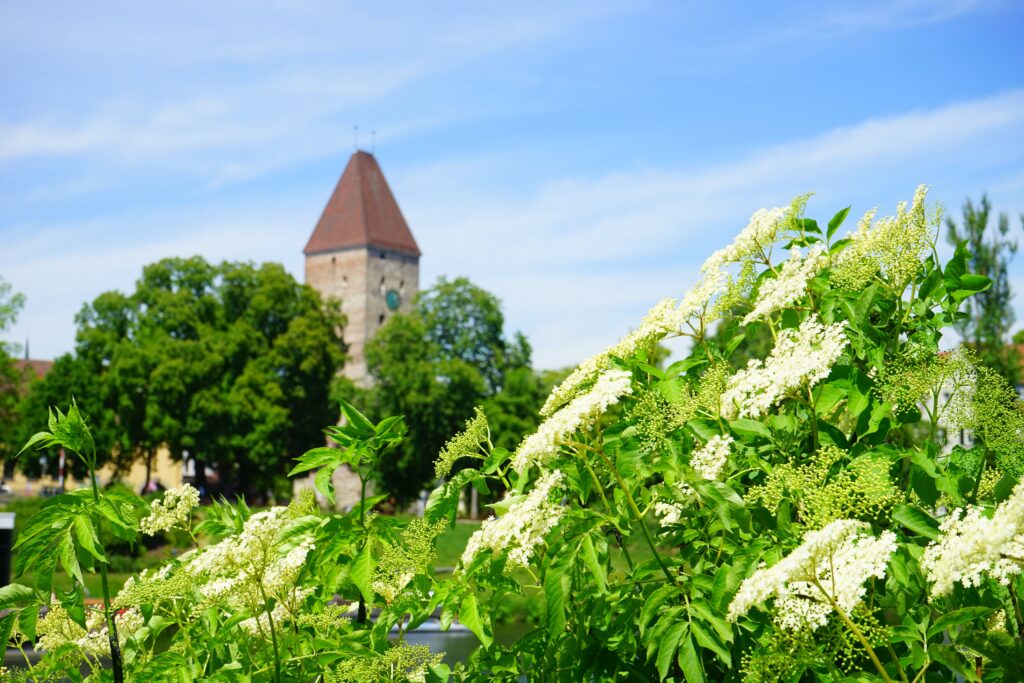
Recognizing the elder tree is quite easy, both in spring/early summer by it's unmistakable umbels of fragrant white flowers and in autumn with it's dark purple elderberries.
For an autumn recipe, be sure to learn how to make elderberry cough syrup.
In spring though, you should look for those magnificent white umbels adorned with countless delicate flowers.
The tree's leaves are long and slender, with serrated edges resembling the teeth of a saw blade. Stay & Roam does a good job of showing you what to look for if you want more information about identification.
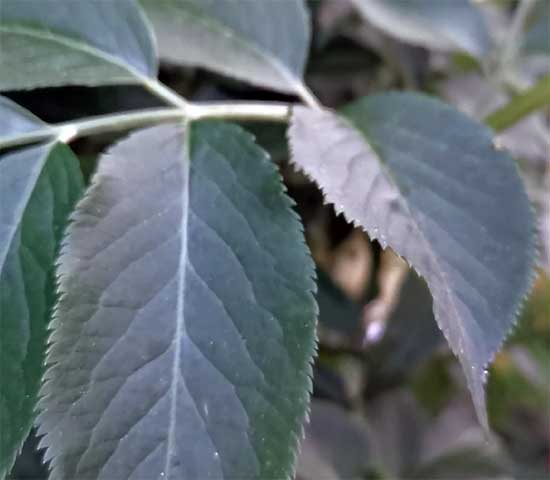
However, I must emphasize the importance of certainty when working with any herbal remedy.
Be sure to carry herbal books or references with you for accurate identification.
If you're unfamiliar with these resources, fear not! Visit bournebright.com/herbs for a comprehensive list of herbal books I own and recommend to accompany you on your herbal explorations.
Make Elderflower Syrup: The Recipe
Now, let's delve into the recipe and learn to make elderflower syrup the old fashioned way.
This delightful concoction will yield approximately one litre of syrup, which can be stored in the refrigerator or a cool pantry for three to four months.
Thanks to the added preservatives (in this case the apple cider vinegar) the syrup will remain fresh and vibrant throughout its shelf life.
However, remember to trust your senses – if the syrup looks off or smells off, it's probably off – and you shouldn't eat or drink it.
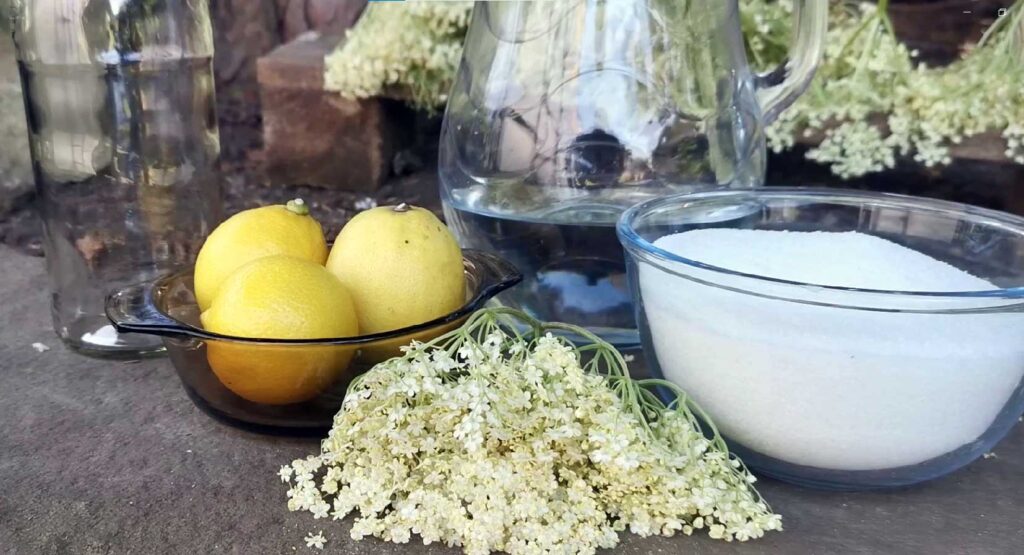
Ingredients
To make elderflower syrup and bring our magical elixir to life, you will need the following ingredients:
- 15-20 elderflower umbels
- 500 grams of sugar
- 500 millilitres of water
- Three lemons
- Apple cider vinegar with the mother (preferably)
The Method: Making The Elderflower Syrup Base
- First, gently shake the elderflower umbels to dislodge any insects or spiders by running your fingers up and down the stem. Find a bowl to catch the falling flowers and see how many insects you'll be shaking off! Take your time, as it may require a good 20 to 30 minutes to remove them all.
- With the elderflowers prepared and insects politely escorted away, put the cleaned elderflowers aside in a your syrup making dish or bowl (I'll be using a casserole dish).
- Now it's time to create your syrup. Begin by pouring 500 grams of sugar into a pot, followed by 500 millilitres of water.
- Take one of your lemons, halve it, and squeeze all of its juice into the syrup.
- Add three tablespoons of apple cider vinegar to the pot.
- Use one of the lemons to great or shave some lemon zest (skin) off the lemon and into the pot.
- Bring the pot to a boil then turn it down to a gentle simmer for a further 15-20 minutes, ensuring the sugar dissolves and creates a sweet aromatic base.
Extracting The Potent Benefits From The Elderflowers
After the syrup has simmered for about 15-20 minutes, it's time to extract the magical essence of elderflower.
- Slice your remaining lemon and place the slices over the elderflowers in your casserole dish.
- Use a sieve and pour the syrup mixture in your pot over the casserole dish, making sure to push the elderflowers beneath the liquid to cover them all and extract maximum potency.
- Return the lid to the casserole dish and leave the mixture to rest for 72 hours.
Straining and Bottling the Elderflower Cordial
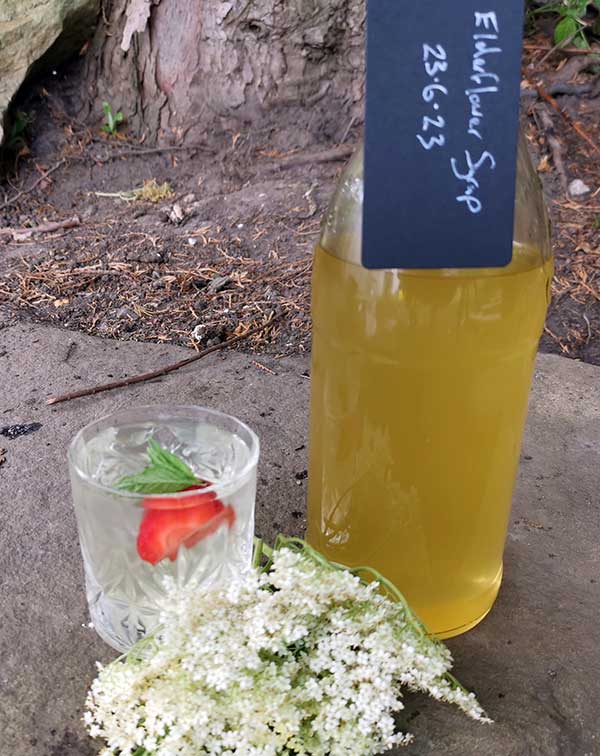
After 72 hours has passed, it's time to capture the essence of our creation and all the wisdom of our ancestors.
- Prepare a clean muslin cloth or a fine-mesh sieve to strain the syrup, ensuring no remnants of the elderflowers remain.
- Position a clean jug beneath the sieve, allowing the golden liquid to flow unhindered, imbued with the transformative power of the elderflowers.
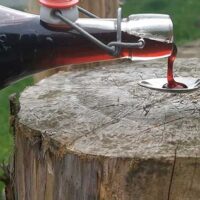
- Pour the syrup from the jug into your clip-top kilner bottle or similar, making sure to put the top in position but not to clip it down.
- Let the syrup rest for 72 hours before clipping down and putting away for storage.
And that's about it.
Magic medicine in a bottle to sip at leisure throughout the summer months, pumping you full of potent antibacterial benefits that will keep you safe and healthy the old fashioned way.
Commonly Asked Questions
How Long Will Elderflower Syrup Keep?
Elderflower syrup made with a preservative like citric acid or apple cider vinegar will keep in a bottle in a refrigerator for at least 6 months. It will keep in a pantry for about 4 months, probably longer.
How Should You Use Elderflower Syrup?
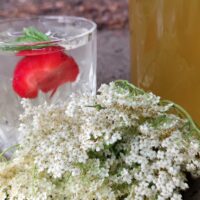
You use elderflower syrup like any other cordial, pouring 1 part syrup to 8 parts water into a glass. You can add more or less to suit your taste.