
Some fruits, like strawberries, peaches and cherries don't contain enough pectin on their own to make jam that lasts for years. But don't worry, you can still use these fruits to make jam without pectin naturally that stores for years and in this guide, I'll show you how.

There are 2 little-known facts about jams and preserves:
- They are easy to make
- They store for years
These two qualities make jam one of the most underrated foods for self sufficiency going.
What makes them so special?
Well, food preserves like jams & jellies come to the rescue when you have fruit that's not quite ready to eat off the bush or when you simply have too much to eat fresh.
They're perfect when you don't want to waste any of your harvest and you don't want to freeze the flavour out it.
And why would you want to when you can make jam easily and cost-effectively and have it store for years?
All of this is possible because soft fruits – the kind you'd use for jams and preserves – contain an essential ingredient that allows them to turn jelly-like whilst retaining (and in most cases improving) the flavour. That ingredient is pectin.
What is pectin and can you make jam without it?
Yes, you can!
Let's unravel this ancient art and learn to make jam without pectin, shall we?
The Essential Ingredients of Every Jam & Jelly
First things first—let's talk about the essential ingredients.
Fruit
Fruit is the star of the show here, providing that fantastic flavour and some of the needed pectin and acid.
Don't worry if you have some wonky-looking fruit lying around; you can still put it to good use. Just make sure to steer clear of spoiled, mouldy, or stale fruit, okay?
Sugar
Now, let's talk about sugar—the sweet companion to our jellied delights.
You see, pectin, whether naturally occurring or in commercial pectins, needs a certain amount of sugar to work its gel-forming magic.
If you want to go for gelled spreads without added sugar or with reduced sugar, you'll need to use sugar alternatives like honey or corn syrup as a substitute for commercially modified pectins, otherwise you'll have to slum it and buy commercial.
Pectin
Now, let's talk pectin—the real superhero of jellied spreads.
What Is Pectin?
Pectin is a naturally occurring substance in fruit that, when mixed with sugar, creates a gel-like consistency and creates the ‘jelly' or ‘jam' we all know and love.
How Much Pectin Do Different Fruits Contain?
The amount of naturally occurring pectin in fruits depends on the type of fruit and how ripe it is. Under ripe fruits have more pectin, but as they ripen, that pectin transforms into a non-gelling form.
So, here's the secret sauce for making jam without commercially bought pectin: using a mixture of 1/4 under ripe fruit and 3/4 fully-ripe fruit creates the best product.
Cooking brings out the pectin from the fruit, but be careful not to overcook it, or you'll bid farewell to that precious gelling power.
Some Fruits Are Pectin Powerhouses
Some fruits are pectin powerhouses, like apples, crab apples, quinces, red currants, gooseberries, Eastern Concord grapes, plums, and cranberries.
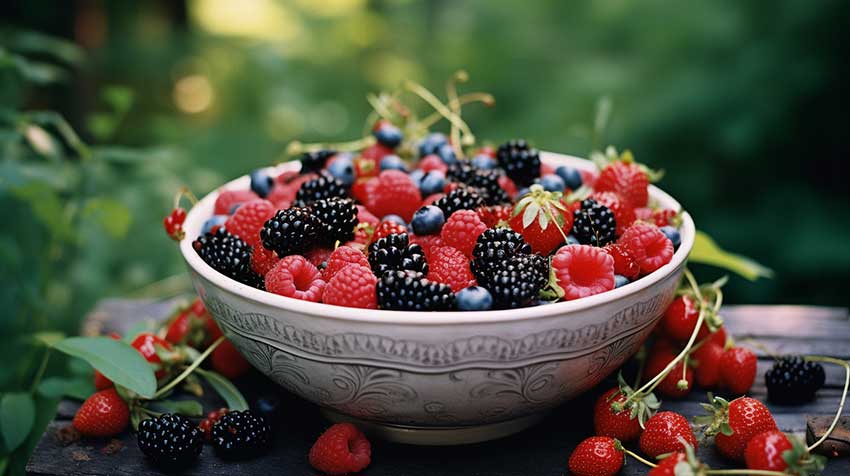
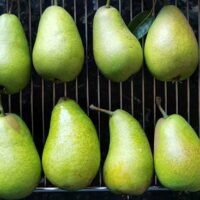
But if you're dealing with fruits that are low in natural pectin—think blueberries, peaches, apricots, pears, raspberries, blackberries, and figs—don't fret! You can combine them with high-pectin fruits instead of using a commercial pectin to save the day.
So, for example, you could add some apple into blackberry jam to create a superb tasting jam without using any commercially bought pectin.
If you're using fruit with high pectin, you won't need extra.
If you only have fully ripe fruit with low naturally occurring pectin, you should add in the appropriate portion of high pectin fruit to substitute to get that gel like consistency.
Now, do keep in mind that jams and jellies made with low-pectin fruits without added commercial pectin may not always achieve that perfect gel consistency. But hey, that's part of the adventure!
What Equipment Do You Need To Make Jam Without Pectin?
Now that we've covered the ingredients, let's talk equipment.
- You'll need a large, flat-bottom pot (8 or 10 quarts should do the trick).
- And if you're making jellies, you'll want to get yourself a jelly bag to extract that fruit juice. It can be as simple as a few layers of tightly woven cheesecloth or firm unbleached muslin.
- Oh, and having a special stand or colander to hold the jelly bag will make your life easier. Keep that bag clean by washing and rinsing it thoroughly after each use.
- To ensure your spreads reach the perfect consistency, a jelly, candy, or deep-fat thermometer will come in handy.
The Proven Method To Make Jam Without Pectin
The general method to make jam without pectin is the same no matter what jam you're making and I'll include it below.
Beyond the basics though, each recipe may require slight alterations and I'll add a couple of actual jam-making recipes below that can be used to make jam without pectin.
If you can't find the jam you're looking for, the Farmer's Almanac keep a good library of recipes.
Basic Jam Making Method
- Start by stirring the fruit mixture over low heat until the sugar dissolves.
- Then, it's time to crank up the heat and let it boil rapidly. We want that finished product to sparkle! As the mixture thickens, make sure to stir it frequently to prevent any sticking or scorching mishaps.
- How will you know when your jam is perfectly done? Well, keep an eye on that thermometer. Boil the jam until it reaches 220°F, or 8°F above the boiling point of water. Oh, and altitude matters too. For every 1000 feet above sea level, subtract 2°F from the boiling point. So, if you're at 1000 feet, your jam is ready at 218°F; at 2000 feet, it's 216°F, and so on. To get an accurate thermometer reading, place it vertically and at eye level. The bulb of the thermometer should be covered with jam but shouldn't touch the bottom of the saucepot. And hey, don't forget to check the accuracy of your thermometer by making sure it registers 212°F (or the boiling temperature for your altitude) when placed in boiling water.
Specific Jam Making Recipes Without Pectin
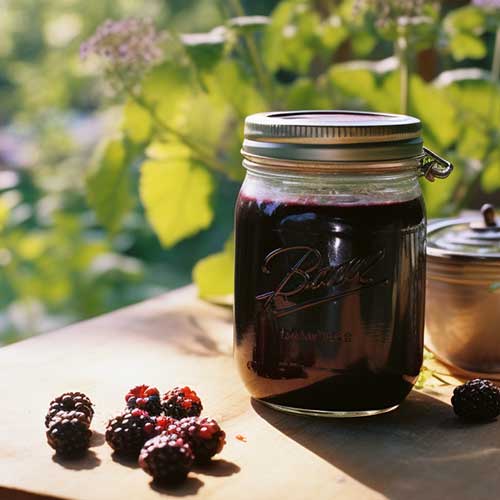
Berry Jam Recipe
(Blackberry, Blueberry, Boysenberry, Dewberry, Gooseberry, Loganberry, Raspberry, Youngberry)(7 or 8 half-pint jars)
INGREDIENTS:
- 9 cups crushed berries
- 6 cups sugar
TO MAKE JAM:
- Sterilize canning jars.
- Combine berries and sugar. Bring slowly to a boil, stirring occasionally until sugar dissolves.
- Cook rapidly to, or almost to, gelling point, depending upon whether a firm or soft jam is desired. As mixture thickens, stir frequently to prevent sticking.
- Pour boiling hot jam into hot jars, leaving 1⁄4-inch headspace.
- Wipe jar rims and adjust lids.
- Process 5 minutes in a boiling water bath.
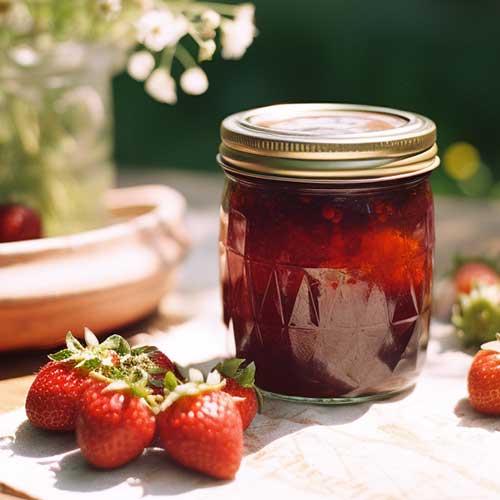
Strawberry Jam Recipe
(about 8 half-pint jars)
INGREDIENTS:
- 2 quarts cleaned, crushed strawberries
- 6 cups sugar
TO MAKE JAM:
- Sterilize canning jars.
- Combine berries and sugar; bring slowly to boiling, stirring occasionally until sugar dissolves.
- Cook rapidly until thick, about 40 minutes. As mixture thickens, stir frequently to prevent sticking.
- Pour boiling hot jam into hot jars, leaving ¼-inch headspace.
- Wipe jar rims and adjust lids.
- Process 5 minutes in a boiling water bath.
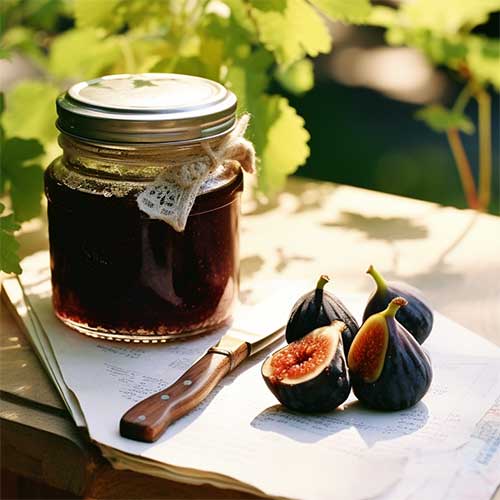
Fig Jam Recipe
(about 10 half-pint jars)
INGREDIENTS:
- 2 quarts chopped fresh figs
- (about 5 pounds as purchased)
- ¾ cup water
- 6 cups sugar
- ¼ cup lemon juice
TO PREPARE CHOPPED FIGS:
Pour boiling water over figs; let stand 10 minutes. Drain, remove stems and chop figs.
TO MAKE JAM:
- Sterilize canning jars.
- Measure and add ¾ cup water and sugar to figs.
- Slowly bring to boiling, stirring occasionally until sugar dissolves. Cook rapidly until mixture is thick, stirring frequently to prevent sticking.
- Add lemon juice and cook 1 minute longer.
- Pour hot jam into hot jars, leaving ¼-inch headspace.
- Wipe jar rims and adjust lids.
- Process 5 minutes in a boiling water bath.
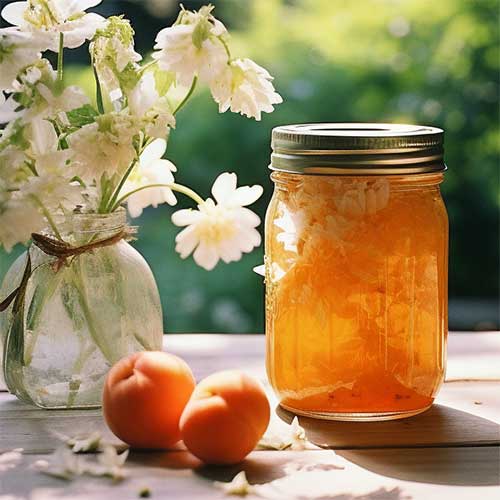
Peach Jam Recipe
(about 8 half-pint jars)
INGREDIENTS:
2 quarts crushed, peeled peaches
1⁄2 cup water
6 cups sugar
TO MAKE JAM:
- Sterilize canning jars.
- Combine peaches and water; cook gently 10 minutes.
- Add sugar; slowly bring to boiling, stirring occasionally until sugar dissolves.
- Cook rapidly until thick, about 15 minutes; stir frequently to prevent sticking.
- Pour boiling hot jam into hot jars, leaving1⁄4-inch headspace.
- Wipe jar rims and adjust lids.
- Process 5 minutes in a boiling water bath.
FOR SPICED PEACH JAM:
- Tie the following ingredients in a cheesecloth bag and add it to the jam during cooking.
- Remove bag before pouring the jam into jars
- 1 teaspoon whole cloves
- 1⁄2 teaspoon whole allspice
- 1 stick cinnamon (3-inch piece)
NOTE: If seedless jam is preferred, crushed berries may be heated until soft and pressed through a sieve or food mill; then add sugar and proceed as above.
If you prefer a softer product, shorten the cooking time; for a firmer jam, give it a bit more time on the stove. Just make sure to remove the cooking jam from the heat when conducting this test to avoid any overcooking mishaps.
Before filling your jars with the glorious jam, skim off any foam that forms on the surface.
And here's a nifty trick: adding 1/4 teaspoon of butter or margarine during cooking can help reduce the foam. Clever, isn't it?
Now, let's talk about processing our jams.
How To Seal, Preserve & Store Jams For The Long-term

Proper sealing is the key to safe and long-lasting jams and jellies.
To prevent any unwelcome mould, we need to process our spreads in a boiling water bath. The processing times we'll discuss here are for jams and jellies made with the full amount of sugar listed.
So, before you dive into making your jellied masterpiece, prepare your canning jars.
Wash them in hot, soapy water, and rinse them well. If you're using pre-sterilized jars, make sure to boil them completely submerged in boiling water for 10 minutes (add 1 minute for every 1000 feet of altitude above 1000 feet).
Keep those jars in the hot water until they're ready to be filled to avoid any unfortunate breaks. But hey, if you're not pre-sterilising jars, that's okay too—just make sure to keep those washed, rinsed jars hot until you're ready to fill them.
Remember to wash and rinse all your canning lids and bands too. Treat those lids as directed by the manufacturer, and remember, they can only be used once to seal new products.
Now, let's get down to business.
Preserve Jam For The Long Term
Fill your sterilised jars with your piping hot jelly or jam, leaving a 1/4-inch headspace. Give those jar rims a wipe with a clean, damp paper towel, seal them up with the treated canning lids and ring bands, and voilà! You're almost there.
Use a canning jar lifter to gently place the filled jars on a rack in a canner filled with hot water. Keep those jars upright, my friends—no tilting allowed! We wouldn't want the jelly or jam to sneak into the lid's sealing area.
Make sure the water covers the jars by an inch or two, and if needed, add more boiling water between the jars. Now, cover the canner, turn up the heat, and bring that water to a full, glorious boil.
Let those jars boil gently for 5 minutes, and then carefully remove them to a safe surface away from any drafts.
Resist The Urge To Move Your Jam For 12 Hours
Patience is a virtue, especially when it comes to jellied products. After making your masterpieces, resist the urge to move them for at least 12 hours. We don't want any broken gels, do we?
After that waiting period, check the seal, remove the ring bands, wash and dry them for another time, and label your jars. Store those beauties in a cool, dry, and dark place.
Remember, the shorter the storage time, the better the flavour and quality. Although cooked jellied products should keep for at least a year, they often start losing their lustre within a few months.
So there you have it, my fellow jam preserving self sufficiency enthusiasts!
Armed with this newfound knowledge, you're ready to embark on your jam and jelly-making adventures and never let an unripe or over-ripe piece of fruit go to waste ever again.
Get creative, experiment with different fruits, and enjoy the satisfaction (and saving) of homemade jams & spreads bursting with flavour.





Hi Seb, came on for a quick look around and 2 hours later I’m now learning how to make jam… Love this site and thanks for putting it all together
Amanda
Ha! That is the BEST kind of comment to receive, Amanda.
Thank you so much for taking the time to do it.
Please let me know if you have any suggestions, I’m trying to make it genuinely useful for those who find it! 🙏