
Water bath canning is a method of preserving food that has been around for centuries. Before the invention of pressure canning, all home-canned goods were produced using water bath canning methods. In this guide, we explore this ancient art of food preservation and show you how you can do it at home.

As with most things in modern life, you've been led to believe that home-preserving methods require significantly more equipment or skill than the time-tested simple technique of water bath canning. This is simply not true and we touched on it in our guide about how to can food without a pressure cooker.
Whether by design or otherwise, there has been an influx of information that has taught you that water bath canning is complicated and unsafe to such an extent that it really feels like a lost art.
But the truth is the technique is just as safe now as it was hundreds of years ago and if anything, our modern-day technology and our access to products and services should make the process even more effective and easy to learn if you've never done it before.
The cost, simplicity and shelf life of the process are just a few of the benefits that water bath canning has over other food preserving methods like freezing, dehydrating or even pressure canning.
What we're saying then is just because something isn't well known or widely used in the public domain, it doesn't mean you shouldn't use it.
In this guide, we'll introduce you to water bath canning and share a time-tested method for doing it in your own home.

A brief history of water bath canning
The first canning methods were reportedly developed by French confectioners in the late 1700s. Their goal was to preserve berries for use in making fruit tarts.
This was done by filling glass jars with the berries, then covering them with a gooey syrup made from sugar, honey, or sorghum.
Later, in the early 1800s, canning was used by sailors and explorers who needed to preserve food for long voyages. Around about the same time, the word “canning” was coined to describe the process.
With its growing popularity, canning soon became the most common way of preserving food at home. Besides using it to keep fresh vegetables and fruits fresh, many people also used canning to make jams and preserves.

Which ancient cultures used water bath canning to preserve food?
The ancient Egyptians were one of the earliest cultures known to preserve food through canning. They would make a mash out of seasoned grapes or figs, then fill glass jars with this. The sealed jars were then placed in a large stone pot full of water and heated.
The Chinese were also believed to have used water bath canning to preserve food such as bamboo shoots and mushrooms. However, since no records of their methods have been discovered, historians are still unsure of how they did it.
We already touched on the early sailors and settlers using water bath canning as a method of food preservation to keep food fresh on long voyages and it's said that some cultures, like the Amish, still use the very same methods today.
Why Should You Use Water Bath Canning Today?
Water bath canning allows you to preserve a wide variety of different foods in an easy to follow method without the high costs associated with buying yourself a pressure canner, dehydrator or freeze dryer.
Most importantly, you could, if you had to, use water bath canning as a method to preserve food if the power ever went out (by heating the pan on a wood stove etc.) A good stove to use for this would be the Trangia 25-2 UL, which we reviewed over here.
You can preserve fruits and vegetables, seafood, meat, dairy products, and even herbs with water bath canning.
Most modern-day information will tell you it’s important to only use this method to preserve high acid foods like apples, peaches, apricots, and most berries. But with the right recipe, for example something like these old recipes from the Amish, you can add acid to your liquid sugar or brine solution to compensate.
By using a water bath, you create an anaerobic environment that prevents harmful bacteria from growing. Because water bath canning involves very little heat, it doesn’t significantly alter the taste or texture of foods.
As a result, you can make jams, chutneys, and even acidic preserves like tomatoes, peppers, and eggs.
What food can you safely preserve using a water bath?
You can safely preserve most vegetables, fruits, meats, fish, and even certain herbs using a water bath canning method. It's important that when you begin your water bath canning journey, you try to find the oldest and most tried and tested recipes you can get your hands on.
Here are some examples of foods you can preserve using water bath canning:
Fruits
- Apples
- Apricots
- Peaches
- Plums
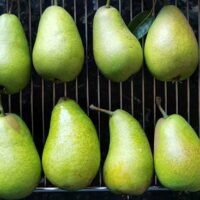
- Pears
- Nectarines (and their juices)
Vegetables
- Corn
- Peas
- Green beans
- Potatoes
Meat and Fish
- Soups (and their ingredients)
- Stocks (and their ingredients)
- Stews (and their ingredients)

What is the Basic process for canning food using a water bath?
If you’re new to water bath canning, it may be a good idea to start with easy and low-risk foods, like jams and jellies. Once you get the hang of things and gain more confidence, you can gradually move onto more complex recipes.
Warning: water bath canning can become addictive once you get hold of some delicious recipes!
Here is a step-by-step guide to water bath canning:
Prepare the Canning Jar
First, you need to prepare your jar. Place the jar on a clean surface, then sanitize it using a jar sterilizer or boiling water and a pot holder.
An alternative method is to place the jars on a baking tray and put them in an oven that has been preheated to 350 °F.
Once the jars have been sterilized, you can start filling them.
Prepare the Food
Choose foods that have been freshly picked or purchased from a trusted source. Place the food inside the jars, leaving just a little bit of room on the top. Make sure that the food isn’t touching the lid or the jar’s rim.
Make The Preserving Solution
Once your jars and food are ready, you can start making the sweetened syrup, brine or vinegar based liquid solution your recipe requires.
Each recipe will call for it's own solution but here are a couple of tried and tested methods for high acid foods (sugar syrup) and low acid foods like vegetables (brine).
- Sugar Syrup
A general sugar syrup recipe would be one cup of granulated sugar and two cups of water to a saucepan, then bring them to a boil. - Brine
A general pickling brine recipe would be white vinegar, sugar, salt, and water (45% water, 45% vinegar, 5% sugar, 5% salt). Dissolve the sugar and salt into the water and vinegar. Do this by combining all four ingredients in a medium saucepan and bringing to a boil over high heat.
Add The Liquid To Your Jars
Now, you can add in some liquid (your sugar syrup or brine solution) and seal the jars using a canning jar sealer (it's usually a metal lid with a rubber seal around it and a seperate screw on lid to keep the rubber seal in place).
Be sure that you leave at least one inch of air space at the top of the jar before screwing on the lid.
Water Bath The Jars
Put the jars in a large stock pot deep enough to cover the full height of the jars with water. Make sure your jars aren't resting directly on the base of the stock pot but are resting on a jar rack or tea towel.
Bring to the boil and then boil on for as long as your recipe requires.
Final Thoughts on water bath canning
Water bath canning is a great way to preserve a wide variety of different foods. It is not as dangerous as you have been led to believe and has been used successfully for literally hundreds (probably thousands) of years as a method of food preservation.
While this method may not be as popular as it used to be; with modern refrigeration and other food preservation techniques, it’s still the most tried and tested, low tech way you can make and preserve different foods for the long term.
Water bath canning is still (and will always be) a great option if you want to enjoy seasonal fruits and vegetables all year round!
Beat The Reset
If you enjoyed this guide, subscribe to my newsletter to receive more content like this, lots of positive news stories and some practical solutions to help you beat the reset.





I am a late starter at 82, I’ve made Jams in the past but never done any water bath canning. I have been given a bag of greengages and have found a recipe for greengage chutney, it has instructions for cooking, which takes approximately 2 hours, plus preparation time. One year shelf life unopened. No mention of using a water bath. Would a water bath prolong the shelf life in this case?
I’m also up to my eyes in apples, tomatoes and runner beans, though I have blanched and frozen the latter, but I am fast running out of freezer space.
I recently bought some Mason Jars, and also have Kilner Jars, are the latter OK in a water bath? Jackie
Hello, Jackie,
Yes, the Kilner jars will be fine in the water bath. They are what I use.
The process of water bath canning is carried out to kill off harmful bacteria inside the jars and create a vacuum seal to protect the contents.
If your recipe involves cooking before jarring, it’s likely you’ll have killed off any bacteria during the cooking.
In that case I’m not sure the water bath canning will add any shelf life to your chutney.
It’s probably good for longer than a year anyway if kept sealed. If in doubt, always go by the rule: if it smells bad or looks bad, it’s probably bad!
I’ve never canned before but it’s becoming ever more clear that I should learn to. I can’t tolerate the taste of vinegar. Is there a substitute when water bathing?