Amidst the outcry to ‘save our planet'; the humble wood stove has become a target for derision. Yet for millennia, we humans kept ourselves alive on the grace of wood which begs the question now, in 2023; can a single wood burning stove heat an entire house?

Curious to get to the bottom of this hot topic; we set out to find the real truth about wood stoves. How? By putting the question to Twitter, of course; and getting first hand feedback.
After receiving over 370 replies mostly from people who own their own wood stove and successfully heat their home with one, the short answer is yes; but there are caveats. Caveats which you can read for yourself in the thread or in this article as we dive deeper into it.
In this article, we will discuss how a wood stove works, how it compares to a fireplace, and how you can use a single wood-burning stove to heat an entire house.
Whether you're considering a wood stove or looking to improve upon your existing fireplace, this article will provide you with insight into the beauty and functionality of a wood stove and how it can help you keep your home warm; and whether or not a single wood burning stove heat an entire house.
What Is A Wood Stove?
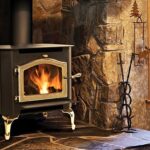
A wood stove is a heating appliance that burns wood fuel to create heat. It consists of a firebox or chamber made of steel, cast iron, or brick, with a flue pipe that carries smoke and hot air outside. The firebox is surrounded by a metal shell and insulated to prevent heat loss. Wood stoves are used to heat homes, cabins, and other buildings, and can be used to cook food.

Being a timeless invention, the wood stove has been providing warmth to people for centuries. The wood stove was first developed in the seventeenth century, in Europe, being a major development in heating homes and businesses efficiently.
The first wood stoves were very large, sometimes taking up entire rooms and were the first heating devices that were used by the American Colonists. Benjamin Franklin was able to add improvements to the design, in 1942, by adding rear baffles which reduced smoke and gave off more heat than an open fireplace. These stoves were not only used for heating rooms but also for cooking and heating food.
When we get into the twentieth century we start to see a decline in people and businesses using wood stoves, as they had been thought to be “obsolete” due to more efficient heating methods that came to market.
That being said there are many people who still believe that this particular heating method is the best option for themselves because of the ability to be less reliant on electricity.
Some people (usually politicians and globalists) like to make the argument that using a woodstove increases your ‘carbon emissions', which is sort of true, but let's not forget that ‘carbon emissions' seem to be an arbitrary figure that is supposed to represent how much carbon dioxide (CO2) a given ‘carbon emitter' puts into the environment.
That's all well and good, but the phrase wasn't even a thing until Severn Cullis-Suzuki’s passionate speech about climate change at the Rio Summit 1992; where we seem to have entered into this phase of creating yet another market out of thin air based on ‘facts' that support whoever funded the research.
And let's really not forget that when the earth has too much CO2, more trees, plants and greenery grows. Commercial farming operations that grow food, for example, actually buy CO2 to help their crops grow…
Armed with this information, the fact that wood stoves potentially create more CO2 emissions leads one to a different kind of conclusion; is more CO2 really bad for anyone? Or is it simply another control mechanism to keep the mob in line and the bankers fed?
Wood Stove: Pillar of History & Boon To Mankind
The wood stove is a pillar in history that showcases human ingenuity and our willingness to adapt no matter what the circumstances are. The development and adaptations made to the design have been of tremendous importance to the history of heating.
And while stoves may not be prominent as they once were, although this does seem to be changing, people all across the world in both rural and remote locations are using this timeless technology to warm their homes.
This is a real testament to its ingenuity and goes a long way to answering the question: can a single wood burning stove heat an entire house.

Can A Wood Stove Heat An Entire House?
A wood stove is more than efficient to heat an entire house. That being said it does depend on the size of your house and the layout, so keep those things in mind when selecting the right placement for your stove. Generally, a wood stove will be capable of heating 100 to 200 square feet.
So, if your house is within those dimensions, you shouldn't have any problems heating the entire house with one stove. If you have more space than that, you may need to find a second location on the other end of the house to sufficiently keep your entire house heated through the colder months.
Wood stoves are a great option for heating smaller homes and cabins. They are much more cost-effective than other heating systems and require minimal maintenance. Wood stoves are capable of providing enough warmth to keep a home comfortable on even the coldest days.
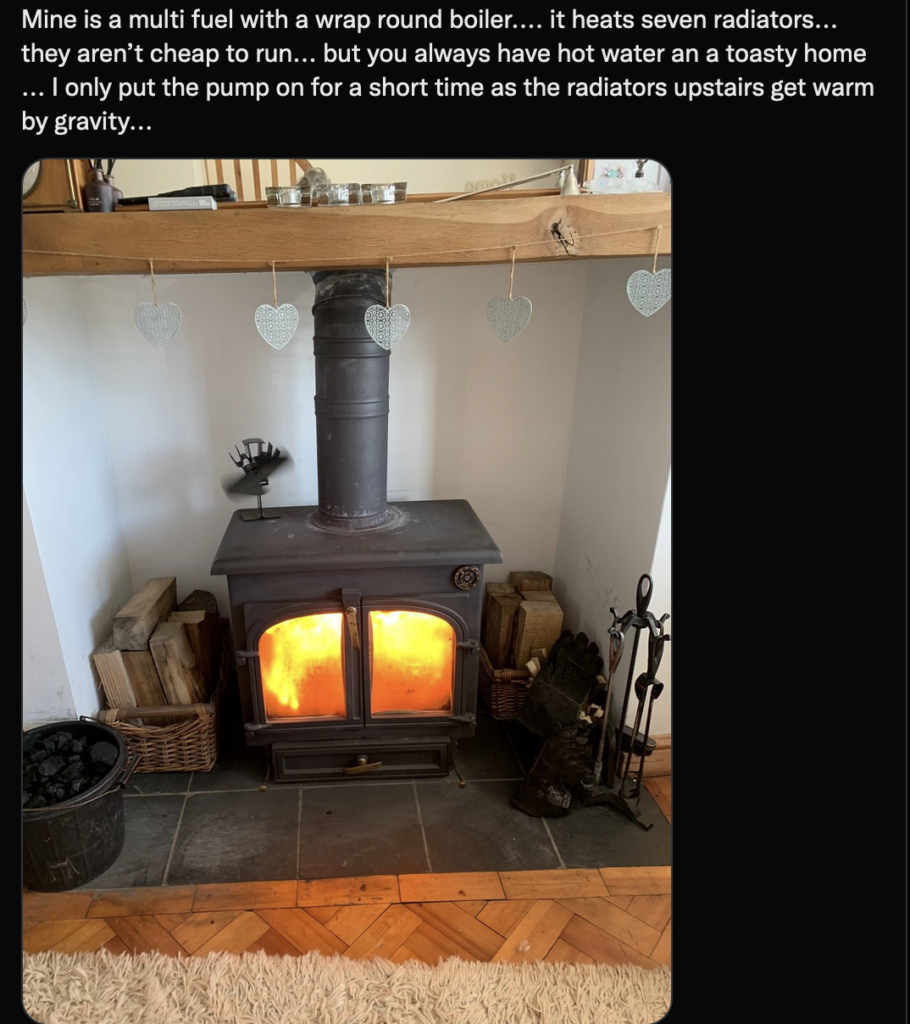
Additionally, they are easy to install and don't require an additional supplemental heating system. So, can a single wood burning stove heat an entire house? Check this tweet for some hope!

How Does a Wood Stove Work?
Metal wood stoves are a timeless invention, first appearing over four centuries ago. Despite continual improvements in efficiency, their fundamental operation has remained the same.
Logs are placed in the firebox or central fireproof chamber of the stove and lit. Air is allowed to enter the firebox through vents, fuelling the flames. The stove then disperses heat into the room, and smoke is vented outside via a pipe.
To ensure proper and safe operation, a wood stove should be heated to between 500 and 800 degrees Fahrenheit. Too low and the stove won't generate enough heat, allowing creosote to accumulate and potentially lead to a fire. Too high and parts may become warped or cracked. Maintaining an optimal temperature is essential for proper stove operation.
The other essential component, of course, is having the right kind of fuel to burn with the appropriate moisture content. A moisture content of less than 20% is essential for clean burning fuel and you can test the moisture content of your fuel with a simple wood moisture detector.
Most wood fuel takes at least a year to ‘season' (dry) and you can find out how to build your own DIY log store or which axe is best for splitting your own fire wood.
Wood Stove vs. Fireplace
When the word ‘fireplace' is mentioned, many of us imagine a comfortable scene of an open hearth or a stone chimney with smoke streaming out into the night. The thought of being warm and snug near the fire is most appealing, however, fireplaces are not as practical when it comes to producing heat.
In fact, they are quite inefficient in this regard. Much like an open window, the heated air produced is easily lost from the house, wasting the energy that has been used to create it.
If you’re looking for a way to heat your home while still enjoying a romantic hearth, then a wood stove may be the perfect option. Wood stoves are a great source of heat while still providing an aesthetically pleasing atmosphere. They offer more energy efficiency than a typical fireplace, making them a great option for those looking for a more efficient home heating system.
Wood stoves offer a great balance of beauty and function, making them a great choice for those looking for a new way to heat their home.
Wood stoves can either be used as the sole heating source for homes in some areas or supplement an existing gas or oil-fueled system. It all depends on what you want and what you are willing to do to make it happen. Consider all the possibilities before making your decision.

Transferring Heat From A Wood Stove Around A Home
Transferring heat from a wood stove around the home can be achieved in a variety of methods. One way is to circulate the warm air into other areas of the home. To do this, pipes or ducts can be installed, moving the heat through brick, masonry blocks, concrete walls, and floors. These materials offer no obstructions when transferring the heat.
When using firewood instead of pellets or cordwood, these methods are not effective as the fuel burns quickly and does not provide enough time to heat the home although, it is worth reading up on different types of wood to use for your log burner because they each offer different energy totals and therefore, heat output.
A second method involves floor registers.
Floor registers are metal plates that are installed near exterior walls, usually close to doors. They are placed flush with the floor, generally at knee height. This allows those close to the register to feel the warmth of the air the register is emitting. To help spread this heat, ducts and pipes can be installed around the register to direct the hot air throughout the home.
This method is great if you are looking for a cost-effective way to heat your home. By using wood instead of pellets or cordwood, you can save money by heating just one space, instead of needing to heat every individual room.
It’s important to note, however, that this method works best if there are no obstructions between the area where the stove sits and the registers. This allows the heat to travel freely throughout the home, keeping it warm and comfortable.
A forced air system is an effective heating option that can be used in conjunction with other heating methods or on its own. It works by using large fans inside the furnace or outside next to it. The fans then blow hot air into the home from a central location.
This form of heating is beneficial as it circulates warm air to the individual rooms through vents installed in each space. This type of system is ideal for homes that don't have a lot of brick/masonry walls as it eliminates the need for ducts and pipes going through them. It is also less disruptive as there is no need to cut holes in drywall.
Forced air heating is a great option for those who want a quick and efficient way to heat their home.

One More Thing, Before You Go…
Alas! We get to the crux of the matter. Yes, a single wood burner can heat an entire house; but there are certain steps and pieces of equipment that need to be in place for it to work properly.
First, it is important to ensure that ashes are not left to build up or clog the chimney. Secondly, installing an air circulation system in your home can help spread the heat from the stove throughout the entire house.
Ultimately, it is possible for a wood stove to heat an entire house, but it requires a bit of extra effort from the homeowner. With the right set-up and maintenance, you can enjoy the warmth of a wood stove all winter long.
If you think it might be a good option for you, then I would recommend researching it further and taking the necessary steps to make it a reality.