It's not possible to live 100% self sufficient but you can get pretty close if you adopt the right mindset, learn the right skills and work really, really hard at it.
In the last 5 years, searches online for ‘homesteading' and other self sufficiency related topics have increased by a whopping 44% according to google trends.
It's easy to blame the pandemic for the sudden surge but the trend was in motion way before 2020 – which actually only served to fan the flames of this burgeoning way of life.
That's ironic too; to call it a burgeoning way of life, when it's actually a rehash of the things our ancestors already did 100s of years ago.
Perhaps then, we shouldn't call it a burgeoning way of life at all, but rather, a return to a way of life instead? Because, honestly, that's what it really is on a spiritual and practical level.
I'll explore this and other questions like it in this article and explain why, from experience, it's not possible to be 100% self sufficient in today's modern world; or any world, for that matter, but you can make a bloody good go of it with the right attitude.
Why Has Interest In Self Sufficiency Surged Over The Last Decade?
Interest in becoming more self sufficient has surged in recent years because more people are looking for ways to opt out of the monotony of consumerism and the soulless way of life it encourages.
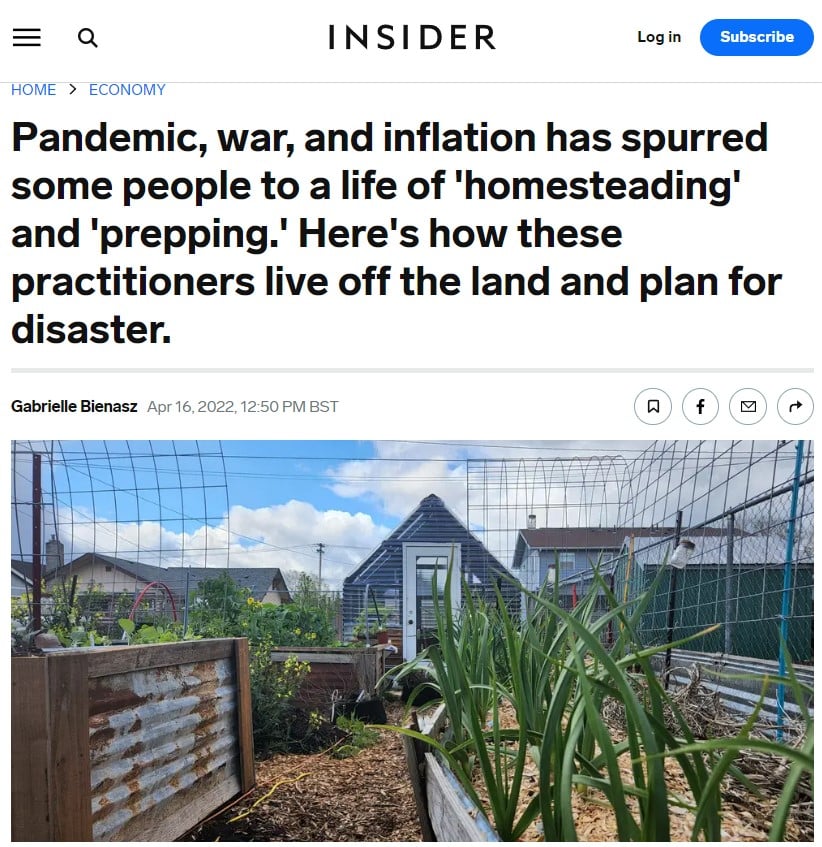
Business Insider says it's because of pandemic, war and inflation…they're partially right, but there's plenty more to it, least of which a disconnection from material desires to soulful fulfilment.
As we [society in general] race blindly toward a more technological and disconnected future, we cannot escape our familiar human desire for connection. As if deep down, we understand intuitively that the more we are pulled away from it, the more we long for its return.
I'm not sure if this is the never-ending dance of life, the great Tao in constant motion, or just the inevitable outcome of the cacophony of greed and corruption seeping through every layer of institution that people unknowingly abdicate to.
Either way, such disturbance in the force has caused more people to pay attention to things like:
- Economic uncertainty
- Health & wellness
- Escalating cost of living
- Survival & preparedness
- Community building
- Alternative energy
- Privacy & censorship
- Leading a more independent life
Which, when combined, create this perfect storm of incentives to motivate people to try and lead a more self reliant, self sufficient, independent life.
I dare say though, this groundswell of momentum towards becoming 100% self sufficient would not be possible if not for the advances in technology that make access to information so simple.
And therein lies the ultimate conundrum of self sufficiency; you can be self sufficient, as long as you have access to all the things that make it possible.
Ergo, are you really self sufficient at all?
What Makes Self Sufficiency So Appealing?
At different times throughout history, the appeal of self sufficiency has been more or less depending on the things going on in the world at that time.
I say world, but what I really mean is the immediate perceived geographical area of influence that the person (or civilisation) seeking self sufficiency resides. I'll expand on that idea a little later.
When there is apparent fragility in the established order, supply chains, economies, healthcare and education; the appeal to return to a more self sufficient way of life emerges strong.
When there is relative stability and quality of life is improving for most people, there is less interest in self sufficiency.
Today, in 2023, we find ourselves in this global, unstable world, where you can still order goods from pretty much anywhere and have them arrive at your door within a few weeks.
The access to information from any part of the world is instant, and that has the supplemental effect of making everything seem ‘local'. Problems 10,000 miles away make the ‘headlines', and all of a sudden, these problems become perceived as local.
At the same time, we know we can get whatever we need from this same endless spring of perceived local goods and services and therefore, we are enamoured to feel more confident about self sufficiency.
I touched on this in one of my foundational pieces, what is self sufficiency, but back in the day, say, around 3000BC, a civilisation was deemed to be ‘self-sufficient' because it had obtained the skill and resources to feed it's people from within its own borders.
Right now we don't feel like we have any borders, and this emboldens us to feel like we can be self sufficient because everything we need is available at the click of a button.
With that fundamental pre-requisite covered, we are lulled into a sense of being able to become self sufficient and are drawn to it as a consequence of the unstable world we find ourselves in.
What's Stopping You From Becoming 100% Self-Sufficient?
There are 3 common barriers that prevent people from becoming 100% self sufficient:
- Knowledge
- Resources
- Time
Lack of Knowledge
Not knowing how to be self sufficient is enough to put most people off the idea. A lack of basic skills like growing your own food, generating your own power, making your own money or looking after your own health is enough to keep people afraid to try.
And that really is the only true barrier when it comes to knowledge; fear. Knowledge is easy to come by. I have over 900 books about self sufficiency in my digital download which you can get instantly, right now, so there really isn't a good reason not to start learning.
Unless of course, it's not for a lack of desire, but a lack of resources available to acquire the knowledge (although I can't see how as there are plenty of free resources online – even here on this website you'll find 100s of free articles designed to help you become more self sufficient).
Lack of Resources
A lack of resources is probably the biggest reason why people are unable to get started in becoming 100% self sufficient. Or, at least, a lack of perceived resources.
Yes, it's true that land is over-priced and you can understand why it puts so many people off the idea of becoming self sufficient. Wages have been relatively stable for about a decade now so most people simply don't feel like they can afford it.
A lack of money is a depressing thing, especially when the frustration it creates by not giving you the opportunity you seek just eats away at you day after day.
I know, I've been there. But let me try and flip this a little by saying that the land you own is not the measure of how self sufficient you are.
Your self sufficiency is measured by how little you need to rely on external factors to get through life, and this is a far easier task to accomplish from an affordable base in an environment you are familiar with.
You see, in this familiar environment, you can learn to forage, find wild places to plant, learn how to store & preserve food, reduce your energy consumption and start taking more responsibility for your health.
You don't need 5 acres of your own land to do these things; you just need to be willing to do the thing you want to do wherever you are with authenticity, integrity and honesty and leave the rest to sort itself out in time.
The hardest part is just rolling your sleeves up and doing it. But that really is all it takes.
Once you start taking ownership over your income/expenditure and applying the principles of self reliance to your daily tasks, you will find that opportunities will open up for you.
Read our 10 tips to start your self sufficient life primer to get 10 ideas on where to start. Today.
Lack of Time
Yes, we are all time poor these days. It was probably designed that way to stop you from focussing on yourself because when you do that, you will realise that you can evolve beyond the nonsense and change your world.
So what to do?
You need to reclaim some of your time. Here's how:
- Make a list of your daily time expenses. Be as precise and accurate as possible, leaving no block of time unaccounted for.
- Break the time blocks down into two columns: required | optional
- Now add up all your optional time blocks. How much time do you spend on optional things?
- Which of the optional things are more important to you than becoming 100% self sufficient?
- Cut the rest.
If you can't find any to cut; you need to open up two extra hours each day. Could you stay up later 1 hour in the evening or wake up 1 hour earlier in the morning?
Don't say no until you've tried it.
Practical Challenges To Becoming 100% Self Sufficient
In addition to the psychological barriers, there are also some real practical challenges to becoming self sufficient – which is the entire purpose of this website: to help you overcome them.
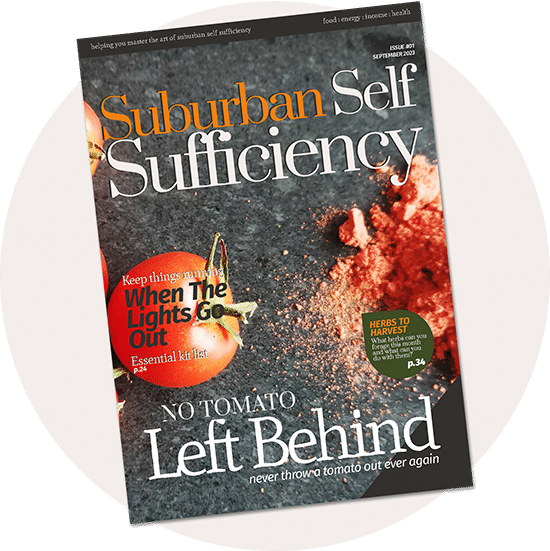
Here at Bournebright and the Self Sufficiency Magazine, we try to provide practical solutions to the 4 primary categories of skill gaps that prevent you from becoming more self sufficient; namely: Food, Energy, Income & Health.
Overcoming Food Self-Sufficiency Challenges
There are 4 big challenges when it comes to food self sufficiency:
- Land and Space: Acquiring enough land or space to grow enough food to keep you away from the stores can be a barrier for urban dwellers or those with limited access to arable land.
- Climate: Adverse weather conditions, such as geo-magnetic solar activity, geoengineering, radiation, droughts, floods, or extreme temperatures, can affect crop yields and food production.
- Expertise: Growing food efficiently at scale requires knowledge and experience in agriculture, which may necessitate a steep learning curve for beginners.
- Pests and Diseases: Managing pests and diseases organically can be challenging and may result in crop losses if not addressed promptly.
You can overcome them by being persistent, dedicated, but most of all, creative in your approach to solving them.
How To Overcome Land Problems
The biggest land problem is not having enough of it. But that's only a problem if you restrict your thinking to only eating food you grow that was only grown in land you own.
But there are other ways to overcome the land problem:
- Forage
- Rent someone else's land
- Do guerrilla gardening on public land (there's plenty of it)
- Hunt small game
- Fish
- Join a community garden (if none exist, start one)
All of these options don't require you to own your own land but add to your ability to be more self sufficient in food.
How To Overcome Climate Problems
With creative thinking and adaptation, you can overcome the most common climate challenges you face to growing your own food.
Here are a few options:
- Build a greenhouse or polytunnel (we made a course for this)
- Only grow what grows well in your area
- Grow indoors
- Keep animals that thrive in your climate
- Rotate your crops regularly
- Collect your own rainwater to mitigate dry seasons and high temperatures
- Mulch your soil and protect it
- Use shade and windbreaks in high heat areas
Although climate is unpredictable, you can do things to help yourself be more resilient in the face of changing seasons.
How To Solve Problems In Expertise
There are really only 2 ways you can solve a lack of expertise:
- Learn the skills you're missing
- Hire or work with others who already know how to solve the problem you're facing
I built Bournebright to help you learn the skills as I learnt them and to give you access to a self sufficiency community of likeminded people looking to do the same.
I also have a USB drive or an instant digital download to over 900 books about self sufficiency which contains most of the information you'll ever need to plug those gaps in knowledge.
As for hiring others to help you; perhaps there are people inside our community here who can help.
How To Manage Pests and Disease
Managing pests & disease is possible by applying a number of natural techniques without ever needing to reach for the insecticides or pesticides.
- Crop rotation
- Companion planting
- Healthy soil management
- Beneficial insects
- Natural predators
- Natural remedies
- Trap crops
- Crop covers
We won't cover them in this article as they each deserve a full guide on their own but as we add them to the website, I'll turn this list into links.
Overcoming Energy Self Sufficiency Challenges
The two primary groups of energy problem you face when trying to generate your own power are:
- Water Availibility
- Electricity Generation
By creating independent access to both of these resources, you are well on your way to beating one of the heaviest nooses around the neck. Here are some ideas.
How To Get Access To Your Own Water
You can get access to your own water by collecting it, diverting it or drilling a well for it.
Probably the easiest method to take control of is rainwater harvesting and we wrote guides about building your own rainwater harvesting system and collecting rainwater for drinking water which you should take a look at.
We even made some rainwater harvesting calculators to help you calculate how much rain you could capture from your source.
Other ways you can collect water are to divert it from a water course (either a stream, river, or even by using the natural lay of the land to create swales or berms that direct water to a certain point).
Of course, being able to implement these things depends on the type of land you're working with.
For most people in suburban areas though, rainwater collection is probably the easiest way to get started.
The final method is well drilling. You can drill a well in a relatively small land area and we'll add full guides to the website about how you can do this as we can but for now, there are still plenty of tutorials online and of course there is comprehensive information about well drilling on the self sufficiency USB drive.
How To Generate Your Own Electricity
You can generate your own electricity by using solar, hydro or wind power. For a small-scale urban setting, solar is probably your best bet.
I should say here though that before we even get into how to generate your own electricity, we first discuss that you need to generate a whole lot less once you start being more mindful about how much you consume.
If you cut down the amount you use, you'll need to generate less. This will bring the cost of your initial system down.
So, instead of thinking about ways to generate electricity, think about ways you can use less. That being said, the best way to figure out what system you need is to work out your current usage and go back from there.
How Much Electricity Do You Need?
We made several calculators for working out your energy consumption and you can find them on our how much electricity do I need calculator page.
Choosing The Right Solar Generator Setup
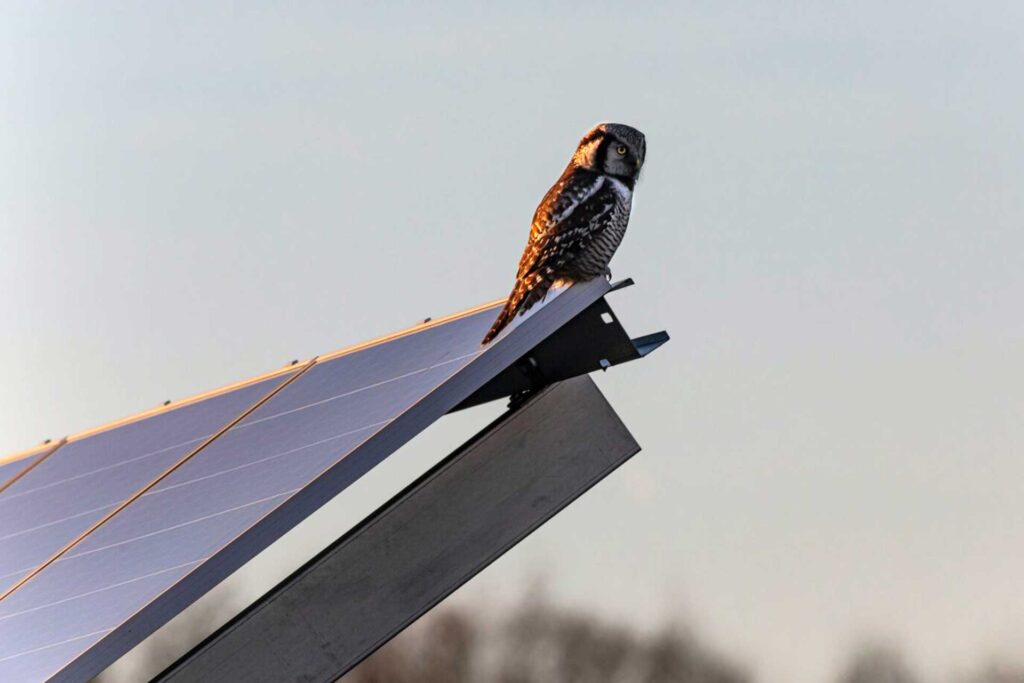
Once you have a rough estimate of your energy consumption, you can begin to choose the kind of solar generating system you need; most specifically, what kind and how many solar panels you'll need and how much storage you'll need to fulfil your demands.
There are an almost infinite number of ways to set up solar; some by installing fixed location solar panels on your property for large-scale electricity generation and others using small solar generators like the Jackery 3000 or Bluetti 500EP power banks.
I won't cover all of this in this article as this is a topic all on it's own and you can read about it in our guide to building your own off-grid solar electricity system – even when you're still ‘on the grid'.
Barriers To Energy Self Sufficiency
The initial investment required to buy the equipment, the skill required to install it correctly and the limitations of your location are the three primary barriers to using solar for electrical generation.
None of these barriers are insurmountable but may delay your being able to get set up as quickly as you like.
As with all things when it comes to becoming 100% self sufficient, don't sweat it, just do what you can with what you've got and keep moving towards your goal.
Challenges With Energy Self Sufficiency
The biggest challenges with creating your own solar energy are:
- Intermittent supply
- Maintenance costs
- Energy efficiency – try to reduce your consumption, don't expect to have access to the same amount of electricity as you would if you were grid-tied.
Reduce Effects of Intermittent Supply
The most common problem with a solar electricity generator system is the potential for intermittent supply. Solar panels by their nature require sunlight.
The only ways to reduce this effect are:
- Site the panels in the most appropriate location (south facing in Northern Hemisphere at an angle between 30 – 45 degrees aiming at the sun.
- Use solar tracking technology so that the panels follow the trajectory of the sun across the sky.
- Have enough battery storage so that you store as much as you possibly can on the good days.
Overcoming Income Self Sufficiency Challenges
In my experience, the biggest barrier to becoming 100% self sufficient is income. Or, more specifically, your ability to offer goods / services in exchange for payment so that you don't need to rely on anyone else to pay your way.
Now, you could say that even in full-time employment, you're still using your own skills to pay your way because it's your skills that landed you the job and I agree.
However, when I get asked ‘can you become 100% self sufficient?', the first thing that pops into my head is ‘yes, you can,' followed by ‘but how will you earn a living?'
The reason I think that is because if everything changes overnight and your job stops; some crisis happens that destroys the current system, what would you eat? how would you get food? what would you exchange for it?
The answer, for me at least, always comes back to what I can grow and what I can do and is the fundamental underpinning of all that I teach here at bournebright.
Thus, you have to find a way to make your own living and make money from your homestead, land or home.
We have an entire section of the website dedicated to this topic alone, but for quick reference, here are 10 quick ideas you could use to make money from your homestead or land:
10 Ideas To Help You Make Money From Your Homestead
- Worm Farming for Profit
- Creating NFTs
- Teaching What You Love via Outschool
- Breeding Rabbits
- Selling Chickens or Eggs
- Grow & Sell Your Own Mushrooms
- Make & Sell Your Own Herbal Teas
- Make & Sell Your Own Breads
- Make & Sell Your Own Fermented Foods
- Make & Sell Your Own Jams
In time, every single item in this list will have it's own guide and more in-depth instructions how you can make it happen.
There is also an entire section of bournebright dedicated to this one aspect of income self sufficiency and making money from your homestead.
Overcoming Being More Self Sufficient in Health
Being more self-sufficient when it comes to your own health is something our ancestors would never have even had to think about!
Today though, it involves taking proactive steps to maintain and improve your well-being while minimizing reliance on external healthcare services.
We've given up so much knowledge in our pursuit of convenience and it really is a shame. But we can take it back.
We created the Herbs & Remedies For Self Healing section of Bournebright for this purpose alone; to remember what our ancestors used to do to keep themselves healthy and live long and prosperous lives.
I can't cover everything here but I can give you a 13-point list of things you can do in your own life to take care of your own health and become more self sufficient with it.
13 Things You Can Do To Be More Self Sufficient About Your Health
- Educate Yourself
Knowledge is empowering. Learn about your body, common health conditions, and preventive measures. If you don't like learning, make connections with someone who does and has already studied this kind of holistic health approach. You'll find 100s of books about health on the Survival USB we sell in our store or you can save 20% and grab the instant digital download. It's also worth understanding your family medical history and genetics and any illnesses that might come down the line. - Cut Out Toxins
Cut out toxins. That's not just foods like seed oils, synthetic sweeteners and pretty much any food that comes out of a packet! It is also news, media and propaganda that seems only to exist to extort your energy and cause worry. It's all toxic. Cut it out. Exercise every day for just 30 mins; a nice walk in the morning before work on an empty stomach for 6 months will make the world of difference to your health (and weight). - Preventive Care
Food is the best medicine. By eating a well balanced diet (especially things you're not too keen on) you'll give yourself the best chance of creating an environment within your body for health to thrive. Eat food from all the food groups. A little of everything. - Access To Monitoring Equipment
There are plenty of tools you can access privately, either in your own home or a Health Hub, that can replicate the tests and services you receive when you're at a Doctors or a hospital like blood pressure monitors, oxymeters, glucose meters, and blood tests. By having access to these things in your private life, either on your own or somewhere you can go is a huge boost. - Build a Home First Aid Kit
Have a well-equipped first aid kit at home for minor injuries and illnesses. Know how to use it effectively, and consider taking a basic first aid course. - Learn About Herbal and Natural Remedies
Learn about natural herbal remedies and start collecting knowledge and books that can teach you how to use them. We have a dedicated section of the website just for this topic. We also have the Self Sufficiency USB with 100s of books about alternative remedies on it. - Keep Your Mind Clean
One of the biggest distractions/challenges we face in this modern world is that we are constantly bombarded by media of all kinds, mostly through devices that emit electromagnetic frequencies. You have to take time to get away from that negative influence and get out into the fresh air. Too much information is just noise. And there's nothing better for the soul than clean air and old trees. Practice mindfulness (or stillness, as I call it). - Learn Basic Healthcare Skills
Consider learning basic healthcare skills such as wound care, CPR, and how to administer common medications. This knowledge can be invaluable in emergencies and reduce your reliance on centralised health services. - Learn To Cook Your Own Meals From Scratch
Learn to cook nutritious meals at home, in bulk using whole ingredients that you prepare and cook yourself. If you've grown it yourself, even better! This not only promotes good health but also reduces your reliance on processed foods and the less processed foods you eat, the better your health will become. - Seek Out Holistic & Alternative Approaches
Don't limit yourself to only believing the allopathic medicine route. That's not to say you shouldn't include it in your treatment, you should, but alongside holistic, natural and alternative approaches such as traditional medicine, acupuncture, or chiropractic care. - Take Self-responsibility
Ultimately, you are the master of your own ship and if you don't sail it, others will. Advocate for your own health by asking questions, seeking second opinions, and being an active participant in your healthcare decisions. Keep accurate records of your medical history, medications, and treatments. - Be Ready For Emergencies with Emergency Preparedness
Prepare for emergencies by having a plan, stores of food, water, tools, skills, knowledge, essential medications, protective equipment, fuel, clothing, and important medical documents readily accessible in case of unexpected events. - Use Online Resources Whilst You Can
Whilst you have access to this wonderful resource known as the internet, use it to gather knowledge, make connections, buy tools, skills, join communities that can contribute to your overall journey towards a more self sufficient life. This website is an excellent starting point and from here you should be able to get signposted from the 100s of articles and guides we've written to where you can go to take the next steps.
Balancing Self Sufficiency With The Conveniences Of Modern Living
I find myself in this situation almost every day: should I really be using this piece of technology if I'm trying to become 100% self sufficient?
Like, for instance, right now on my laptop, typing away whilst being connected to the interent?
Or like yesterday, using an electric food dehydrator to dehydrate some plums I'd picked a couple of weeks ago?
Or even the Makita electric-powered jig saw I was using earlier today to make my mushroom shelves for when I start growing my own turkey tail mushrooms?
It's easy to get wrapped up in ideology and fall into the trap of becoming a ‘purist' in one thing or another but the truth is, you have to play the hand you're dealt and if you don't you'll find yourself at a distinct disadvantage when trying to reach your goals.
My goal is to become 100% self sufficient by the end of 2025.
Whether I get there or not is almost a moot point because the ultimate measurement for me is how much more self sufficient will I be then compared to how self sufficient I am now and will I be better prepared for whatever the future holds than the people around me.
If the answer is yes to both of those, then I'll be in a position I am personally satisfied with because I know how much hard work has gone into getting there but I'll also be able to help the people I love and care about when the time comes.
This, for me, is really all it has ever been about.
Can You Ever Really Be 100% Self Sufficient?
It's unlikely.
But you can always be more self sufficient than what you are now.