If you want to be more self-sufficient in suburbia; I've learned a few things over the last 10 years that will help you get further, faster.
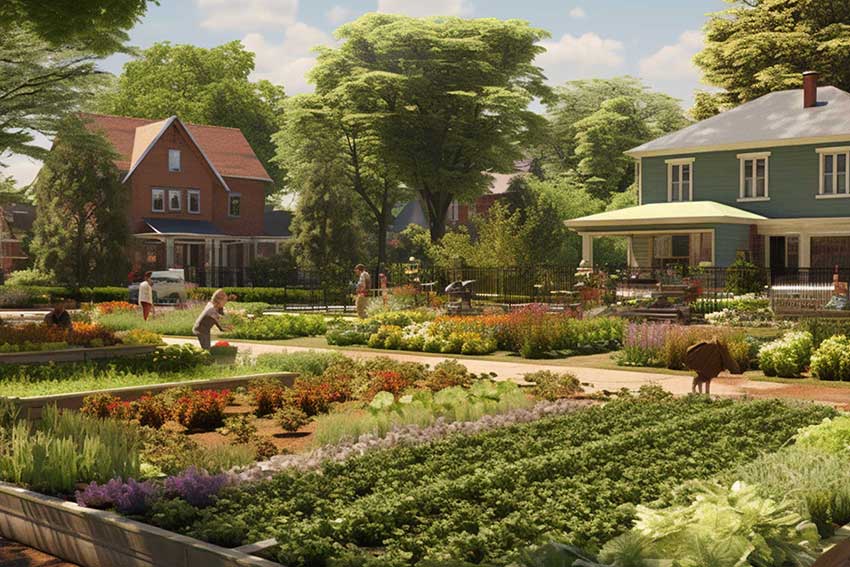
Back in 2010 when I started this journey into self sufficiency, I had a rose-tinted belief that I could grow all of my own food, generate all of my own power and disentangle myself from ‘the system' in a short few months.
How wrong I was.
It turns out food takes a long time to grow, energy gets used far quicker than it is generated and the system has leaching tentacles sucking the life and energy out of every aspect of society – and it really doesn't like it when you start to pull them off.
I've found that answering the question of whether or not you can be self-sufficient in a suburban setting largely depends on your definition of self-sufficiency. I wrote a whole article on what self sufficiency means to me and would encourage you to read it if you're thinking about going self sufficient.
Summarising though; for most people, it is the skill and ability to survive in the world with as little input as possible from external sources.
In the suburban setting where I am, that means relying on the supermarkets as little as possible, re-using and repairing things as often as I can, cutting down my energy consumption and earning a living without being dependent on the state to supply the infrastructure to keep my income coming in.
Of course, all of these things can be extrapolated to greater or lesser extents and if you want to get further faster on your own self-sufficiency journey, my advice is to not sweat the small stuff.
In other words; don't try and go ‘off grid' all at once; take a small piece of the pie and get really good at one of those aspects.
For example;
- If you currently go to the supermarket 5 times a week; try to plan so that you only need to go once a week.
- If you have your central heating automatically scheduled to turn on each morning and evening; try changing that to a manual setting.
- If you water your plants with tap water, make a plan to water them with rain water instead.
- And so on and so on; I'll go through some more specific examples later on.
Small chunks, one at a time, is a much more efficient way to become more self sufficient in a suburban setting than trying to eat the whole pie all at once.
After all, self-sufficiency is as much a mindset as it is a material and spiritual pursuit of independence.
In this article, I'm going to share the things I've learned over the last 5 years to help me become more self sufficient in a suburban setting so that you can get to where you need to be faster than I did.
Crashing The Myth Of Self Sufficiency In Suburbia
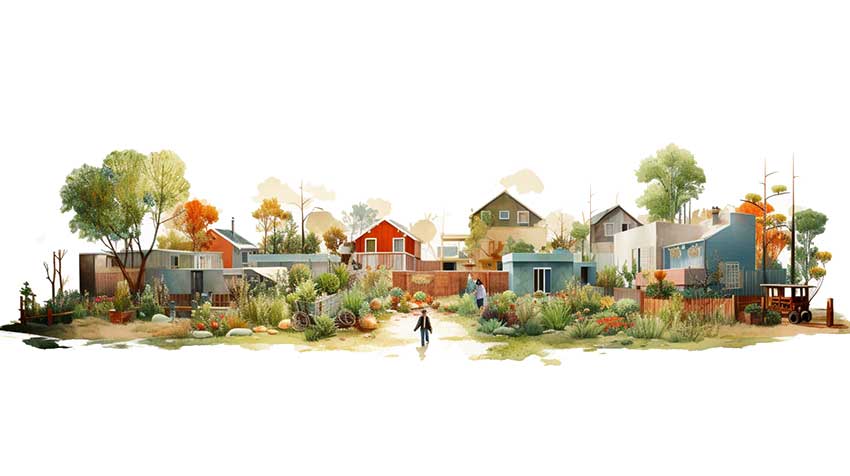
There is no such thing as complete self sufficiency. I crashed this myth in my can you live 100% self sufficient article.
But you can get pretty close – even in suburbia.
The first thing you need to appreciate is that all society is dependent to a greater or lesser extent on external inputs. All people, to be more precise. No man is an island is the popular idiom. It's true.
In suburbia, this truth is more apparent; with state-sanctioned infrastructure supplying power, communication, transport and water. Not to mention the 5-minute drive to the closest supermarket.
And that's fine. Don't beat yourself up over it. You're grid-tied and that's OK, you can always start disentangling yourself no matter what your starting point is.
In order to do that though, you first need to smash the myths and misconceptions about suburban self-sufficiency that have been holding you back thus far.
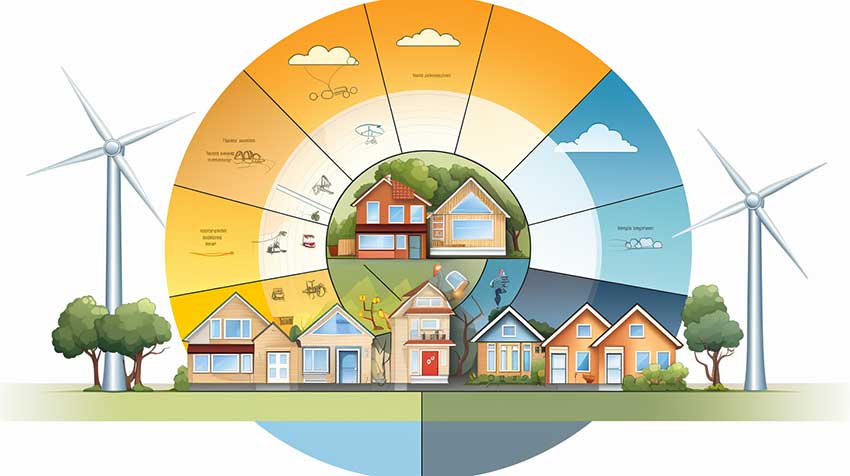
5 Common Misconceptions About Suburban Self-Sufficiency
- Limited Space Means No Self Sufficiency
- Too Many Laws & Regulations
- High Cost & Investment To Get Started
- Self-sufficiency Means Complete Independence
- You Need To Be An Expert To Get Started
Limited Space Means No Self-Sufficiency
Many believe that self-sufficiency requires vast acreage, making it impossible in suburban settings. The misconception is that without expansive land, it's unattainable.
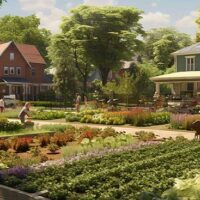
Reality: Suburban areas offer ample opportunities for self-sufficient activities like creative space utilization (vertical gardening, container gardening, and community spaces) or shared plots.
They also offer plenty of opportunities for foraging in the city, buying in bulk with friends and monitoring and reducing consumption.
Remember, becoming self sufficient in the city is not about becoming 100% independent, but rather, about continuously reducing the need to rely on external inputs for survival. Suburbia offers plenty of opportunities to do that!
Too Many Laws & Regulations
Some assume that suburban areas are heavily regulated, making it impossible to implement self-sufficiency practices due to homeowner association rules or local zoning laws.
Reality: While there might be some regulations, many communities have relaxed rules or allow for alternative solutions like rainwater harvesting, small-scale livestock, or community gardens with proper planning and adherence to guidelines.
There is also the ‘do it and ask for forgiveness later' tactic, which, admittedly, you shouldn't do with anything that costs a lot of money!
I'm personally at the point now where my family's well-being trumps any local zoning laws.
High Cost & Investment Required
One of the most debilitating misconceptions is that achieving self-sufficiency in suburbia demands massive financial investment in expensive equipment, technology, or extensive modifications to your home.
Reality: While there may be initial costs for some of the high investment items like solar power, greenhouses, or tools and equipment, most self-sufficiency activities can be started simply by being frugal and mindful in all that you do.
Simple DIY solutions, like composting, repairing, planting seeds wherever you can, joining a local community growing group or even a simple rainwater water-harvesting system cost very little and can significantly reduce your expenses.
Self-Sufficiency Means Complete Independence
Probably the biggest misconception is that being self-sufficient in suburbia means completely cutting off from the grid or relying solely on one's own resources, leading to isolation.
Reality: Self-sufficiency in a suburban setting often involves starting at a point of hyper-dependence and moving (one step at a time) towards independence.
It rarely happens all at once and you should take massive satisfaction at every step you take/achieve to reduce your reliance on external resources for survival.
You Need To Be An Expert To Get Started
Some believe that achieving self-sufficiency requires extensive knowledge, constant attention, and consumes too much time, making it impractical for busy suburban lifestyles.
Reality: Starting small with manageable projects and gradually learning through experience is exactly how you make self-sufficiency achievable within the illusory constraints of suburban life.
As with most things, you can overthink the outcome (or how to get there) so much that you fail to start at all through fear of the unknown.
Just get started. Expertise is relative and objective anyway.
The First Step To Suburban Self Sufficiency: Assessing Resources and Space
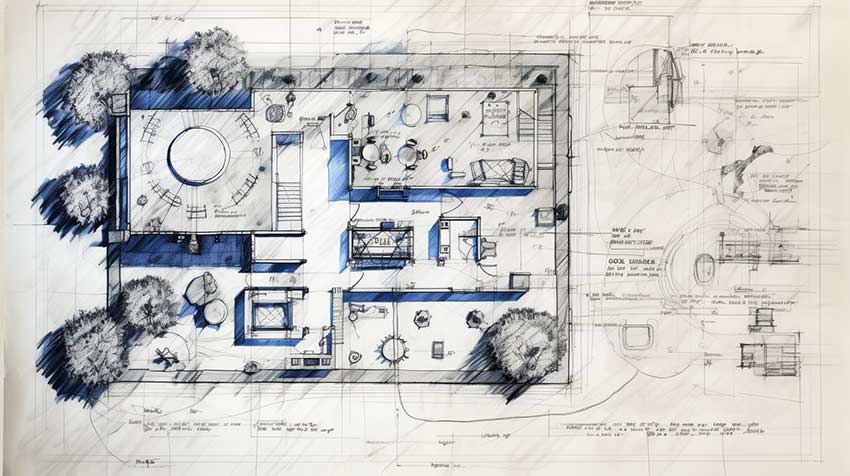
Whenever I talk to people about doing things to become more self sufficient (wherever they happen to be), I always assess things by these 6 axioms:
- Growing space
- Storage space
- Free time
- Alternative power potential
- Distance to foraging locations
- Distance to community growing locations
How much you have of each of these resources will determine which aspects of suburban self sufficiency you should focus on to begin with.
1. How Much Growing Space Do You Have?
Whether or not you have any space is not the determinate factor on whether or not you should grow anything at all.
I say this because you can learn to grow outside of your own garden/yard if you don't have the space to do so.
You can do this in a few ways:
- Guerilla gardening: planting food in public/open/common spaces or by being part of a community growing group.
- Growing indoors: growing food inside your home or garage.
- Shared gardens: use a platform like AllotMe to find garden plots near you where you can grow food in exchange for keeping the garden tidy
The amount of space you have access to is of course a factor in how much you can grow and where and what you grow.
I wrote an article not long ago showing 10 self sufficient garden plans that you can copy and inside that article are plans for all sizes of gardens including container gardens or small gardens.
Bottom line: You should never be put off simply because you yourself don't have a garden to grow your own food in. There are ways around it.
2. How Much Storage Space Do You Have?
Almost everyone I speak to thinks they have no storage space.
And almost everyone I speak to, after speaking to me, realises they have more than they thought!
Storage space is everywhere and in this example, I'm specifically talking about space to store food.
I have a garage and rather than use the garage for my car (which is approaching 12 years old now anyway!) I use the garage as a pantry. It's full of dried foods that I've dried using my dehydrator and canned foods (mostly canned using the water-bath canning process).
If you don't have a garage, that's OK, I have friends who store tinned and dried food in loft and attic spaces and some even under their lift-up mattresses.
Generally speaking, we tend to waste a lot of space too with things we don't need or by storing things inefficiently.
So, one of the first things to address when assessing storage space is how you're currently using it and really ask yourself if the thing you're storing needs to be stored or is being stored efficiently (like cereal in half-empty cardboard boxes rather than in smaller Tupperware tubs or glass jars for example).
If you still don't have any storage space
Don't worry, you can rent storage facilities for as little as $20 per month. The best ones for storing food are the shipping containers – either 10 or 20ft long with 24-hour access, 24-hour security and a solid lock.
3. How Much Free Time Do You Have?
For a lot of people; where they may be thin on space, storage or even money, they may well have a lot of free time to dedicate to self sufficiency and this is a major benefit.
If you have time to dedicate to any project, let alone one as important as self sufficiency, you are going to experience improvements in your life.
With time, you can learn things of real value, like the kind of things you'll find in the downloadable survival & self sufficiency books I have available here on the website.
These skills that you can learn are oftentimes more valuable than space or storage because you can trade those skills for the things you need, including food and space.
Don't ever underestimate the value of having free time to learn new things – and time is something you can have no matter where you are.
4. Alternative Power Potential
Wrapped up inside alternative power are predominantly 3 aspects:
- Solar power potential
- Wood fuel potential
- Rainwater harvesting potential
Now, I know every single house has the potential to collect rainwater. Different climates have different potentials and we catalogued those in our rainwater harvesting tables earlier, which show how much rainfall you can expect in your given location over a year (or month).
At the very least, rainwater harvesting is one alternative energy source that can move you one step closer to suburban self sufficiency.
In most cases, it is an inexpensive way to bring fresh water for drinking, washing or watering your garden into your home without requiring external resources from the ‘grid' (after the installation, of course).
I created a guide about how to set up your own rainwater harvesting system for drinking water over here which might be of help to get you started.
The other two potentialities are wood fuel for heating and cooking and solar power for electricity generation.
I want to point out here that I've not forgotten about hydro, thermal or wind but these are less likely to be relevant to most people and unlikely to be found in great quantity in a suburban area.
Assessing Your Home's Potential For Wood Heating And Cooking
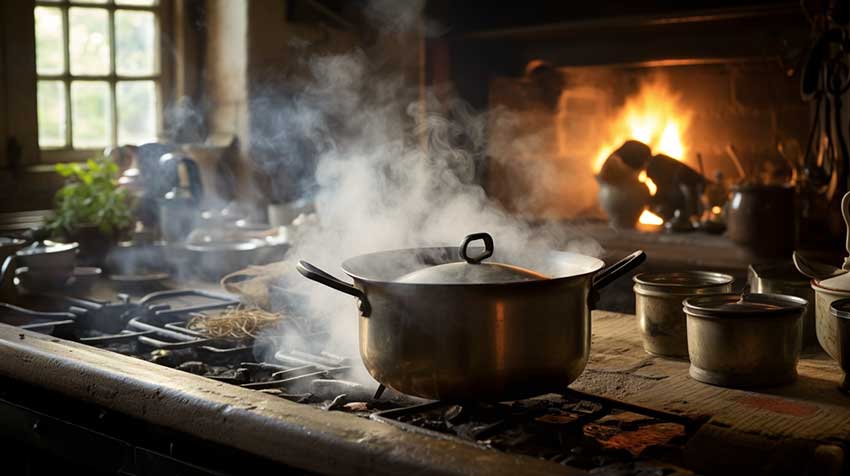
Some homes are more suited to wood fuel than others and this is one thing the suburban home tends to have going for it.
It has plenty of room to install a log burner or wood-fired open fire. This is not so easy when you're right in the city.
There are costs associated with that but if you're lucky, you may have an older home that already has a fireplace and chimney built in which you can upgrade from the mains-connected fire to an open wood fire – or fit an efficient solid fuel heating system into.
This kind of thing can double up as a heating element/cooker top so you could potentially have an excellent alternative energy source available.
Assessing Solar Potential
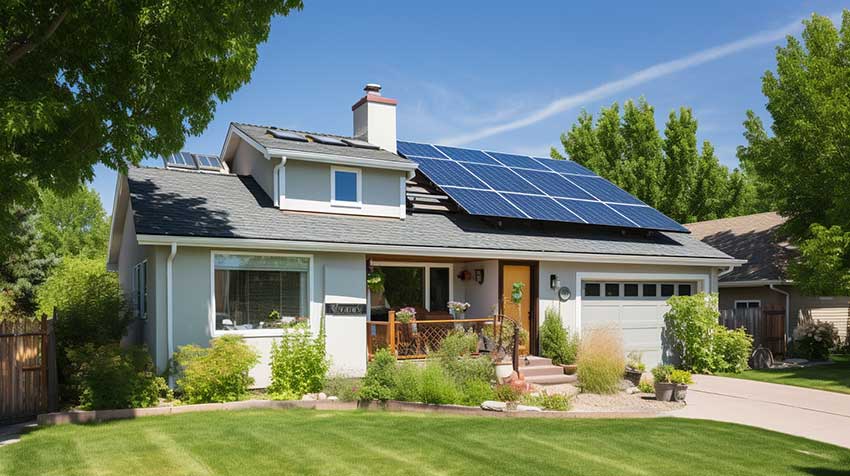
We're in this time where showing your ‘environmental credentials' is not only trendy, it's seen by most people as responsible too.
This brings great opportunities for solar panels to be fitted to your roof or housed in your garden.
Ideally, you want to have the ability to switch your home from grid-tied electricity to solar-generated electricity at the flick of a switch and not be tied into one of those schemes that ‘feedback' into the grid system.
If you have the resources to invest in a solar-powered system, get the help of an expert installer to build you such a system.
The predominant factor in assessing your solar potential is the orientation of your home or garden and whether or not you can capture enough sunlight to generate enough electricity to make the investment worth it.
If you can't, don't worry, focus on one of the other aspects of self-sufficiency that you can achieve.
5. Distance To Foraging Locations

One of the big things I assess, when someone asks me about being more self-sufficient in a suburban setting, is how far away from wild foraging locations are you?
Most people in Suburbia have ready access to wild places where foraging for herbs, fruits and nuts can take place or, if there's no foraging to be had, perhaps a spot of guerilla planting.
Where I am, I'm surrounded by woods and forests with some meadow in between as well as the odd spot of abandoned wilderness. That gives plenty of potential for foraging, whether that be mushrooms, fruit, nuts or even wild vegetables.
Even city dwellers usually don't have to travel too far to escape the confines of the concrete jungle and find some wild food growing.
Although, you could argue that city dwellers are surrounded by food – much of it going to waste, every single day.
6. Distance To Community Growing Groups/Locations

It's common when you're in a suburban setting that you don't have much access to land of your own.
Don't get discouraged. What is also common is that there are a lot of people who feel the same and have come together to form community growing groups in community gardens.
These groups fall into the category of ‘Mutual Aid Societies', a topic, I believe, that is essential to our path forward over the next few decades.
Mutual Aid Societies are groups of people that have come together to achieve a single objective which, in this case, could be to grow lots of food for the community.
One advantage you have as a suburbanite that rural folk don't have is that there is a plentiful supply of people relatively close to you who can come together to form these groups – all you need to do is find them or start them.
Practical Steps Towards Suburban Self-Sufficiency
Following your assessment; there are 4 practical things you can start doing right away to become more self-sufficient in suburbia.
- Change Your Food Consumption Habits
- Change Your Energy Consumption Habits
- Use Water Differently
- Join A Community Group
Change Your Food Consumption Habits
I'm writing this from my perspective, looking back to when I first started and one of the things I could have done quicker, more efficiently, was change my food consumption habits.
What I mean by that specifically is it took me a long time to break the cycle of popping to the supermarket every few days regardless of whether I had space to grow my own food or not.
What eventually broke that cycle was when I started preparing meals that could be canned using the water-bath canning method, frozen or dried.
By planning meals ahead of time, and planning meals that I knew would be fine to water bath can, I was able to buy ingredients in larger quantities for cheaper and make larger batches of meals that could be separated and stored for eating later.
The other benefit that emerged from this habit creation was that I became more familiar with the types of food I used at the time of year and this, several years later, began to inform my choice of what vegetables to grow in my garden and when.
The point is that once I started thinking about batch cooking and storing meals for the long term, my bad habit of nipping out to the supermarket every few days reduced to less than once per week.
Change Your Energy Consumption Habits
I arrived at this one a bit late too. Only when I started generating my own electricity, actually.
It took the process of generating my own electricity on a small Jackery portable solar generator to appreciate just how much energy is being used every day for the most seemingly mundane of things.
It sounds like hard work, I know, but start measuring how much energy your appliances use and work out how much they cost.
Start with a simple one like the toaster.
Once you know how to do this, it will change how you view energy consumption and you'll start to be far more proactive in conserving it.
How To Calculate Your Appliance's Energy Consumption & Cost
Energy Consumption = Power Rating (in watts) × Time Used (in hours)
Cost = Energy Consumption × Cost per unit of electricity (usually per kilowatt-hour, kWh)
Let's take a TV and a toaster as examples:
TV
- Power Rating: 150 watts
- Time Used: 4 hours/day
- Energy Consumption: 150 watts × 4 hours = 600 watt-hours (or 0.6 kilowatt-hours per day)
- Cost: If the cost per kWh is $0.15, then the daily cost would be 0.6 kWh × $0.15 = $0.09. Monthly cost would be around $2.70 (assuming 30 days).
Toaster
- Power Rating: 1200 watts
- Time Used: 0.5 hours/day
- Energy Consumption: 1200 watts × 0.5 hours = 600 watt-hours (or 0.6 kilowatt-hours per day)
- Cost: Using the same $0.15 per kWh rate, the daily cost would be 0.6 kWh × $0.15 = $0.09. Monthly cost would be around $2.70 (assuming 30 days).
Home Appliance Cost Calculator
If you'd like to do this for your own appliances to help you understand just how much energy you're using, I added this simple appliance calculator to help.
Use Water Differently
Water is a free resource.
I know. A strange concept in today's world.
Instead of paying the grid for your water, try collecting some of your own. You can collect your own water from the sky via a rainwater harvesting system, from the ground via a well or from water courses like rivers and streams if you're lucky enough to have one close by.
The Easiest Way To Reduce Your Water Bill
The simplest form of reducing your water usage is to stop using tap water to water any plants.
This may be easier said than done in some states where average monthly rainfall is low; but that's exactly the reason why you need to start thinking about how to collect it.
In this scenario, a rainwater harvesting system like the one used in my gravity-fed watering system would do the trick, capturing your water in the heavy rain seasons and storing it for use throughout the year.
Try to think intentionally about only watering your plants with free water and if you are able to keep it up for 28 days or more, it will shift your whole perception about water and you will see opportunities for self-sufficiency in suburbia everywhere!
Join A Community Mutual Aid Group
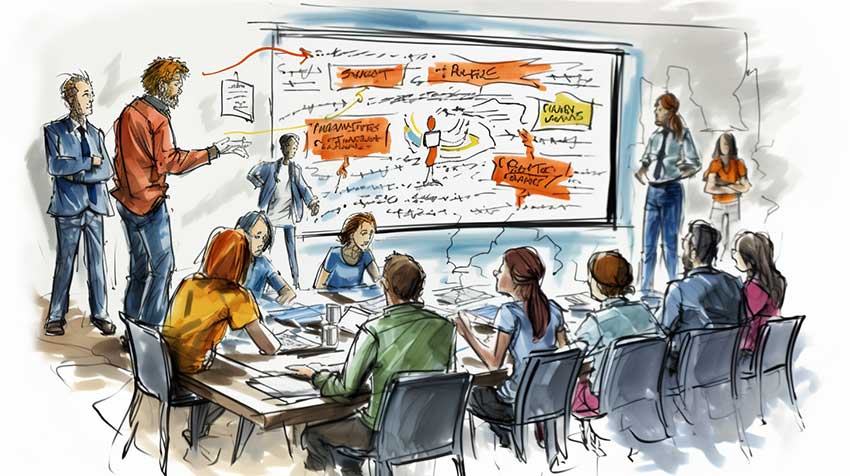
I don't see this one being mentioned when I catch sight of these ‘how to be self sufficient' listicles on the internet.
They all pretty much cover the basics of growing your own food, generating your own power or earning money from your homestead but very few talk about the shortest route to self-sufficiency (although it might sound antithetical to the ideology) – joining a group with common aims.
By doing this one simple thing, you will take a dramatic shortcut on your journey.
Mutual Aid Groups
Mutual Aid Groups can be dedicated to any particular objective from growing food to disaster training and whilst the very nature of a ‘mutual aid group' sounds the opposite of being self-sufficient, I encourage you to think differently about this notion
No one can ever truly be 100% self sufficient; but you can work with others of like mind to be more independent of the system in whatever aspect your group chooses to pursue.
For example; a mutual aid group could be a food co-operative, sourcing organic produce from local farms and distributing it amongst its members. Or it could be a first aid and trauma training group, teaching and sharing the skill of first aid, trauma response and so on.
Joining these groups removes you just one step further away from the ‘system' and the more of these steps you stack; the more self-sufficient you'll become; even in Suburbia.
If you'd like to get started stacking right now; you can download my survival and self sufficiency library here.
Share What You Know About Suburban Self Sufficiency
Do you know of other simple, practical things you can do to become more independent, resilient and self-sufficient in a suburban or urban area?
Please post a comment below with any links to your resources so others can benefit from your knowledge.
Thank you!