Even though I've been dehydrating food for a few years now, I still need to refer back to my dehydrator temperature notes to make sure I'm dehydrating at the best temperature for the finish I want.

I've found that in most cases, the best temperature to start with when you don't have a recipe is:
- 55 degrees Celsius (or 130F) for 10 hours for fruit.
- 60C (140F) for 10 hours for vegetables.
- 72C (161F) for 5 hours for meat.
- 40C (105F) for 2.5 hours for herbs & spices.
I know this because if I had a dollar for every spoilt batch of food I'd tried to dehydrate at the wrong temperature for the wrong amount of time, I'd have enough money to buy myself that 50 acre homestead in the country I've been dreaming about – no, not really, just kidding!
I might be able to buy that all singing, all dancing, cost-effective energy efficient dehydrator I always wanted though…
Wisely, throughout my failed food dehydration attempts, I kept a diary – or journal – as I went (this website is part of that process). I'm also lucky enough to have a huge library of old books about dehydrating food which I've downloaded, bought, bartered and been given and I added them to the Survival USB that you can buy from the supply store which I highly recommend you do.
Keeping a journal full of the different dehydrator temperatures I've tried helps me to remember the things that worked and the things that didn't otherwise I'd definitely still be spoiling my batches.
And believe me, that's a pain in the ass when you've just spent months growing your own fruit, hours harvesting it and even more minutes preparing it. It makes you feel like a total failure, like you've wasted all that time.
But you won't ever need to feel this way because in this guide, I'm going to share my best dehydrator temperatures for different food groups in the hope it gives you a shortcut to perfect dehydrated snacks and saves you the spoilage.
I'll constantly add to and update the temperatures as I try (and find) more recipes so be sure to bookmark this and come back again – or just follow me on twitter for updates.
Best Dehydrator Temperature For Drying Fruit

| Fruit | Temperature Range (°C) | Temperature Range (°F) | Approximate Drying Time |
|---|---|---|---|
| Apples | 51-57 | 125-135 | 6-12 hours |
| Bananas | 51-57 | 125-135 | 6-12 hours |
| Strawberries | 51-57 | 125-135 | 6-12 hours |
| Blueberries | 51-57 | 125-135 | 6-12 hours |
| Grapes | 57-63 | 135-145 | 22-30 hours |
| Cherries | 57-63 | 135-145 | 18-24 hours |
| Pineapple | 57-63 | 135-145 | 8-12 hours |
| Mangoes | 51-57 | 125-135 | 10-16 hours |
| Papayas | 51-57 | 125-135 | 10-16 hours |
| Peaches | 51-57 | 125-135 | 8-12 hours |
| Pears | 51-57 | 125-135 | 6-12 hours |
| Apricots | 51-57 | 125-135 | 8-12 hours |
| Plums | 51-57 | 125-135 | 8-12 hours |
| Kiwi | 51-57 | 125-135 | 6-10 hours |
| Cranberries | 57-63 | 135-145 | 10-16 hours |
| Oranges | 57-63 | 135-145 | 10-14 hours |
| Grapefruit | 57-63 | 135-145 | 12-16 hours |
| Lemon/Lime Slices | 57-63 | 135-145 | 8-12 hours |
| Raspberries | 51-57 | 125-135 | 6-12 hours |
| Blackberries | 51-57 | 125-135 | 6-12 hours |
Best Dehydrator Temperature For Drying Vegetables
| Vegetable | Temperature Range (°C) | Temperature Range (°F) | Approximate Drying Time |
|---|---|---|---|
| Bell Peppers | 57-63 | 135-145 | 6-12 hours |
| Carrots | 57-63 | 135-145 | 6-12 hours |
| Tomatoes | 57-63 | 135-145 | 6-12 hours |
| Zucchini | 57-63 | 135-145 | 6-12 hours |
| Green Beans | 57-63 | 135-145 | 6-12 hours |
| Onions | 57-63 | 135-145 | 6-12 hours |
| Mushrooms | 57-63 | 135-145 | 6-12 hours |
| Spinach | 49-57 | 120-135 | 4-8 hours |
| Broccoli | 57-63 | 135-145 | 6-12 hours |
| Cauliflower | 57-63 | 135-145 | 6-12 hours |
| Celery | 57-63 | 135-145 | 6-12 hours |
| Peas | 57-63 | 135-145 | 6-12 hours |
| Corn | 57-63 | 135-145 | 6-12 hours |
| Green Peppers | 57-63 | 135-145 | 6-12 hours |
| Cabbage | 57-63 | 135-145 | 6-12 hours |
| Asparagus | 49-57 | 120-135 | 6-10 hours |
| Eggplant | 57-63 | 135-145 | 6-12 hours |
| Beets | 57-63 | 135-145 | 6-12 hours |
Best Dehydrator Temperature For Drying Meat
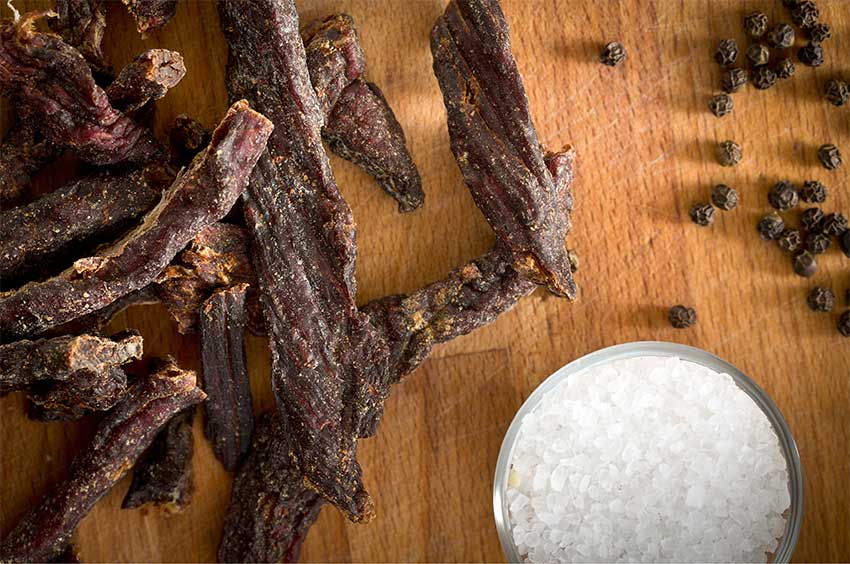
Although meat will dry into jerky at the temperatures provided below, it is recommended by the Food Safety & Inspection Service FSIS that all meat be dried internally to at least 160F to reach the ‘lethality' temperature to kill off salmonella bacteria.
To achieve this, you should set your dehydrator temperature to 165F and use a probe to measure the internal temperature of your meat.
One way you can do this is to cut one of your jerky pieces double the thickness and use that as your probing meat. Once it has achieved 160F internal temperature, then logic dictates the thinners slices will have to.
| Meat | Temperature Range (°C) | Temperature Range (°F) | Approximate Drying Time |
|---|---|---|---|
| Beef (Jerky) | 63-68 | 145-155 | 4-10 hours |
| Turkey (Jerky) | 63-68 | 145-155 | 4-10 hours |
| Chicken (Jerky) | 63-68 | 145-155 | 4-10 hours |
| Pork (Jerky) | 63-68 | 145-155 | 4-10 hours |
| Fish (Jerky) | 54-57 | 130-135 | 4-8 hours |
| Ground Beef | 63-68 | 145-155 | 4-10 hours |
| Sliced Ham | 54-60 | 130-140 | 4-8 hours |
| Turkey Slices | 54-60 | 130-140 | 4-8 hours |
| Chicken Slices | 54-60 | 130-140 | 4-8 hours |
| Salmon | 54-57 | 130-135 | 4-8 hours |
| Trout | 54-57 | 130-135 | 4-8 hours |
| Venison | 63-68 | 145-155 | 4-10 hours |
| Bison | 63-68 | 145-155 | 4-10 hours |
| Duck | 63-68 | 145-155 | 4-10 hours |
| Lamb | 63-68 | 145-155 | 4-10 hours |
| Jerky Mix (Mixed Meat) | 63-68 | 145-155 | 4-10 hours |
| Bacon Strips | 57-63 | 135-145 | 4-8 hours |
| Pork Chops | 57-63 | 135-145 | 4-8 hours |
| Chicken Breast | 57-63 | 135-145 | 4-8 hours |
| Sausage | 57-63 | 135-145 | 4-8 hours |
Best Dehydrator Temperature For Drying Herbs & Spices
| Herb/Spice | Temperature Range (°C) | Temperature Range (°F) | Approximate Drying Time |
|---|---|---|---|
| Basil | 35-40 | 95-105 | 1-4 hours |
| Oregano | 35-40 | 95-105 | 1-4 hours |
| Rosemary | 35-40 | 95-105 | 1-4 hours |
| Thyme | 35-40 | 95-105 | 1-4 hours |
| Parsley | 35-40 | 95-105 | 1-4 hours |
| Cilantro | 35-40 | 95-105 | 1-4 hours |
| Dill | 35-40 | 95-105 | 1-4 hours |
| Sage | 35-40 | 95-105 | 1-4 hours |
| Mint | 35-40 | 95-105 | 1-4 hours |
| Chives | 35-40 | 95-105 | 1-4 hours |
| Bay Leaves | 35-40 | 95-105 | 1-4 hours |
| Tarragon | 35-40 | 95-105 | 1-4 hours |
| Lavender | 35-40 | 95-105 | 1-4 hours |
| Marjoram | 35-40 | 95-105 | 1-4 hours |
| Coriander (Seeds) | 40-50 | 105-120 | 1-4 hours |
| Fennel (Seeds) | 40-50 | 105-120 | 1-4 hours |
| Mustard (Seeds) | 40-50 | 105-120 | 1-4 hours |
| Cumin (Seeds) | 40-50 | 105-120 | 1-4 hours |
| Red Pepper Flakes | 40-50 | 105-120 | 1-4 hours |
| Garlic Powder | 40-50 | 105-120 | 1-4 hours |
Why Do Temperatures Vary So Much?
The basic premise with dehydrating food is to remove enough moisture from the food so that bacteria cannot form or grow.
Different food groups contain different moisture content and that essentially is the reason why some foods take longer to dehydrate than others.
Other factors that will affect drying times are the thickness of the cut, the circulation of the air inside the dehydrator and the positioning of food inside the dehydrator (close together vs far apart for eg).
Is There An Optimal Dehydrator Temperature?

Unfortunately, there is not a single optimum temperature that you can apply to all food or even all food types of the same group as so many other factors contribute to the total drying time.
Things like size of cut, chemical makeup of the food, quality of the dehydrator, air circulation and how you position the food all play a part.
The only real way to find your optimum drying temperature and time is to experiment with your favourite foods and record your winning recipes.
The information in this guide will give you a starting point based on my times.