
Learning how to harvest stinging nettle properly will give you access to one of Nature's most abundant and potent [free] herbal medicines we have.
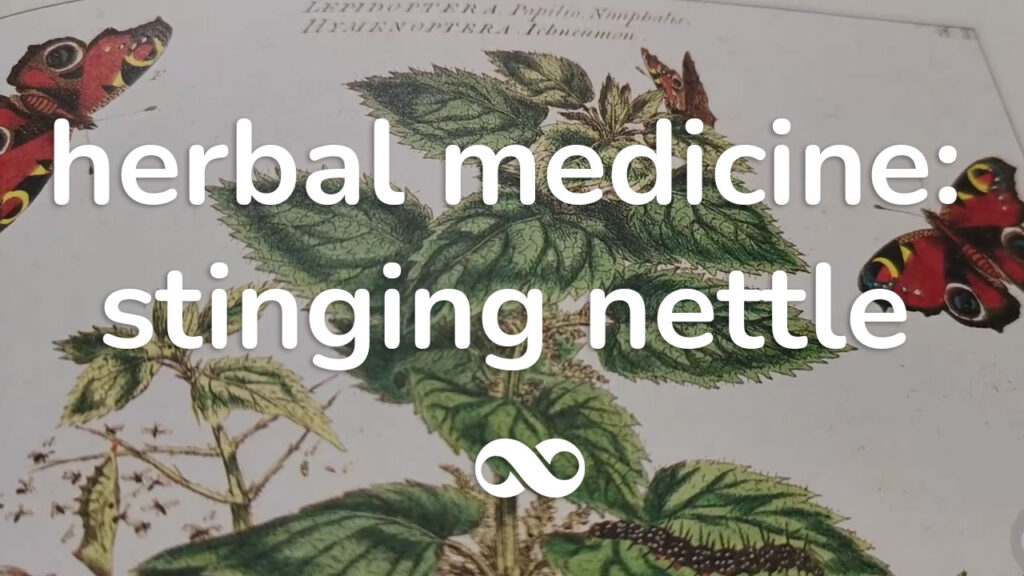
When was the last time you innocently brushed past a stinging nettle only to find yourself cursing profanities at how it somehow managed to surprise you and leave you with that all too familiar tickling, stinging, tingling sensation – and maybe a few red lumps?
Yes, the humble nettle; the silent attacker whose real secret is not hidden in the chemicals that sting you, but in it's powerful use as an effective herbal remedy from a time gone by.
A time before Rockefeller hijacked the medical system and shut down all the naturopathic, homeopathic and herbal clinics and replaced them with the medical ‘system' you are more familiar with today.
You have to dig through some dusty old tomes and seek the counsel of sage herbalists to get to the root of herbs and natural remedies. Luckily for you, I've been collecting old books for years so discovering the secrets of the stinging nettle wasn't too hard to do.
The humble stinging nettle is found almost everywhere but it is especially abundant in those plots of land that seem unkempt and abandoned – making it perfect hunting for the novice forager.
Stinging Nettle Medicinal Properties
The humble and betrodden stinging nettle doesn't get the love it deserves in our modern world for the properties it holds.
Yet, for as long as I've been able to trace my herbals back, the stinging nettle (urtica dioica) was always revered by herbalists for it's medicinal benefits.
Chief amongst those were its energy changing properties and its ability to stop minor bleeds – both internal and external.
“As an arrester of bleeding, the Nettle has few equals and an infusion of the dried herb, or alcoholic tincture made from the fresh plant, or the fresh Nettle juice itself in doses of 1 to 2 tablespoonfuls is of much power inwardly for bleeding from the nose, lungs or stomach.”
A Modern Herbal, Mrs M. Grieve
The Romans were said to have collected nettles from the side of the road as they marched to create “whacking bushes” to prevent against the symptoms of rheumatism. As they marched, they would whack themselves in the legs to stimulate blood flow to the rheumatic areas of the legs.
I took this snapshot from David Hoffman's Holistic Herbal book which has a bit more specific detail.

Properties taken from David Hoffman's Holistic Herbal.
If you don't already own some physical herbal books, I'd recommend you buy some from independent bookshops before access to this information is lost to us forever.
How To Harvest Stinging Nettle
You can harvest all parts of the nettle for use.
Harvesting Nettles for Drying
If you want to collect the herb for drying and storing for use when you need it, you'd be best to collect in May or June, just before coming into flower.
You should also wear some gloves to prevent against the sting which, whilst not dangerous, can be an irritant. If you do happen to sting yourself, you will usually find a patch of Dock Leaves nearby which can ease the sting if crushed up and rubbed onto the area.
It would also be beneficial if you collected the herb on a fine day, in the morning, when the sun has dried off the dew.
Cut off just above the root, making sure to cut away any insect-eaten or stained leaves and tie about 8 nettle plants in a bunch.
Spread them out fan-like, so the air can pass between them and hang them up either outside in a warm but shaded place or inside in a sunny, warm room – making sure to leave any windows open for airflow.
Harvesting Fresh Nettles
If you want to eat or drink stinging nettles fresh, you should harvest the leaves in the spring (May) or early summer (June) when the young tops are about 6 – 8 inches high.
To do this, simply cut off a bunch of leaves as required, spreading your cuttings across many plants so as not to take too much from any one.
How to Identify A Stinging Nettle
The common stinging nettle has heart-shaped, finely-toothed leaves tapering to a point, and green flowers in long, branched clusters springing from the axils of the leaves.





I like this learning the herbal way. Where do you find books and which do you recommend starting with? Denise
P.s. may keep me busy and off Twitter….
Hello Denise,
I made a list of all the herbal books I own and use. You can see them here.
I bought all mine from second-hand book shops and car boot sales (garage sales).
Mrs Grieves Herbal and David HOffman are good starting points. Also maybe Bartram’s encyclopedia.
Good luck!