Are you looking for an easy way to pick apples high up in the tree? Then stick around, because in this guide I'll share 5 of the best tools I've come across for picking apples when they're too high to reach.

If you've never tried picking your own apples before or had the pleasure of biting into one fresh from the tree, you're missing out on one of nature's sweetest treats.
Nothing beats biting into a wild crunchy apple that explodes into fresh apple juice because 1) it might be the best apple you've ever tasted and 2) there is something spiritually soulful about enjoying nature's bounty fresh from the vine.
Such reward is a feeling that most of us seem to have forgotten these days; but perhaps all that is about to change?
The only problem: picking apples when they're high up in the tree can be both dangerous and daunting if you've never done it before or you don't have the right tools for the job.
Is It Dangerous To Pick Apples High Up In The Tree?
I know apple picking doesn't strike you as one of the world's most dangerous activities but believe me, sometimes the temptation of the apple can be too much for some to do it safely.
I've heard of ladders being set up on uneven ground and tipping over when apples are being picked and I'm sure you've heard of at least one person who has fallen out of a tree to a broken bone!
The most common thing that tends to happen though is branches get snapped as they get climbed on or pulled down and this can be dangerous for the person climbing or anyone else beneath.
Not to mention it's just not very respectful to the tree to climb all over it and snap branches to satisfy your urge.
The point is, you don't need to hurt yourself or be disrespectful to the tree to pick apples high up; just use one of these 5 safe methods and you can enjoy the best apples from the top of the tree without hurting yourself in the process.
Before You Harvest Your Apples
Regardless of the 5 methods for picking apples high up that we're going to cover below, there are some basic harvesting tools and practices that you should have ready for the season:
Basic Harvesting Tools
- Set of specialist pruning ladders for extra stability on uneven ground
- Bags or baskets for your apples ( I just re-use shopping bags)
- Long trousers or shirts to stop you getting scratched as you work
- Gloves with good grip
Before the harvest season arrives, make sure you check your equipment thoroughly.
Are the ladders still in good working order? Are the gloves still gripping? Baskets still holding firm?
Tools in tip top condition make the job so much easier.
Best Practices For Picking Apples High Up
There are also some tried & tested best practices for picking apples when they're high up that have been used by orchardists and apple-growers for centuries:
- Be as efficient as you can be when you are up the ladder: minimum movement, maximum picking
- It's good to have a partner helping out
All this being said, let's get into the best tools I've come across to help you pick apples high up safely and efficiently.
Tool #1: A Long-Handled Fruit Picker

A long-handled fruit picker or telescopic fruit picker is basically a long pole with a basket on the end with some blunt metal ‘fingers' at the edge.
The technique for using the tool is to hook the metal fingers between the branch and the apple and gently pull the apple off into the basket.
Some of these tools come with detachable baskets that can hold 4 or 5 apples whilst some come with a fixed ‘claw' that can only pick one apple at a time.
There are also DIY apple pickers that do the same job that are essentially a plastic bottle attached to the end of a broom handle and there plenty of videos showing you how to make one.
DIY Long-Handled Fruit Picker
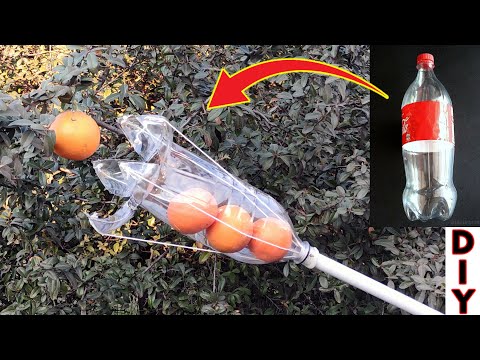
Best Technique for picking apples high up with a long-handled fruit picker
The basic technique is simple:
- Hook the fingers of the picker between the apple and the branch
- Give the apple a gentle flick & twist by twisting and pulling on the handle of the picker at the same time.
- The apple should drop into the basket.
Pros and Cons Of Using a Long-Handled Fruit Picker
| Pros | Cons |
|---|---|
| Enhanced Reach | Limited Precision |
| A long-handled fruit picker allows you to access and pick apples that are out of arm's reach, even from the ground. | It can be challenging to accurately target and pick a specific apple among a cluster using the picker's basket. |
| No Climbing Required | Risk of Dropping Apples |
| You can avoid climbing the tree altogether, reducing the risk of falls or injury. | Mishandling the fruit picker might lead to accidentally dropping apples from a height, causing bruising or damage. |
| Minimized Tree Impact | Dependency on Tool Quality |
| Using a fruit picker is less likely to damage the tree compared to climbing or vigorous shaking. | The effectiveness of the fruit picker heavily depends on its quality and design. A subpar tool might not work well. |
| Less Physical Strain | Access Challenges in Dense Foliage |
| Picking apples with a fruit picker requires less physical effort than climbing or shaking methods. | Dense foliage might obstruct the picker's access to some apples, especially if they are deeply nestled within the branches. |
| Applicable to Most Tree Types | Time-Consuming for Many Apples |
| Fruit pickers are versatile and can be used for a wide range of tree types and sizes. | If you have a lot of apples to pick, using a fruit picker for each one can be time-consuming. |
| Gentle Handling of Apples | Single-Apple Focus |
| The picker's soft basket cradles the apple as you pick it, reducing the chances of bruising or damage. | The tool is best suited for picking one apple at a time. Gathering larger quantities may be slower. |
Tool #2: Long-Handled Pole Pruner
Pole pruning is a method of using an extendable pole to prune or cut off small branches – usually no greater than about an inch or so in diameter.
It's not often associated with fruit picking but you could use a good pole pruning tool like this one from Fiskars to reach up to 12′ foot without ever climbing a tree limb and cut off fruit at the stem.
You'd just need to be really good at catching as it fell or have something soft for it to land on if you have any plans to store the apples. Bruised apples won't store.
Best Technique For Picking Apples High Up With A Pole Pruner
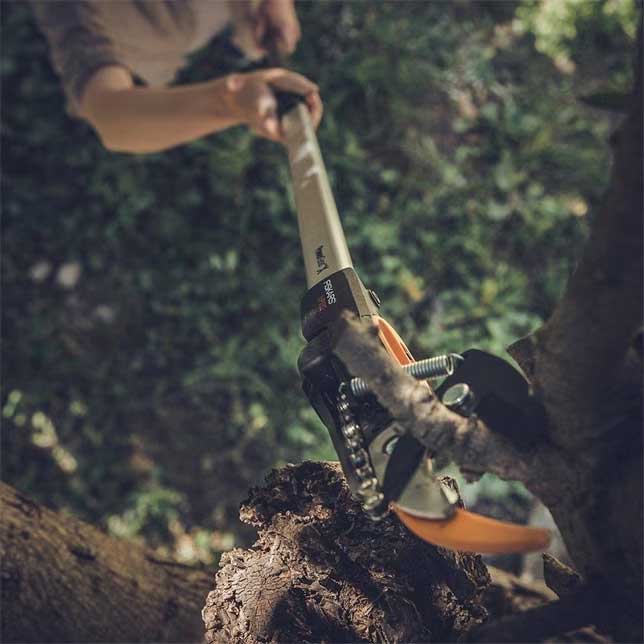
The technique for fruit picking with a pole pruner is very similar to the long-handled fruit picker, except instead of catching the fruit in the basket, you'll be cutting it off completely.
To do this well, you'll need a pole pruner like the Fiskars Pruning Stik that allows you to adjust the angle of the pruning head to about 90 degrees.
Once the pruning head is at a right angle, you can position it between the branch and the fruit before cutting the stem to free the apple.
I'd even recommend giving the apple a little twist before you cut it to see if it falls off of its own accord.
Pros and Cons Of Using a Pruning Pole To Pick Apples
| Pros | Cons |
|---|---|
| Extended Reach | Limited Precision |
| A long-handled pole pruner allows you to reach apples that are high up in the tree without climbing or shaking. | It can be challenging to selectively pick a specific apple when dealing with clusters or dense foliage using the pruner. |
| No Climbing Required | Risk of Fruit Damage |
| Avoid climbing the tree, reducing the risk of falls and injury. | The cutting action of the pruner might damage the apple or the branch it's attached to if not used carefully. |
| Minimal Tree Impact | Dependency on Pruner Quality |
| Using a pole pruner can minimize the impact on the tree compared to more aggressive methods. | The efficiency and effectiveness of the pruner depend on its design, sharpness, and quality. |
| Safer than Climbing | Obstruction in Dense Foliage |
| Picking apples with a pole pruner eliminates the need to climb, making it a safer option. | In trees with dense foliage, the pruner's reach might be limited, making it hard to access certain apples. |
| Efficient for Single Apples | Additional Handling Required |
| It's effective for picking apples individually or in smaller quantities. | After cutting, you might need to gently guide the apple down to the ground or catch it with a tarpaulin or basket. |
| Suitable for Most Trees | Not Ideal for Large Quantities |
| Long-handled pole pruners can be used on various tree types and sizes. | If you have a significant number of apples to harvest, using a pruner for each one could be time-consuming. |
| Gentle Handling of Apples | Risk of Missing Ripe Apples |
| When used correctly, the pruner can provide gentle handling of the fruit, minimizing damage. | It might be difficult to identify ripe apples from a distance, potentially leading to unnecessary cuts. |
Tool #3: Lightweight Extension Ladder
Using an extension ladder sounds like the easiest method to pick apples high up doesn't it? But in reality, when you're out in the wild, you're not often carrying your ladder with you!
There are of course some excellent product choices these days for lightweight extension ladders but even then, very few are suitable to carry around with you as you hike.
They do, however, give you all the height you'd need to pick apples as high as 15′ from the ground.
Tips for Positioning, climbing and picking
When you position your ladder, there are a couple of things you should consider:
- You need to make sure it's on stable footing
- Try and position the ladder in such a way that you can collect as many apples as possible without having to reposition it.
Sometimes, apple trees grow on slopes and the traditional extension ladder doesn't always afford the greatest stability.
In these circumstances, you can use a pruning ladder or tripod ladder, which give you 3 legs instead of two and are extendable/retractable so you can have stability even on slopes or steps.
Pros and Cons Of Using An Extension Ladder To Pick Apples High Up
| Pros | Cons |
|---|---|
| Increased Height Reach | Requires Set-Up Time |
| Extension ladders can provide access to higher branches that might otherwise be unreachable. | Setting up an extension ladder takes time, which can be less efficient when picking from multiple trees. |
| Stability | Limited Mobility |
| Extension ladders are designed to be stable and secure when positioned correctly. | Once positioned, the ladder may be stationary, making it challenging to move around the tree. |
| No Climbing | Space and Obstacle Constraints |
| You can access high branches without needing to climb the tree itself. | The ladder might not fit well in tight spaces or around obstacles like branches or uneven terrain. |
| Relatively Inexpensive | Storage and Transport |
| Extension ladders are more affordable compared to some specialized equipment like bucket lifts. | Storing and transporting a ladder might be cumbersome, especially for longer ladders. |
| Suitable for Most Trees | Risk of Falling |
| Extension ladders can be used for a variety of tree types and sizes. | If not properly secured or used, there's a risk of falling from the ladder. |
Tool #4: Tarpaulin Tree Shaking

This is a tool & method used mostly by commercial apple growers to get the apples high up on the tree off and onto the ground quickly.
Basically, you position a tarpaulin (or two) beneath the tree and give it a good shake with a long hooked pole. Your pole pruner or fruit picker should be able to do the shaking for you.
It increases your apple picking efficiency for two reasons:
- You can shake down a lot of apples in a short space of time.
- You can harvest multiple trees more efficiently because you can shake off one tree onto the tarp and pull the tarp to the next tree and the next tree until you reach your last tree then collect altogether.
Safety Considerations Of Using the Tarpaulin & Shake Method
There aren't many safety concerns to be truthful; just make sure you stay out of the way of falling apples and clear of any branches that might get accidentally snapped on shaking.
Pros and Cons Of The Tarpaulin & Shake Method
| Pros | Cons |
|---|---|
| Efficient Harvesting | Limited Precision |
| Catching fallen apples on a tarpaulin beneath the tree allows you to quickly gather a large quantity of fruit. | Shaking the tree vigorously might lead to more apples falling than intended, potentially causing damage or bruising. |
| Reduced Risk of Damage | Potential for Tangled Fruit and Debris |
| The tarpaulin cushions the fall of apples, reducing the likelihood of bruising or damage. | Apples might get tangled with leaves, branches, or debris on the tarpaulin, requiring additional sorting later. |
| Time and Energy Saving | Requires Set-Up and Cleaning |
| Collecting apples from the tarpaulin is faster and less physically demanding than picking each apple individually from the tree. | Setting up the tarpaulin and cleaning up fallen leaves and debris afterward can take time. |
| Ease of Gathering | May Not Work for All Tree Types |
| The tarpaulin provides a clear visual of the gathered apples and makes it easy to transport them. | This method might not be suitable for trees with very thick foliage or complex branching patterns. |
| Good for Bruised Apples | Weather Dependency |
| Fallen apples on the tarpaulin are less likely to get bruised compared to those falling directly onto the ground. | Weather conditions like wind or rain could impact the effectiveness of using a tarpaulin. |
| Applicable to Various Trees | Risk of Over-Shaking |
| This method can be used for different types and sizes of trees. | Excessive shaking might lead to more apples falling than you can efficiently gather, potentially wasting fruit. |
Tool #5: Your Partner
Ok, you got me, this isn't a tool – it's more of a technique. Sometimes the easiest way to pick apples when they're high up on a tree is to simply ask a friend to give you a good old-fashioned boost.
It's important when you do this to get the technique right and that the booster is strong enough to hold the boosted long enough to pick whatever apples he can.
It's also important that you choose the right spot to boost where the picker can get the most apples without you having to move.
How To Boost A Partner Higher
Just like when lifting heavy objects, you should use a similar technique for boosting your friend.
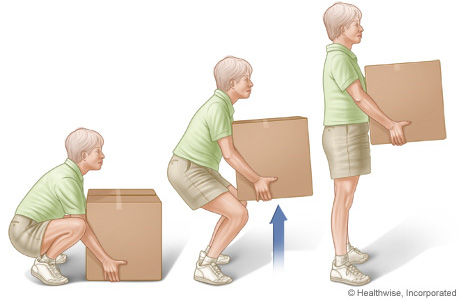
- Interlock your fingers with thumbs pointing out and palms facing up.
- Squat down to the appropriate height so your partner can step onto your hands easily
- Straighten your legs whilst keeping your hands interlocked together and lift your partner higher.
Pros and Cons Of Lifting a Partner
| Pros | Cons |
|---|---|
| Increased Reach | Requires Two People |
| Lifting a partner can extend their reach and access higher branches that may otherwise be difficult to reach. | This method requires at least two people to coordinate and ensure safety. |
| No Climbing Needed for Picker | Potential Safety Risks |
| The picker doesn't need to climb the tree, reducing the risk of falls and injuries. | Both the lifter and the picker need to be cautious to avoid accidents or falls. |
| Simple and Low-Tech | Limited Precision |
| This method doesn't require specialized tools, making it simple and accessible. | It might be challenging to accurately target and pick specific apples among clusters. |
| Good for Small Quantities | Risk of Dropping Apples |
| Lifting a partner is efficient when picking a smaller quantity of apples. | The picker might accidentally drop apples while picking or handling them. |
| Teamwork and Collaboration | Physical Strain on Lifter |
| Lifting a partner encourages teamwork and collaboration in the harvesting process. | The person lifting needs to support the weight of the picker, which can be physically demanding. |
| Interaction and Communication | Not Suitable for All Trees |
| Both the lifter and picker need to communicate effectively for a successful harvest. | This method might not be suitable for very tall or wide trees, as stability could be compromised. |
| Safer than Climbing for Picker | Time-Consuming |
| The picker is not exposed to the risks of climbing, making it a safer option. | The process of lifting, positioning, picking, and lowering can take time. |
| Applicable to Various Trees | Coordination Required |
| This method can be used on different types and sizes of trees. | Effective coordination between the lifter and the picker is crucial for success. |
Special Tips for Really High Branches
If you still can't reach your apple with a long-handled fruit picker, a pole pruner or some extension ladders, you're best bet is to try a tree shake.
If the tree shake doesn't work, I think you'd better concede that on this occasion, the apple has thwarted you and come back in a few days to try again. It may have loosened it's grip by then.
Never ever put your life or safety at risk to pick an apple.
Have faith, hold tight, and wait for nature to do its thing.