
After discovering the best wild apple tree I've ever discovered earlier this week and filling two 5kg bags with big, juicy [free] apples, I've gone and dusted off the old self sufficiency books and magazines to find some tried & tested ways you can store apples without refrigeration this winter.

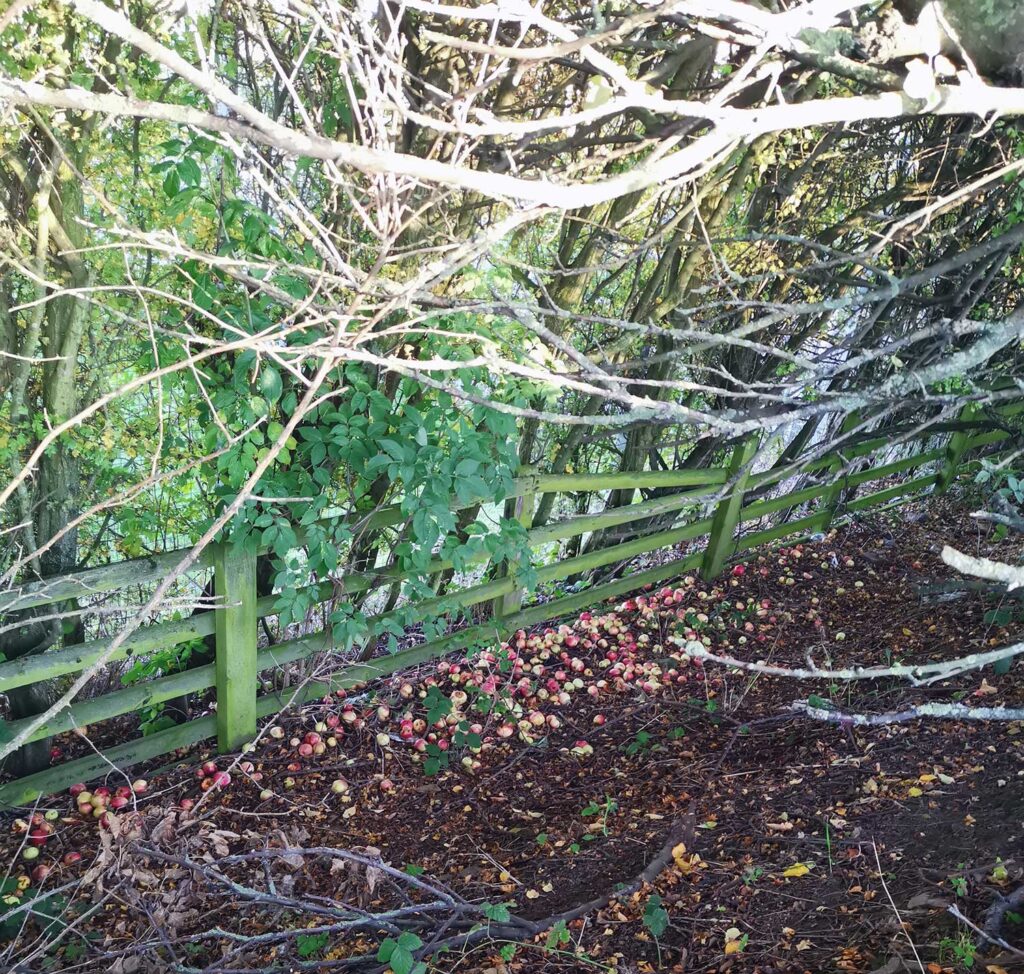
Earlier this week, I discovered the best apple tree I've ever discovered out in the wild. It was located on a south-facing roadside, about half way up a slip road.
Its wild and abandoned branches tangled their way up about 15 feet, with a canopy twice as big. It enjoys the warming rays of the sun, unobstructed, every single day.
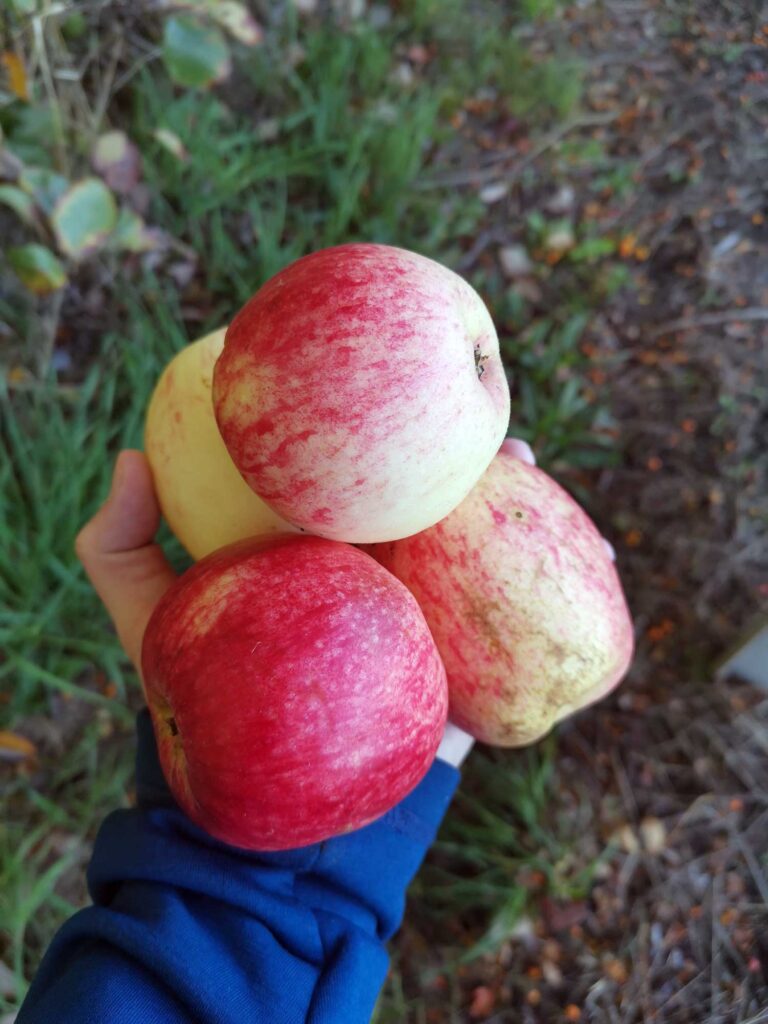
It's an old tree, and judging by the apples I picked and ate this week, it's a real treasure. The apples are bigger than supermarket ones – by double I'd say – and they are crisp, juicy and deliciously sweet.
Even better is that it's in such an awkward position to get to that no one can get to it or seems to want to enjoy it – except me. I'm not complaining!
Excited, I shared my find on Twitter this week and a friend suggested the apples looked like extra large Gala apples. I'm not sure about that, I'll have to buy a large Gala to test, but they were mouth-wateringly delicious.
I was able to fill two bags with about 5kg of apples each (for free!) and because I didn't want to waste any of them, I dusted off my old self sufficiency books to look for some low tech ways I could store apples without refrigeration.
I'm about to share everything I found out below and by the end of it; you'll be saving your money and storing your apples through winter without refrigeration.
Enjoy!

Why Do Apples Spoil & Rot?
There is no denying the passage of time for any life and just like you, apples spoil naturally over time as they ripen and age. Of course, you don't spoil, you just get better with age…
There are, however, a number of other factors outside of time that contribute to how quickly an apple rots.
If you can take steps to mitigate these external factors then you can store your apples without refrigeration right through winter:
- The variety of the apple itself
- Apple Wounds
- Oxidation
- Fungi
- Humidity, Light & Heat
- Ethylene Gas
We'll look at each one in depth below and explore how you can mitigate spoilage.
1. Pick An Apple Variety Suitable For Long Term Storage
The first, and probably most important, factor that affects how long an apple stores for is the apple variety itself. Some apple varieties are more hardy than others.
The first sign of how hardy an apple is is how late it hangs on the tree. As a rule of thumb, if an apple is still hanging on a tree after October, it's probably going to be a good keeper.
Other signs include how thick the skin is and how soft the apple flesh is. The tougher the skin and the harder the flesh, the better the apple will keep.
I've taken some time to re-compile the amazing information about apple harvesting times and storage information from PickYourOwn.org into this table below. It's mostly showing varieties that are more common in America but I'll update it over time as I gather the data for UK varieties too.

Apple Harvesting Table: How Long Apples Keep Table
| Apple Variety | Ready To Pick | Eating | Cooking | Juicing | Storage Information |
| Akane | August | X | |||
| Ambrosia | mid to late September | X | X | X | Should Refrigerate |
| Arkansas Black | mid to late October | Baking | Great keeper | ||
| Autumn Crisp | mid to late October | X | X | X | |
| Bevan's Favorite | early July | X | |||
| Black Twig | mid to late October | X | X | X | |
| Blushing Golden | early to Mid October | X | X | X | |
| Braeburn | early to Mid October | X | X | ||
| Cameo | early to Mid October | Very good | X | ||
| Cortland | mid to late September | X | X | ||
| Detroit Red | early , August into September | X | X | Heirloom brought from France by settlers in the Detroit area, but then later planted by Thomas Jefferson, using grafted trees of Detroit Red in the nursery at Monticello in 1805. | |
| Earligold | August | X | X | Must Refrigerate | |
| Empire | mid-August through September | X | X | A McIntosh type apple with a long shelf life. Aromatic and crisp with creamy white juicy flesh, sweet and tart | |
| Enterprise | early to Mid October | X | X | ||
| Evercrisp | mid October until frost (November) | Very good | X | BEST | Excellent storage due to it's parents (Fuji and Honeycrisp) |
| Fuji | mid to late October | Very good | X | Great keeper; stores well in garage or basement | |
| Gala | late July to early September | Very good | X | X | Must refrigerate; even then only keeps for a few weeks |
| Ginger Gold | early August to early September | Very good | X | ||
| Golden Delicious | mid to late September | X | X | X | Should Refrigerate |
| Granny Smith | mid to late October | X | X | X | |
| Gravenstein | August | X | X | X | Should Refrigerate |
| Grimes Golden | August | X | X | ||
| Honeycrisp | September | Very good | X | BEST | |
| Jazz | early to Mid October | X | X | X | |
| Jersey Mac | August | X | X | OK | |
| Jonagold | mid to late September | X | X | ||
| Jonalicious | mid to late September | X | X | X | Must Refrigerate |
| Jonamac | mid to late September | X | X | ||
| Jonathan | mid to late September | X | X | X | |
| Jubilee | mid September to early October | X | X | ||
| Keepsake | Late September to early October | X | X | ||
| Liberty | mid to late October | X | X | ||
| Lodi (aka, Yellow Transparent) | early July, even June some years | X | Must Refrigerate | ||
| Macoun | mid to late October | X | X | ||
| McIntosh | September | X | X | ||
| Melrose | early to Mid October | X | X | X | |
| Mollies Delicious | August | X | Must Refrigerate | ||
| Mutsu, also called Crispin | Late September to early October | X | X | ||
| Northern Spy | Late September to early October | X | X | Very good for storing | |
| Ozark Gold | Early August | X | |||
| PaulaRed | mid August to early September | X | X | ||
| Pink Lady | mid to late October | X | X | X | |
| Pristine | early July | X | X | Must Refrigerate Very sweet, juicy, does not store well, bruises easily (like Gala) | |
| Red Delicious | mid to late September | X | |||
| Redfree | Late July | X | X | ||
| Rome | early to Mid October | X | |||
| Shizuka | Late September to early October | X | X | X | |
| Snowsweet | Late September, 2 weeks after HoneyCrisp | X | X | Good | |
| Stayman | late September | Very good | X | ||
| Stayman Winesap | mid to late October | Very good | X | X | |
| Summer banana | August | X | X | ||
| Suncrisp | mid to late October | X | X | X | |
| Sundance | early to Mid October | X | X | X | |
| SweeTango | mid August to early September | X | |||
| Ultra Gold | mid to late September | X | X | X | |
| Virginia Gold | September | X | X | ||
| Wild Crisp | October | Very good | X | BEST | Cross between Honeycrisp and Cripps Pink (AKA Pink Lady)Juicy, sweet, crisp, great for fresh eating or all-purpose, applesauce or in a fruit salad |
| William's Pride | early July | X | X | ||
| Yates | mid to late October | X | X | X | Stores very well |
| Zestar | mid-July to mid-August | X | X | X | Should Refrigerate |
You'll see from the table that apples that spoil quickly tend to ripen quickly; and they don't store well without refrigeration.
So, the first step you should take in storing apples without refrigeration over winter is to find the right variety. This is easy to do with apples you buy from the store because they usually have the variety printed on the packaging, but may take a little more work if you're picking and storing wild apples for free.
There are a few websites that can help you with apple identification and one I've used before is FruitID.
2. Apple Wounds
It seems obvious, I know, but if an apple you want to store has cuts or bruises or has any evidence of the skin being broken or bashed, it won't store well.
Put these apples aside and make sure to use them within a week.
The old saying, “treat your apples like eggs,” is a good baseline for how you should handle apples when preparing them for long term storage.
3. Apple Oxidisation
You know that thing that happens when you take a bite out of an apple and then get distracted for a few minutes and when you come back to your apple, the juicy white flesh has turned brown?
That's oxidisation – the process of a substance or element oxidising. eHow explains it quite well:
Oxidisation happens because apple flesh has chemical compounds known as phenolics that react with oxygen when exposed to air. Once the skin of the apple is broken, the compounds are exposed to oxygen and enzymes in the apple known as polyphenol oxidases cause the browning reaction.
You can prevent this from happening without refrigeration by storing your sliced or exposed apple in acidic water – 1 part lemon juice, 5 parts water.
Although this guide deals specifically with storing apples without refrigeration, refrigeration does slow down the browning process too.
4. Apple Rot: Fungi
You've seen it happen. You go to pick an apple up and you feel a soft, squidgy underside, maybe upset a few fruit flies as you do and turn it over to reveal a bit of mould build up.
You wrinkle your face up with a ‘yuck!' before throwing the apple away.
This is simply the natural build up of Fungi, part of nature's way to return all that comes from the earth back to the earth. In an unbruised and well stored long-keeping apple, it can take months for an apple to reach this stage.
In a bruised apple or an apple with a slight wound, it can be a matter of days. Again, eHow does a good job of expanding on the idea:
The most common causes of apple rot are from the fungi Penicillium expansum and Monilinia fructigena. These fungi feed on and kill the cells that make up the apple. The fungi produce pectic enzymes that break down apple pectin to expose the nutrients of the cells to the fungi. Different fungi and molds produce different patterns of rot damage.
The best way to prevent apple rot and fungi growth is to make sure that your apple isn't bruised or wounded before storing.
Apple rot can spread to other apples in the same box too, which is why it's important to only store apples that are free of bruising and wounds.
5. Humidity, Light & Heat
It's not always obvious that the basics like light, humidity and temperature can have dramatic effects on how long your apples keep.
If, for example, you store your apples on a kitchen bench that gets plenty of light and is both humid and hot, you're apples will start to rot faster than if they were stored in a cool, humid environment.
Another thing to note is that apples require light to ripen, but the fungi and moulds that cause rotting do not require light to grow. So, just keeping your apples in a dark drawer will not prevent apple rot unless it is accompanied by a cool temperature and slightly humid environment.
We're going to go into some specifics below as we explain how to store apples without refrigeration in more depth.
6. Ethylene
A less obvious but perhaps even more common way that apples rot and spoil is to do with a hydrocarbon chemical known as Ethylene. Ethylene is a hormone produced and released into the air by most plants as they ripen; including apples.
From the moment an apple is picked from the tree, it begins to ripen and age and as it ripens (and then over-ripens) it release more and more Ethylene. Ethylene is interesting because when other fruits are in the vicinity of Ethylene, they ripen quicker too.
This is where the saying ‘one rotten apple spoils a bunch' comes from. If you store away a bruised or wounded apple with a bunch of non-bruised apples, the Ethylene released by the bruised apple will actually ripen, over-ripen and ultimately rot the other apples too.
The Ethylene accelerates the ripening process in the apples around it which causes them to give off more ethylene themselves, further accelerating the ripening process in all the apples in the box.
In very short order the entire box of apples will be over ripe and eventually be unpalatable for eating.
We'll look at ways you can reduce Ethylene exposure below.
2 Tried & Tested Ways To Store Apples Without Refrigeration
After finding the best wild apple tree in the world earlier this week, I dusted off my self sufficiency books to learn about all the different ways I could store apples without refrigeration.
Why without refrigeration? A few reasons really:
- It'll save you money.
- It'll make you more self sufficient.
- It'll prevent your apples from spoiling if the power ever goes out.
It's amazing to think that your ancestors knew all of the methods I uncovered in the books but somewhere in the last century, you and I were hoodwinked into forgetting them – or thinking that we'd never need them.
Yet here you are; and here I am, and here's 2 tried & tested ways you can store apples without refrigeration to enjoy all winter long.
Store Apples In Cardboard Boxes
Here in the UK, our winter is pretty mild in comparison to some places and that means we can store apples in cardboard boxes in pantries, garages or sheds relatively easily.
In the ideal world, each apple would be wrapped individually with newspaper (let's face it, they're not much good for anything else these days, are they?) to avoid all of the ways apples can spoil that we mentioned earlier, but I know that's not always practical. Don't use newspaper pages with coloured ink as this can have heavy metals in it.
In which case, be sure to place your (unbruised, unwounded) apples in a single layer across your box, making sure that no apple touches. The cardboard boxes the supermarkets use to hold their apples are great for this because they will stack on top of one another and are readily available for free from your local supermarket if you ask nicely.
The ideal temperature to store apples is around 4 degrees Celsius or 40 degrees Fahrenheit. Frost will spoil them (it will freeze the cells of the apple and cause them to expand and burst) but if you keep them in a garage, shed or pantry, you'll avoid the frosts but keep the temperature low enough to store.
My garage in the winter is around about this temperature which makes it perfect for storing apples.
As well as a relatively stable temperature of around 4 degrees Celsius, you'll also need to store them in an area with good ventilation that is slightly humid. The air has to feel slightly damp rather than dry.
If your air feels too dry, pour some water on the floor or leave a cup full of water in the room to add humidity to the room.
If you can do all of this then your apples will keep for months and still be just as fresh and crispy as the day you picked them. Well, maybe not exactly the same, but close.
Bury Apples In The Ground For Winter Storage
Back in time, our ancestors had enough space and wherewithal to create root cellars or ground clamps. These underground constructions were essentially stone rooms built into a hillside or underground.
They were extensively used for storing food through the winter months because underground temperature remains cool and constant. Perfect for keeping fruit and veg fresh for longer – at no cost.
Most of us on the path of becoming more self sufficient with food can't afford the cost nor have the space for a full-blown root cellar but there is a way you can reap the benefits of having a root cellar without the space or expense.
You can bury a metal or plastic container with drainage holes in the bottom into your garden and layer your apples into the container, separating each layer with dried straw. The rules about spacing apples so they don't touch still apply.
The container will act as a mini root cellar and will keep your apples at a cool enough temperature to store. It may not be as practical as storing your apples in boxes in the garage, but it does offer another cost-effective option if you don't have a garage or shed.
Final Thoughts On How To Store Apples Without Refrigeration
I hope by reading through this guide you've come to realise that storing apples without refrigeration is not difficult and almost anyone can do it.
All you need are some long-keeping apples, a cardboard box and a dark, damp room to store them in.
Now you have no reason not to get out there and pick your own apples or even buy a bulk load of apples from the supermarket in the high season (when they're cheaper) and set about storing them yourself for the winter.
If you know of any other methods of storing apples without refrigeration please share them in the comments below.
If my content helps in any way and you'd like to say thanks, please consider buying me a coffee 🙏





Canning is another way to preserve apples, they would have to be peeled, and cored. either is a sugar or honey syrup for pies, or plain water for eating straight from the jar. I found this link if anyone wants to try it:
https://growagoodlife.com/canning-apples/