
If you're new to vegetable growing and you're feeling the urgency to grow a lot of food fast, this guide to planning a vegetable garden for the apocalypse will help you hit the ground running.
It should go without saying that planning any vegetable garden is a unique challenge that requires you make choices based on your own preferences, environment and aspirations.
I can't say what's best for you without knowing everything about your situation and needs.
But I can share the most beneficial and practical things I've learned over a decade of becoming more self sufficient that will help you grow a meaningful supply of food – fast.
I've been growing most of my own fruit and vegetables for 11 years now.
In that time I've made a lot of mistakes and learned a lot of frustrating lessons. The one lesson I cherish above all others is: if you want to grow lots of food, you need to have clear goals and a plan to meet them. We talk about the 10 key principles to a self sufficient garden layout in our accompanying guide.
This guide will help you create your own vegetable garden plan to get you through the breakdown of established supply chains.
Planning A Vegetable Garden For The Apocalypse For The First Time
If you're anything like me then your first resort in a survival situation is your secret larder.
Your vegetable garden is primarily there to supplement your stores and give you room to leverage your growing space into something bigger when required.
I'm fortunate to have a lot of freeze dried meat (I bought a freeze drier in 2018), sacks of rice and boxes of pasta, along with fats of all kinds. If the time comes that I'll need those supplies then my culinary life is going to be pretty unhealthy, boring and repetitive.
Chances are that most people with emergency stores will be in an even worse situation than I will be.
Planning a vegetable garden for the apocalypse then, in my case, is all about helping my family survive off these basic calories I have in my stores by helping to stretch them out with grown produce and add a lot more nutrition in that first year.
If you don't have meat stores then you need to grow a lot of iron and protein… or get some livestock!
For my needs it's essential that I initially have a lot of aromatic foods like garlic, ginger and onions, as well as a large herb garden (with many medicinal and practical uses). I'd imagine many of you are in the same boat with your supplies.
Living off plain rice doesn't sound like much fun or sustainable from a health point of view.
Whatever your situation, you must plan thoughtfully around what you actually want to eat and the flavours and nutrition that you'll need. You need to become highly efficient at meeting your needs.
That being said, let's jump into some of the practicalities of making it happen.
Soil & Compost Basics
Ok, so let's start with the basics, where everything starts and ends. The soil. More specifically, compost!
This is gardening 101, but if you are just getting started then this is the most important advice you can assimilate quickly to speed up your growing journey. Strap in because I'm really going to hammer this point home.
Whatever soil you have, the chances are extremely high that you're going to need a lot of compost in order to grow a lot of decent fruit and vegetables in a sustainable way.
- Heavy clay soil? Add compost to improve it.
- Light sandy soil? Add compost to improve it.
- A little too acid or alkaline? Add lots of compost.
- Low on any key nutrients? You guessed it.
There's no substitute for good compost really. Everything in your garden relies on having a productive medium to grow in. Your yields, pest and disease damage, time to harvest and your food quality; these are all largely dependent upon two factors: the growing medium and the weather.
You can't do much about the unpredictable weather but you can control the underground environment you grow in.
Be Wary Of Buying Compost
Bought compost is rarely of good quality and the good stuff will cost you far more to buy than the vegetables you produce would.
Buying compost isn't a practical, sustainable solution for a post-apocalyptic vegetable garden either. But, if it's your only option, or it's your first season and you just need to get started, it's certainly better than no compost at all. And it's better than relying on additives too!
Don't Rely On Additives
Petrochemical fertilizers damage the ecosystems in the soil and they yield less volume of lower-nutrient, worse-tasting crops, in an unsustainable way.
Even organic fertilizers can make for less healthy plants and soil with a roller-coaster of nutrient droughts followed by excesses and inconsistent moisture levels in the absence of that beautiful, rich, water-retaining, structure-maintaining compost.
How To Make The Best Compost
Good compost will reduce the room for you to make some inevitable mistakes; from trying to keep your plants healthy with additives, manually loosened soil and a rigid irrigation schedules.
Strong, reliable and healthy plants will also reduce the risk of diseases and pest issues. It takes a lot of the pressure off. Your garden will generally be healthier, simpler, more productive and more resilient when you grow in rich, finished compost.
If you want to be a successful, self-reliant vegetable gardener then you're going to need to start and end that journey with becoming a good compost manufacturer.
The best piece of advice I could give to any novice planning a vegetable garden for the apocalypse is to start making and accumulating this precious resource immediately.
Stockpile it!
If you've been dehydrating food and have dried or canned goods to last you from a few months to a year then you might need a huge harvest that year to help carry you through the second. The only way to get those kinds of results quickly and reliably is to have A LOT of good, finished compost ready to grow in.
If you're planning a vegetable garden for the apocalypse from scratch in a new growing space then you are going to need tonnes and tonnes of it. I can easily get through 5-10 tonnes in a year and that's in an already established garden!
You can use literally ANY organic material to make compost and it can sit in a pile, under a tarp, finished and waiting to use, indefinitely. So, wherever you are there's really no excuse for putting it off.
There are also tons of different ways to make compost, ranging from high-input methods with a fast turnover (hot), to lazier, slower (colder) options. Your choices here will impact the amount of work you have to do later on too.
Hot composting kills off most of the weed seeds in your mix. If you can get your compost bin/pile over sixty degrees centigrade then you will have a far easier job later on.
Similarly, no-dig methods of mulching with thick layers of compost don't disturb the soil or encourage more weeds to sprout.
So, your methods of both compost manufacture and application will impact your results and/or workload as the seasons progress.
How to Use Compost Effectively With ‘No-dig' Gardening
If you're in the UK, I highly recommend Charles Dowding's method of no-dig gardening in a maritime, temperate climate like mine.
No-dig allows you to prepare a bed from rough ground instantly and you'll end up with a fantastic, deep soil structure within a month or two. You can plant on top of the grass and weeds with no digging at all, on the same day!
The only caveat is that you'll need a LOT of compost to do this.
With a few layers of cardboard and five inches of firm compost you can transform an area of grass and weeds into a vegetable garden in minutes, with very little effort.
A few wheelbarrows of compost spread thickly over layered cardboard is all it takes. It does have to be thick though! In subsequent years you'll only need to add an inch to the top, but that first year requires at least 10-12cm.
This method also leaves the soil to do its thing and doesn't break the mycelial web or disturb the soil and the complex underground ecosystems which feed your plants.
Here's a great example video of some no-dig bed creation with immediate planting from Charles.

When you apply compost you're feeding the soil as much as the plants. It's the soil life which breaks down that compost into food for your crops. The compost holds the moisture and nutrients to feed that complex ecosystem.
A healthy, well-fed, undisturbed soil is going to give you a low-maintenance, trouble-free and highly productive garden that will greatly improve your quality of life and perhaps even be a life-saver one day!
There are no short-cuts to a healthy garden. It requires good fertility and soil structure, so your job as a vegetable gardener is to build good soil.
The rest will follow naturally from this starting point.
After 10 Years Of Experimentation, I Settled On No-dig Gardening
The no-dig method is quick, effective and requires far less physical work (burning those valuable calories), so it is the method I have come to adopt. Your environment may not suit this type of gardening, but the only advice I can give is from my own experience.
I tried permaculture and forest gardening. I tried intensive ‘double-digging' and amendments. I tried creating biochar beds and Hugelkulturs. No-dig is where I landed after a decade of experimentation.
I'm very happy with my results.
I can produce more food, faster and with less work than any other method of gardening that I've tried so far.
There are distinct advantages to all the varied methods of growing and sustaining plants. But, if you need a lot of food ASAP from a relatively small space and you want to do the least physical work to get it, then I don't know of a better way.
All methods lead back to COMPOST!
How Long Does It Take To Make Compost?
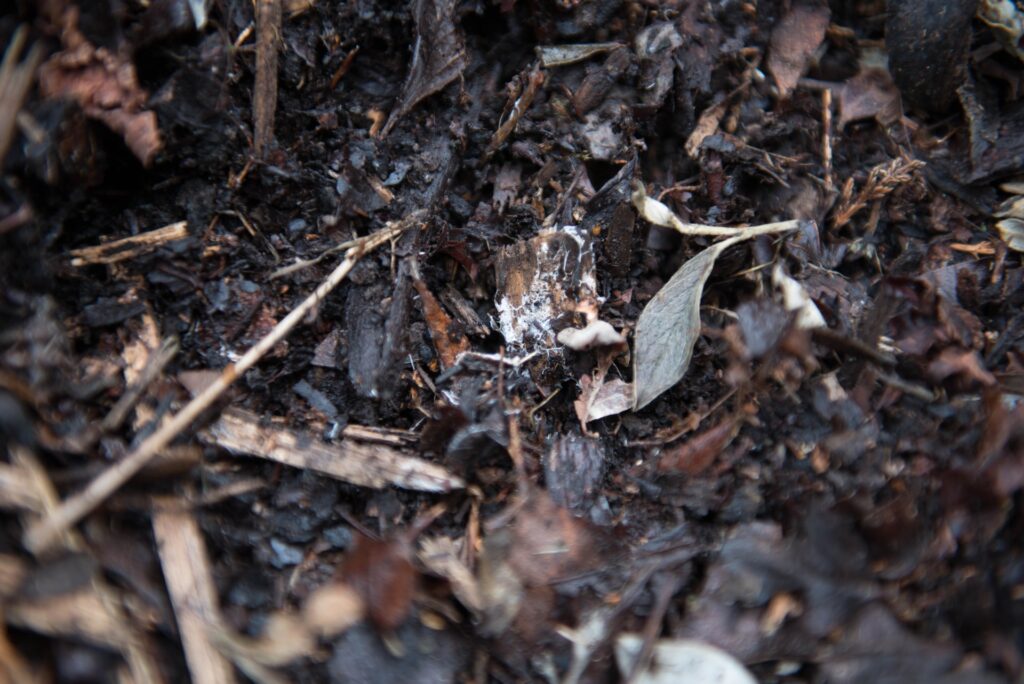
It will take from 6 months to 2 years for the organic material you throw in your compost pile today to break down into the best kind of usable, finished compost.
So, go beg, borrow and steal whatever organic waste you can find. Think big!
- If you live near a farm or stables then get chatting to the owner.
- If you live near town then start collecting cardboard, grass clippings and coffee grounds.
- Call a local tree surgeon and ask for chips.
- If it's autumn then go out and sweep up leaves.
- Start your journey with chickens (they're great composting machines, as well as being useful for their eggs and meat).
- Watch composting videos and learn everything you can about the process.
Become an expert at composting before you go near a seed catalogue. Accumulate it.
I can't really labour the point enough. Whoever you are and whatever your goals, your plan should probably start with composting as much material as you can NOW. You don't have enough. No one ever has enough!
Gardeners joke about it being ‘black-gold' for good reason. Whether you go no-dig or not, you're still going to want more than you can get when you're trying to grow a lot of food quickly.
You can NEVER have too much of it and everything you do will be bigger and better with more of it!
Calories vs Nutrition: What To Grow?
Ok, so we've covered the basics to get you to a beautiful, thick layer of compost in which to plant what you need. Now comes the question of how you are going to reach your specific goals?
Even if you hate maths, I'm afraid this is one step you probably can't avoid. You'll have to work out your basic calorie economics (how many calories do you need to produce and when do you need them available?).
Survival is fundamentally a game of calories/energy. You spend a certain amount each day, so you need to produce as much or more than you're spending to avoid calorie debt (aka starvation). It's all just a numbers game really.
The caveat for this is whether you're planning for a ‘post-apocalyptic' survival situation, a slow economic collapse causing increasing food prices or if you have basic stores for the year to come and you're just looking for nutrition to add to your meal plan.
In these cases you might want to adapt your planning to grow only the expensive, nutrient-dense, leafy greens to supplement your cheap staples.
Potatoes yield the most calories per square foot, but they're very cheap in the shops & can easily be stored for months after you buy them compared to leafy greens.
A complete survival garden will be full of calorie-dense potatoes, roots and beans. With potatoes and other roots, you can grow them without a garden if you use bags.
A nutritional/cost-saving garden, on the other hand, should be full of fast-growing, nutrient-dense crops like annual herbs, spinach, salad leaves and kale.
My garden is a mix of both and I'd need to expand my survival crops if my supplies ever got low.
For the purely nutritional garden calorie planning is obviously not really necessary. If you have a lot of stored carbohydrates then you've probably already gone through this process for your stores. You won't need to repeat it in the garden, yet.
For any urgent ‘survival' garden calorie economics must be front and centre in all of your plans!
Detailed Planting Plans & Timings
Most of the calories in a survival garden will come from starchy carbohydrates. For me that means potatoes, squash, beans and all manner of root vegetables.
These are all quite easy to store, which reduces complications with succession planting to ensure food is there at the right times. Most of these root vegetables can be stored for 6-12 months or more with ease, so planning for the year isn't as complicated as it sounds.
We wrote a guide about storing potatoes for months after you buy them from the supermarket but the same technique can be applied to potatoes you grow.
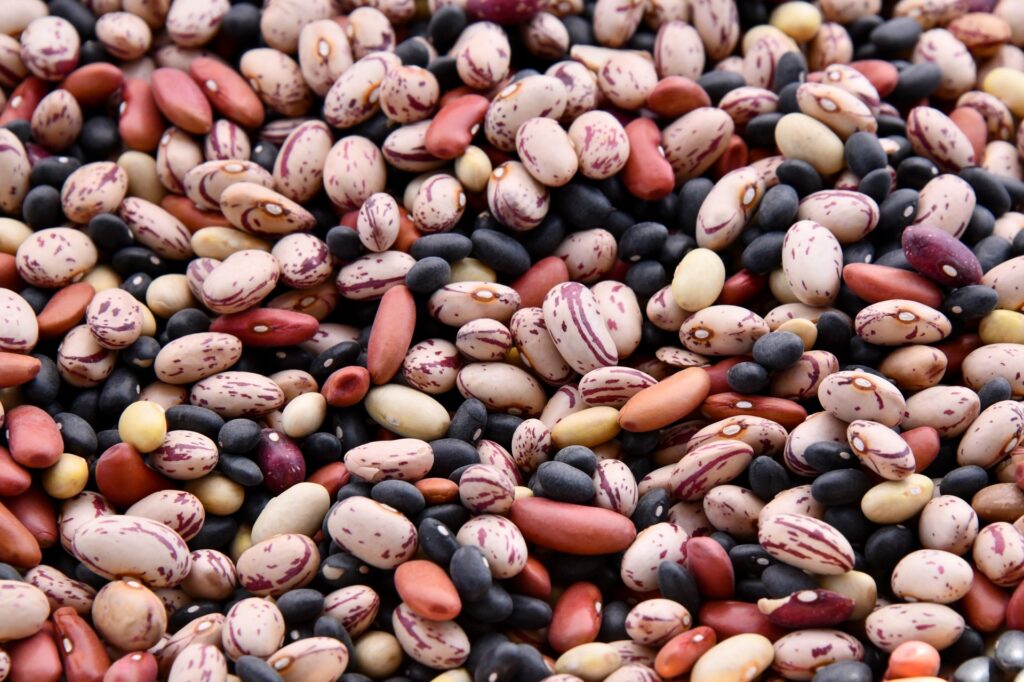
Dried beans will last for many years too, so I always end up eating these in spring, when last year's potatoes, squash and roots are running out.
The 30% Rule
Work out the calories or yield you want to produce for your survival or supplemental rations and add at least 30% to that to allow for pests, diseases, crops bolting, or bad weather impacting yield. That should be your target when you plan for emergency rations and calorie production.
It would be much better to have it and not need it than need it and not have it, so always aim high. If you can't get there right away then work out how you might eventually get there and know what would be required, so you're ready to upscale effectively when the time comes.
Broadly speaking they say you need around 2,000 square feet per adult to grow all of the calories they'll need. 100 square feet will get you 30,000 to 40,000 calories from potatoes in 3-4 months, but less than a third of those calories in any leafy green that follows in the same space.
As you can tell from those basic numbers, you're going to have to think quite big if you want your garden to make a meaningful difference to your food supply.
Plan well and you'll know what you need and how to ration what you have. Wing it and you're very likely to grow too little, get less than you bargained for, and have fewer of the right things at the right time.
Grow Plenty Of Backup Seedlings
It's very hard to keep track of a large plot with a lot going on and you will miss all kinds of opportunities and gaps if you don't plan well. Even with detailed plans things always go wrong somewhere.
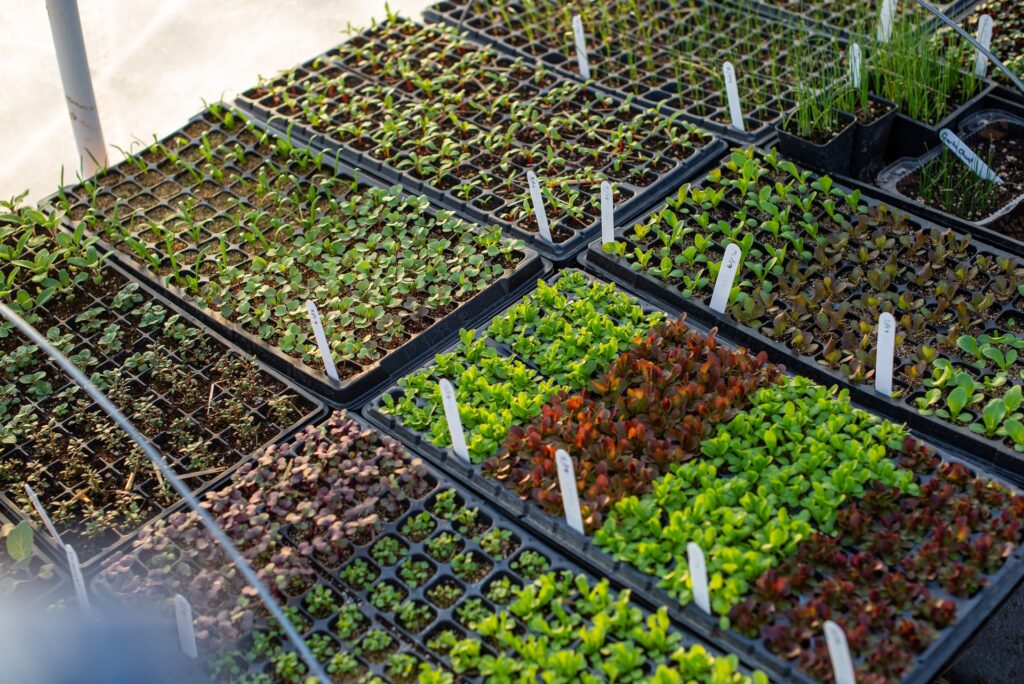
So, having a steady, excess supply of seedlings in your propagation space is a good idea. You don't want patches of ground left bare simply because you had nothing to slot in there when disaster strikes.
Whether it's a slug eating a row of newly sprouted carrots, a rabbit eating your salad seedlings, or a dog digging up your artichokes; you have to be ready to ensure that 100% of your growing space is productive and not sitting idle.
If that compost isn't growing crops it'll just be growing weeds and making work for you. Nature abhors a vacuum and so should you.
I keep propagating crops like beets, coriander, parsley, spinach, chard, salads and spring onions for most of the year, just to ensure that I always have seedlings to pop into any space that opens up.
A good plan and a constant supply of back-up ‘spare' seedlings will end up doubling the amount you produce (it did for me anyway), so it's not really optional in a survival situation. I had no idea how much more I could grow until I started planning better and sowing extras.
Don't wait to learn that lesson. Start with good habits!
The Importance Of Diversity In Your Vegetable Garden
In the case of gardening, diversity isn't a superficial platitude. It really is a strength and you don't want all of your eggs in one basket, not if you can help it.
Try to ensure that you have a bit of variety, even if you focus on one or two reliable crops as your staples. Your health and the resilience of your garden and larder will benefit greatly from having a widely varied harvest.
Always Plan Your Vegetable Garden With Winter In Mind
When the cold weather comes (assuming it does come in your part of the world) you will need all of your stores rationed into a meal plan to get you through. You need to plan your nutritional requirements through the coldest months and the ‘hungry gap' in spring.
Although some vegetables don't give much in the way of calories they do provide a lot of nutrition when you need it most. Things that grow at this time of year grow slowly, so they need to be well-established.
You must be ready to plant the right things at the right times to ensure you have the nutrition you need when the winter comes and the glut of fresh food disappears.
It's no use thinking about winter food or the ‘hungry gap' in November, you need to start planning it out in the preceding spring if you want abundant food options when the days are short and hard.
For example, spinach goes to seed in June and July here in the UK. That means I can plant it in August and get 10 months of crisp, buttery leaves! You don't get a lot in mid-winter, but it's like gold-dust when nothing else is growing.
Sprouting broccoli is fantastic in early spring, but many varieties need to be nearly a year old by that point.
Leafy greens like chard and kale, along with root-and-leaf crops like beetroot can be productive for most of the year, so winter-hardy staples like this are good to have dotted all over the garden.
If you have the space and time then perennial plantings like asparagus and self-seeding tubers like Jerusalem Artichokes can fill in some interest during the hungry gap without any work or planning required.
Leaving some roots in the ground through milder winters and under fleece is also a must, so they're still ok in early spring. Crops like parsnips, yacon, celeriac and carrots can all survive quite well above minus 5-10 centigrade under fleece.
Crops straight out of the ground in winter end up tasting the best. They're sweeter for fending off the frosts with more sugar production.
Keep winter in mind all year long. You'll be glad you did!
Plant Perennials For Reliable Food Crops Every Year
This bring me onto my final planning tip for the growing space itself when planning a vegetable garden for the apocalypse. Invest in some perennials if you have the space and time!
You can't beat perennials for low-maintenance and added diversity in your garden. You can plant asparagus crowns now and although you'll wait 2-3 years for your first harvest, you'll then get a crop every year for the next 25 years or so. And for no more than the price of weeding and a thin annual scattering of compost. What's more, you'll likely get more and more as time progresses.
The same is true of your nut trees, fruit bushes and canes etc. If you have the time and money to do it then start adding some perennials to your food production plot now. This doesn't have to be an expensive process done at garden centre prices.
Most plants are easy to propagate from and most friends and neighbours are happy to let you take a cutting, or dig up a handful of canes.
The best time to plant an apple tree was 7 years ago, the next best time is today!
Invest In Quality Tools
My next tip (after a decade of experimenting) is to invest in yourself by investing in some good quality hand tools.
Every job is quicker and easier with the right tool. Don't waste your time with poor quality tools and make sure you have the right tools for the right job.
A chore can be turned into a joy with a good tool and proper technique to make quick work of it.
Start Saving Your Own Seeds
My final apocalyptic vegetable garden planning tip is to learn about seed saving for all of your favourite crops and buy mostly heritage or heirloom variety seeds rather than F1 varieties, which can't be propagated from.
If you want this garden to provide for you for years to come and you can't predict the supply (or price) of seed, then you might need to rely on your seed-saving knowledge. Your garden will benefit functionally and financially from learning about it sooner rather than later.
Seed may seem cheap and saving seed is therefore often overlooked by new gardeners, but it comes with all kinds of benefits.
- Your plants evolve in your environment and they acclimatize to it because you propagate from the ones which grow best in that climate and you usually end up with improved results, year on year.
- Your seed is always fresh so your germination rates are high.
- You grow a lot more plants than you need because you have more seed than you can use: that feeds into having a lot of spare plants and no empty growing space!
All this before you even get to the arguments about seed-saving being fundamental to a truly sustainable, self-sufficient garden. Don't ignore seed-saving, it should come right after you've become the king of compost and worked out a basic planting plan.
Important Note: Factor Seed Saving Into Your Garden Plans
It's worth mentioning that you'll also need to factor seed saving into your planting plans.
I have to grow 175 bulbs of garlic in order to have 150 for the kitchen (around half a bulb per day) and the best and biggest 25 to use for replanting next year's crop.
Likewise you'll want to keep dozens of potatoes to replant. You'll need to leave a parsnip or two and a few carrots and onions in the ground to go to seed etc.
If you have to be completely self-sufficient in seed then you're going to lose a fair bit of ground and harvest to seed-saving, so you'll need to factor that into your plans.
As overwhelming as all of that sounds, by applying your energy and attention to the task at hand, you can make a success of planning a vegetable garden for the apocalypse even if it's your first year trying.
Get to it! You have a lot to do!
Happy growing!



Fabulous post James. Thank you for the great advice.
I’m so glad you find it useful! It’s all worth the effort if even one person is helped. To think that several people might get better results sooner gives me a real buzz!
Hi James
Invaluable information, a great help, thank you.
I’ve been growing a variety of fruit and vegetables for a few years, totally agree with focussing on own good compost, we have alpacas as neighbours which aids excellent compost. I tend to rely on freezing for storage with the exception of chutney and jam. I’ve tried to store apples, pears & potatoes, pickle beetroot & cucumbers but these methods failed but determined to try again this year. Regarding a store cupboard, I’ve stocked up on stock cubes as they are extremely handy for all veggie soups and of course lentils for protein, both keep well over 2 years if air tight. I’m going to add micro pasta as well. My mum used to add porridge oats to mince to stretch it out which with gravy, is hardly noticeable but adds nutrition, oats are a valuable flexible food needing only water.
Let’s hope we never have to live through apocalyptic times rather grow our own for the goodness, flavour and joy as well as benefitting from an healthy occupation and being able to eat well without paying high prices. Look forward to hearing and sharing more. Ellie
Hi Ellie, yes storage is quite a tricky issue. My freeze drier is very handy, but it uses a lot of electricity, so the time may come that it isn’t an option any more. Learning to pickle and can your harvest is essential and harder than it sounds. Getting to grips with it also feeds into supply planning for salt, vinegar, sugar etc. I still haven’t mastered all the aspects of this myself, so I sympathise with your challenges and issues.
RE apples and potatoes, try storing in a single layer in one of those large supermarket veg boxes. Keep them in a cool, dry, dark place that doesn’t suffer frost (I use my workshop). I get those boxes and stack them from floor to ceiling. As long as none of the fruit or tubers are touching each other you should end up with most of them making it through winter. Variety matters here though. You can’t easily store thin-skinned potatoes like first earlies. Your maincrop need to be left in the ground until the skin is really thick. Never wash or clean them, just leave the dirt on. Don’t try to store any with any damage at all. Even a tiny rip of the skin is enough for it to go bad and then it’ll rot the surrounding tuberst. Same with apples, it only takes one bad apple to spoil the rest. Make sure you use a variety that stores well, if not get making cider and chutney!
Agree, it would be ideal if these skills just lead us all to a higher quality of food and lifestyle. If TSHTF then even the best prepared will suffer, so I pray that I’m just paranoid and my worst fears are never realised. I have 3 young kids and I very much hope they never have to go through a collapse of any kind! There are no winners in that situation really.
All the best Ellie… and feel free to hit me up with any questions or return the favour with any of your own tips as you discover them (oats in mince is a great tip, ty). It’s all about networks and knowledge at this point imo! When we work together everyone wins.