
Cucumbers have a relatively short growing season and if you've grown them right, provide an abundant harvest. So abundant in fact, that you usually get a glut all at once. They don't keep for very long though so in this guide, we'll show you how to preserve cucumbers for the winter by water bath canning (bottling) them.

Cucumbers are delicious and they grow reasonably quick in the right conditions. I get an abundant harvest every time I grow them in my greenhouse here in the North of England. They also happen to be one of the easiest vegetables to water bath can because they are naturally acidic and have minimal moisture content.
This makes them perfect for food preservation and once canned properly, will last over a year on the shelf, without any other refrigeration required.
On top of all that, they taste absolutely delicious out of the jar when you need a sweet, tangy, crunchy healthy snack. Very few vegetables give you that satisfying snap when you bite into it the way well pickled cucumbers do.
In this guide, I'm going to show you how I water bath can, thus preserving cucumbers so that they last all winter (if we don't eat them first!).

What is water bath canning?
Water bath canning is a method of food preservation that will help you become more self sufficient in food in which jars of food are submerged in hot water and brought to a boil. It is a reliable, inexpensive, and low-tech method of preserving a variety of low-acid foods. You can preserve high acid foods too, you just need to adjust your brine recipe to suit.
The goal of water bath canning is to create an environment (controlled temperature, water, and pressure) that prevents the growth of microorganisms (namely, pathogenic bacteria like Clostridium botulinum). Whilst those science words may sound a bit scary, they're not as bad as they sound and if you preserve cucumbers the way I share in this guide, you won't have anything to worry about.
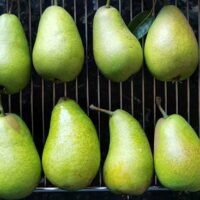
For this reason, water bath canning is an excellent method to preserve cucumbers and other vegetables, herbs, and certain types of fruit such as apples and pears.
How to select cucumbers for water bath canning
In order to be safe for water bath canning, cucumbers should be harvested before they are fully mature. The best time to harvest cucumbers is when they are between 6 and 10 inches long and still have the seeds.
Select cucumbers that are firm and free of any damage. A slight bend in the cucumber is normal and does not affect the quality for water bath canning. However, avoid cucumbers that are soft, have cracks, or are beginning to rot.
Equipment and supplies for water bath canning
In order to water bath can and preserve cucumbers, you must have a few pieces of essential equipment.
- Firstly, you will need a large pot for boiling water. A stock pot or a specialised water bath canning pot will do.
- Next, you will need jars for canning the cucumbers. Ideally, jars designed for water bath canning will have a wide mouth, which makes it easier for you to pack the jars tightly with cucumbers and allows for easy removal of the cucumbers after the canning process is complete. I use Kilner jars but you could also use old curry jars or sauce jars as long as they have the top with the ‘pop' sound and the rubber around the lid is in good condition.
- Finally, you will need canning lids that fit the jars and a canning lid lifter. If you're buying new jars especially for your canning, they will come with the lids.
Some optional extras:

7 Steps To preserve cucumbers via water bath canning
- First, sterilize the empty jars in a water bath canner, along with the lids. Boil them, basically, but don't boil the lids with the rubber seal. You just need to bring them to a gentle heat. While the jars and lids are sterilizing, begin to prepare the cucumbers.
- For best results, wash the cucumbers and then half or quarter them depending on how chunky you picked them. If you picked them young, you may be able to fit whole cucumbers (with the blossom ends cut off) into your canning jars but if not, half or quarter and chop appropriately.
- After preparing the cucumbers, add them to the jars and fill the jars with your pickling brine (see my pickling brine recipe below) or a simple syrup (1 cup of sugar dissolved in 1 cup of water).
- Finally, seal the jars with the rubber lids and screw the fastening rings until they are just touch tight.
- Return the jars to the water bath canner and bring to a boil. Once you have a rolling boil, leave the jars for a further 5 minutes before removing them from the canner and placing them gently on a tea towel on your bench.
- Leave the jars to stand and cool for 24 hours and then they'll be ready.
- Make sure to check to see if the lids have sealed correctly. If they have, you will not be able to ‘pop' down the top. This means you have a vacuum seal and your cucumbers are ready to preserved all winter long.
Cucumber Canning Brine Recipe
This is my favourite cucumber preserving brine recipe. It retains the usual vinegary pickle flavour but is enriched by a sweet, tangy flavour too.
- 1 small garlic clove per jar
- 2 dill sprigs per jar
- 900ml natural spring water
- 900ml distilled white vinegar
- 100g cane sugar
- 1 heaped tablespoon of salt
Method:
Put 1 garlic clove and 2 sprigs of dill in each jar. Mix the water, vinegar, sugar and salt together in a saucepan, bringing slowly to a boil until all the sugar and salt has dissolved. Once dissolved, leave to cool while you fill your jars with cucumbers and once all jars are filled, pour the the brine solution into each jar, filling up to the jar neck.
After Canning Cucumbers
Once the jars have finished the water bath canning process, they must be allowed to cool. For safety reasons, you should never open a jar before it has cooled down to room temperature.
Once the jars have cooled, test the seal by pressing on the top of the lid. If the lid does not pop up, the jar is sealed. If the lid does pop up, the jar did not seal properly and must be refrigerated and eaten within 2 weeks. You could also try water bathing it again if you plan to do another batch.
If you have a seal (the lid does not ‘pop' when you press it), you can store the jars at room temperature in a dark and dry shelf somewhere. They will last for a year in this state and easily see you through the winter.
Once the jars have been opened, you can store the cucumbers in the jar in the refrigerator for up to one week.

Extra Tips for Successful Preserving Cucumbers by Water Bath Canning
While some varieties of cucumbers can be harvested when they are as small as 6 inches long, others require 8 inches or more. Determining the best time for harvesting depends on when the seed packet or your experience tells you the cucumbers are at their best.
Obviously, different varieties of cucumbers will require different lengths of time to be ready.
I harvest my cucumbers when they are about 6 – 8 inches long and after they have been exposed to a few hours of daylight each day, but before they have been exposed to direct sunlight. Direct sunlight causes them to lose that fresh, juicy flavour and snappy texture.
When filling your jars, pack the cucumbers as tightly as possible to ensure that they do not float when submerged in water during the canning process.
Before opening a jar of water bath canned cucumbers, be sure that the jar has completely cooled. This will ensure the safety of the jar and its contents.
Once opened, water bath canned cucumbers will last in the refrigerator for up to one week.
Finally, if you can drag your family in to help you with preserving cucumbers it will make the process much more enjoyable and you'll get a lot more done in a shorter space of time.

Final Thoughts on Preserving Cucumbers for the Winter with Water Bath Canning
Cucumbers are a delicious, versatile vegetable that usually gives you a glut all at once. They can be a pain in the ass to use up and preserving cucumbers by water bath canning them is the perfect way to keep 100% of your harvest whilst retaining (and adding to) their nutritious benefits.
Water bath canning when done correctly will let you store your cucumbers all winter, in fact, longer than 12 months, and that makes it a self sufficient skill worth practicing.
Even better, by learning how to preserve cucumbers by water bath canning this way, you'll also learn how to preserve other vegetables too because the process is virtually the same.
And that’s all you need to know about water bath canning cucumbers! If you have a family recipe you've been passed down and you don't mind sharing, please post it in the comments below. I love to try new preserving recipes – especially when they've been handed down from ancestors.
If you don't have any recipes but you'd like to experiment, you could always try these different ways to preserve cucumbers from Ashley at Practical Self Reliance.
Beat The Reset
If you enjoyed this guide, subscribe to my newsletter to receive more content like this, lots of positive news stories and some practical solutions to help you beat the reset.






Going to try your cucumber & brine water bath. I have 20 cucumbers and will have about 20 more in a few days. Thank you. I noticed your last paragraph referring to Ashley at Practical Self Reliance. She is amazing! I am with the right people. ❤️ i am happy to come across you as well.
Hello Nichole,
Well done growing so many – they do tend to all come at once don’t they?
Great! Let me know how it turns out for you. Once you get the basics down, you can experiment with recipes to suit your taste.
Good luck,
Seb