
It's late August here in the UK and the apple trees are laden with scrumptious fruit. That means it's time for some scrumping to fill those bags up with beautiful, delicious, sweet, crunchy apples – for free. In this guide, I'll take you through how to find apple trees out in the wild, when is the best time to pick apples and how to store apples for the long term.

It's crazy to think that most people think apples grow on trees all year round. They're so accustomed to being able to pop into the nearest supermarket to buy a bag full of apples that the thought of apples only growing for a few months a year doesn't even enter their head.
It seems reality and the natural cycles of this place we live in have been lost in the noise of modern-day convenience but the great news is that your ancestors wrote books about it all so that you could always go back and remember.
In this guide, I've taken the best advice and tips from these great old books to help you learn when the best time to pick apples is and hunt them down when the time is right. (And fill your boots (or bags) with delicious apples for free).
Of course, finding and picking is only half the battle; you also need to know how to store apples, preserve apples and even dry apples for long term storage too.
Let's find out how your ancestors did it.
Before I get into finding wild apple trees, you have to have a good idea of what you're looking for. As with most things in life, if you don't know anything now, don't worry, you'll get better with practice and patience.
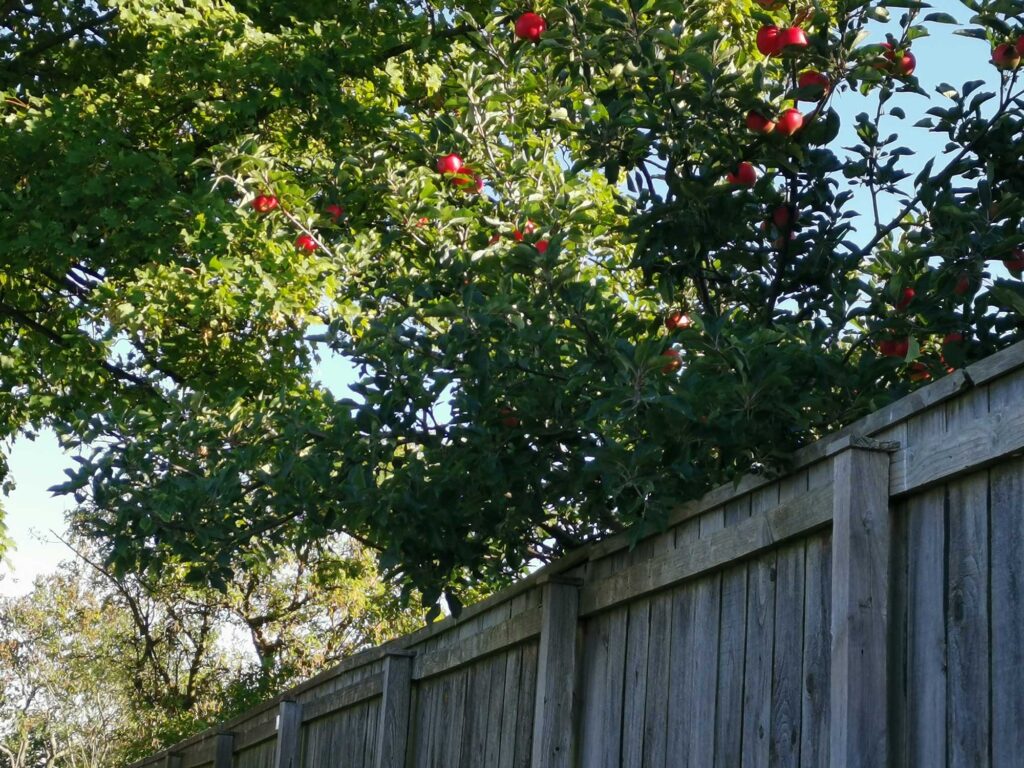
How To Identify Apple Trees Out In The Wild
The simplest way to identify apple trees out in the wild is by their their fruit or their flowers. Their flowers you'll find in Spring (April time here in the UK) and their fruit you'll find hanging from late summer to winter – late August to December for hardy varieties.
Apple Tree Flowers in Spring
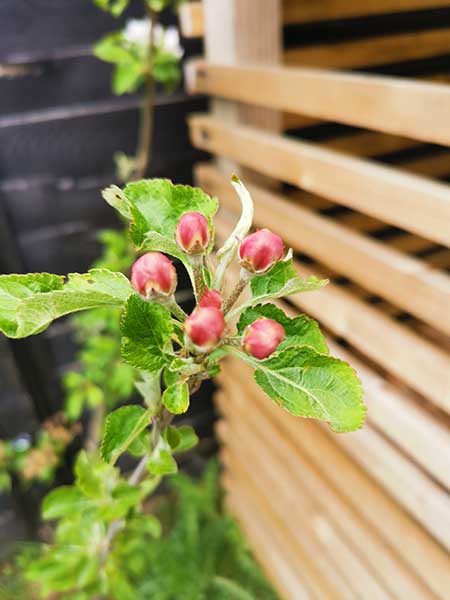
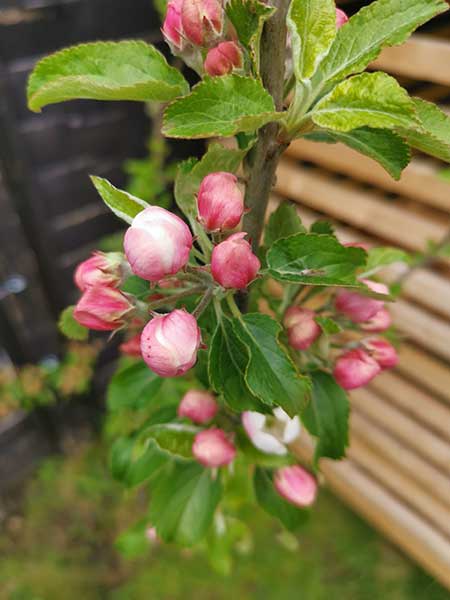

Best Time to Pick Apples Is In Late Summer

Identify An Apple Tree By Its Fruit
This is the easiest way to identify apple trees. Apples are pretty simple to spot; especially near harvest time around late August to December – which is usually the best time to pick apples. Different varieties ripen sooner than others which is why the harvest season is so long.
They look just as you find them in the supermarket when they're hanging on the tree, although the colour will vary depending on variety.
You'll also often notice when driving down a road a pile of apples in the gutter. This is a great method for spotting apple trees.
Make a note of the location and come back later for a closer look when you have a bit more time. Bring a bag just in case.

If you miss these two windows of opportunity, they're a little harder to identify as they shed their leaves in winter.
This means the best (easiest) time to identify an apple tree is Spring or Late Summer.
It sounds obvious, but you'd be surprised just how alien the concept of seasons actually are in our modern society – or even why they are important for things like this.
How To Identify An Apple Tree Without Any Fruit On
You can identify an apple tree in the Winter by the bark. The bark of an apple tree is generally grey, scaly and rough to the touch.

Apple trees have a relatively smooth but scaly bark. That sounds like a bit of a contradiction so I'll try and explain. The colour is more grey than brown and the bark grows as ‘scales' (not always, but often). Each scale is more smooth than rough, unless the tree is very old.
It's a much more difficult thing to do than just looking at either leaves or fruit in the spring, summer or autumn though.
You can identify whether a tree is an apple tree or not but you won't be able to identify the apple variety until you pick it and eat it. And that can be very tricky (but fun) to do.
A good place to try and identify an apple variety is the Apple Name website, which has a tool online to help.
Identify An Apple Tree By Its Leaves
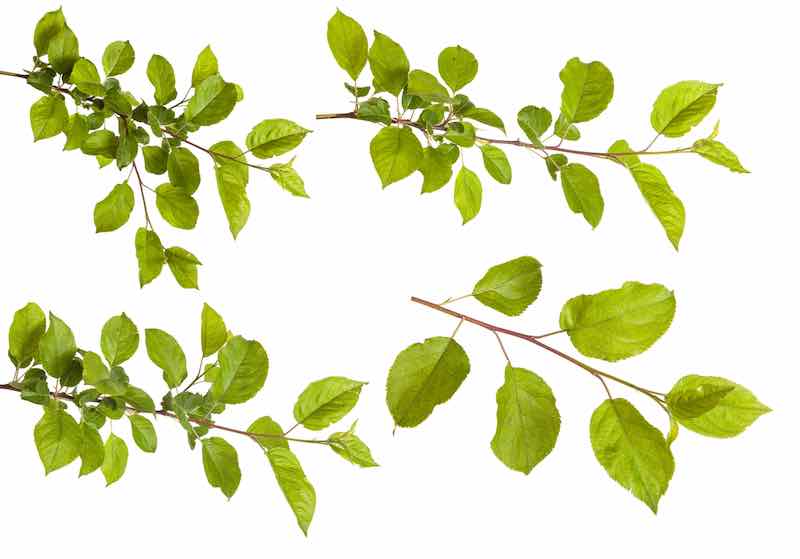
You can identify an apple tree by looking at some of it's leaves. This image from Minneapa Orchards is a good one to start with.
The best time to do this is from Spring through Summer. You'll see looking down at the leaves that they are not glossy, but rather, have a matt appearance.
The darker underside is about the same colour as the upper side. You'll also see they have jagged edges, like a serrated knife or fine tooth saw.
The leaves grow as single leaves directly from a branch.
The Best Time To Pick Apples
The best time to pick apples (in the Northern Hemisphere, at least) is between late August and December (that's late summer to winter), when the apples are ripening on the tree. You can usually tell when an apple is ripe because you might see a few of them on the ground around the tree.
This is not always the case though so don't just wait for apples to drop before you try them.
And that is the next best way to tell when an apple is ready to pick; by trying it.
You can tell when an apple is ready to try because it will be swollen to about the size of your fist. When you twist it, it will let go of the branch pretty easily. If it doesn't come off easy, it may not be quite ripe to eat but could make a great juicing or cider apple at this stage.
4 Ways To Test If An Apple Is Ready To Pick
- Check the colour of your apples
- Check for ease of separation from the tree
- Check the pip or seed colour
- Taste your apple
One: Check The Colour of Your Apple
Check the final colour of your apple. This may be difficult if you don't know what variety of apple is growing on a tree and if that's the case, the other methods in this guide will be better suited.
Alternatively, you may, for the first year at least, just wait and watch patiently as the apples ripen and fall off the tree to see what colour they turn.
For example, I have a [variety] in my garden and I know that when the apple is fully ripe, it has a blushed light red/pinky colour to it that covers most of the apple.
Before it reaches that stage, it has a green colour that fades to red/pink where the apple hangs on the branch. If my apple has more than 80% red or pink colouring, I know it's ready to pick.
Two: Ease Of Picking
Ease of picking, or ease of separation is a good way to tell if an apple is ripe or not. It's pretty easy to try.
For example, when you pick an apple; can you just lift it up and off without forcing or twisting anything? This is a good sign these apples are ripe.
If they're not ready, you'll find you have to twist and turn to get the apple off. That means it's not quite ready.
Important to note here though that sometimes apples higher up the tree come off easier/sooner than those down below. It's not a ‘harvest everything in one day' sort of situation. Some apples ripen on the tree quicker than others so you may need a few apple picking sessions.
Three: Check The Pip (Seed) Colour
Another great way to check if an apple is ripe or not is to see what colour the seeds inside are. Ripe apples will have nice brown seeds.
Unripe apples will have seeds that are white or white turning brown.
Four: Taste The Apple
My favourite method to see if it's ripe enough and ready to harvest; if it's too sour and your puckering too much then chances are it's going to need just a little bit more time.
When you've found a tree with ripe apples you like the taste of, it's time to grab your bags and fill your boots up.
Are Poisonous Apples Real?
No, there is no such thing as poisonous apples but apple seeds do contain traces of cyanide. One gram of apple seeds contains around 0.6mg of cyanide, but the lethal dose of cyanide starts at over 50g, which means you'd need to eat nearly 100 apple seeds in one sitting to start putting yourself at risk.
I don't know where the origin of the poisoned apple story comes from exactly but the most well known origin story is that coming from the Bible, where Adam and Eve were warned not to eat fruit from the Tree of Knowledge.
In pictures, this fruit is often depicted as an apple. As a gentle aside, I find it interesting that when you cut an apple in half length ways, you will see the 5 pointed star shape housing the seeds…
If you have any other stories about the possible origins of the poisoned apple I'd love to hear about them in the comments below.
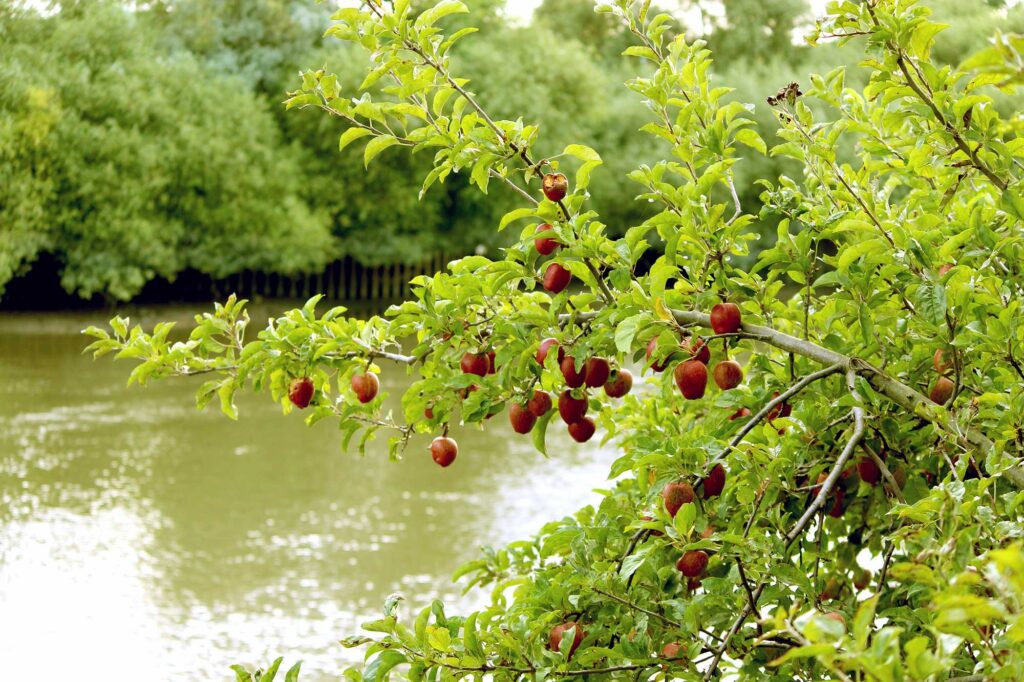
Best Places To Find Wild Apple Trees
I've done a lot of wild apple hunting in my time. It's not even something I set out to do these days, I just do it wherever I am.
Hands down the best place to find wild apple trees is by roadsides. But perhaps standing on a busy roadside is not exactly the best time to pick apples!
It makes sense; you're eating an apple in the car and you finish it to the core but you wait until you slow down at a roundabout or junction to wind the window down and throw the apple out.
About 7 or 8 years later, boom, you get an apple tree. I say 7 or 8 years because that's generally how long it takes an apple tree to start fruiting.
So next time you see a wild apple by a roundabout, give it a little respect, it's been growing there against all the odds for a long time.
Roadsides are not the only place to find apples though; here's a list of my top locations:
- Roadsides
- Roundabouts
- Junctions
- Parking Lots (rather the grassland surrounding parking lots)
- Abandoned land with public footpaths dissecting it
- Land at either side of public footpaths in forests, meadows or parks
- Old monasteries, churches, abbeys and the like
- Land by riversides
- Boundaries between farmers' fields
If you have a good hunting ground to find apple trees please drop it in the comment section below.

The Best Way To Pick Apples
Unless you've found a wild apple that has grown outward instead of upward for some reason, you'll likely find that the best apples tend to grow at the highest branches of the tree.
If you're lucky enough to have a small or well-cared for tree that was pruned to height correctly, you'll be able reach up or shake the branches to release those scrumptious apples yourself but if you need to shake a tree to release apples, be wary of the limitations of storage.
If you plan on storing apples for the long term then it is best to not bruise them (so not let them drop onto the grass) as this will affect the length of time they will store for.
There is nothing more frustrating than seeing a gorgeous looking, scrumptious apple that is just out of reach. But the good news is there is a simple, life-altering hack that will change everything…an apple picker.

Yes…it's just one of those tools that make your life unbelievably more simple!
The one shown in the pic here is a generic, cost-effective extendable apple picker that collapses down to less than a metre high and extends outward to almost 2.5 metres when you're ready to pick. This makes it manageable to take with you on your apple scrumping adventures.
2.5 metres is good reach to get the best apples, trust me. This one here is available to buy online and if you look after it properly (as you should all of your tools), will last you years so will be worth the investment.
If you don't want to buy your own apple picker, you could always build your own with this simple method if that's more your thing.
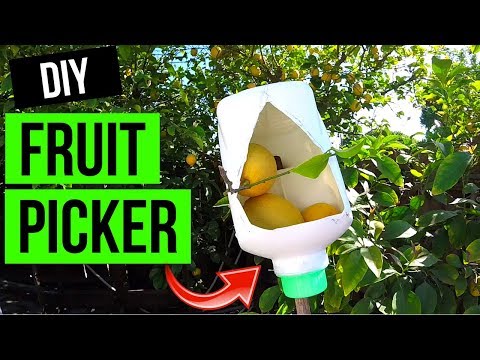
You'll also need to have a couple of big bags with you to fill up that can handle the weight. Don't skimp on the bags after all your hard work picking.
The Best Way To Store Apples
Picking the apples from some wild apple trees is only half the battle. The rest of it comes down to storage and, given where it seems we're heading, the most efficient way to do this would be to store apples without refrigeration.
As you learn more and more about becoming more self sufficient with your food you'll learn that the most important factor in all of it is learning how to store and preserve the food you harvest.
Apples are the same and if you find the right varieties and have the ability to store them at the right temperature your apples will stay fresh for up to 6 months.
How Can You Tell If An Apple Is Going To Store Well
A simple rule of thumb to assess the storage potential of an apple is how long it stays hanging on the tree for. If an apple is still hanging on a tree towards the end of December then chances are it's going to store very well in the right conditions.
Apples that fall off the tree before November won't be as good at storing as those that hang after but may still give you a few months of storage if they're kept in the right environment.

What Are The Right Conditions To Store Apples For The long term?
First, pick your apples into large boxes that have good airflow, being careful to ‘handle like eggs' as old wisdom tells.
Next store them in a chiller at somewhere approximating 34 degrees. You can take it down to 30 degrees with most apples without causing any damage. If you want to learn how to store apples without refrigeration, we wrote a dedicated guide just for that.
Once you have the right temperature, you need to keep the area damp but not soaked as much as possible and that's to keep the apples hydrated.
The key to apple storage is to slow the respiration rate down to prevent dehydration which is what happens to most things under any refrigerated conditions. The goal is to slow down the production of ethylene and the resultant production of enzymes within the apple that break it down.
If you can do all these three things you can end up with apples that store for up to 6 months whilst retaining their flavour and crispness.
The biggest factor though, is choosing the right apple to begin with so keep that in mind when you go scrumping.
And now you know that if you see a tree full of apples in the middle of December that also taste great; you've found a real treasure; so keep it secret (and make lots of clones of it).
Beat The Reset
If you enjoyed this guide, subscribe to my newsletter to receive more content like this, lots of positive news stories and some practical solutions to help you beat the reset.





Hi,
Great info! I just love how versatile apples are. You can make so many things but applepie is the favorite. Never tire of that 🙂 This year there has been so much talk about chemtrails and I have seen how plants actually don´t seem as healthy as usual. Is it safe to eat is my consern, maybe wash thouroughly? Is that enough? I guess the water trees absorb come from further down in the soil so that should not be a problem anyway. Thoughts on that?
All the best
Kristina
Hello, Kristina,
Apples are delicious. Especially when they’re free.
With regards to the fumes, chemsprays etc. I really just assume that everything grown outside has to be washed thoroughly anyway.
If you spend your life thinking everything will kill you, surely, something will.
Do what you can with what you’ve got and put your faith in The Great Spirit for the rest.
Safe travels out there.
Hi Kristina, We wash all of our organic veg (from Farmacy co-op!)with a product called Veggie Wash (and fruit too) A friend of ours developed it some years ago and it has been one of his most successful products across the world. All natural.
We have a hedgerow apple tree just down the road, and I found this site https://www.fruitid.com/#main where I may be able to identify the variety. Says it is for the common cultivars growing in the British Isles.