I went into an independent bookshop for the first time in years over the holidays and can honestly say it was the most nauseating experience of ‘wokeness' I'd ever unknowingly subject myself to. In the entire shop I only found one book that gave me any sense of hope: The Wilderness Cure, by Mo Wilde, and this is my review.

My trip to the bookshop should have been a pleasant, peaceful experience. Surrounded by ancient wisdom and knowledge, interspersed with the odd waft of dusty pages revealing their secrets to the world.
Instead, I found myself suffering a saddening shrine to wokeism; every title jumping off the shelves as I walked slowly down the aisles, pricking me with globalist thorns filled with faithless poison: climate catastrophe, virus fearmongering, transgender ideology (in the children's section), politically biased fiction and desperate, desperate glorification of the established order.
For the first time in my life, I could see the laws that governed the publication of mainstream books loud and clear, like neon signs in the dark: support the narrative, and ye shall have your book published.
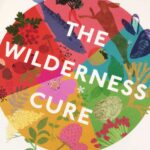
Nauseated, I turned to leave, resigning myself that all was lost when I noticed the bright and interesting cover of The Wilderness Cure on a table by the door. “Ancient wisdom in a modern world,” the strapline read. This sounded right up my street.
Of course; it was nestled on the ‘climate table,' a curated collection of books about ‘saving the planet' and nature. Naturally.
I lifted the book and read the cover insert with some cautious hope but, honestly, expected to be disappointed:
“A captivating and lyrical journey into our ancestral past, through what and how we eat.
Mo Wilde made a quiet but radical pledge: to live only off free, foraged food for an entire year. In a world disconnected from its roots, eating wild food is both culinary and healing, social and political. Ultimately, it is an act of love and community. Using her expert knowledge of botany and mycology, Mo follows the seasons to find nutritious foods from hundreds of species and plants, fungi and seaweeds, and in the process learns not just how to survive, but how to thrive. Nourishing her body and mind deepens her connection with the earth – a connection that we have become estranged from but which we all, deep down, hunger for.This hunger is about much more than food. It is about accepting and understanding our place in a natural network that is both staggeringly complex and beautifully simple. THE WILDERNESS CURE is a diary of a wild experiment; a timely and inspiring memoir which explores a deeper relationship between humans and nature, and reminds is of the important lost lessons from our past.”
OK, I was interested. I bit the bullet and paid in cash – although, admittedly, the gesture was lost on the store owner.
In writing The Wilderness Cure review, I've tried to remain unbiased, reviewing the book on it's promise, rather than it's politics, and have tread very carefully in my writing so as not to spoil the book for you by giving too much away.
The Wilderness Cure review should, therefore, not ruin the surprises, but simply inform you as to whether or not it's worth buying at all.
I hope you enjoy it.

The Wilderness Cure Details
Price: £16.14
Publisher: Simon & Schuster Ltd
Publish Date: 23 June 2022
Language: English
Type: Hardback
Pages: 368
EAN/UPC: 9781398508637
The Wilderness Cure Review: A Book By Mo Wilde.
I'm not going to lie; I bought The Wilderness Cure for two reasons:
- I enjoy learning about alternative forms of healthcare because I believe one day we'll need them. And, with a title like ‘The Wilderness Cure‘, how could I ignore this? Could it really offer the answer to curing yourself of ailments in the wilderness? My interest was piqued.
- It had a great strapline: ANCIENT WISDOM IN A MODERN WORLD. Another thing I'm partial to is ancient wisdom; things that we've lost along the road to convenience. Again, because I think we'll need it one day.
It also happened to coincide with some downtime around the holidays where I really fancied sticking my head into a book instead of losing it in a smartphone.
I already have a shelf full of herbal books; David Hoffman's Holistic Herbal, Bartram's Encyclopaedia of Herbal Medicine, Margaret Grieves' A Modern Herbal and a stack full more and I didn't really need another one.
I think that's why The Wilderness Cure hooked me in. It seemed to offer a cure through the telling of a story, day by day, rather than provide a list of cures to pick from like many herbals do.
There is great power in story telling, and I hoped this was going to tell the story of how the author found a wilderness cure; some profound knowledge that was so easy and accessible to all that it becomes obvious once you see it.
First Impressions
I realise that I may come across as somewhat of a dinosaur to you when I tell you I'm one of those old souls who still find enjoyment and pleasure out of how a book feels. The binding, covers, embossing, quality of paper and even the weight; those simple base level tactile pleasures that are now lost to tough glass and touch screens.
The Wilderness Cure felt good. Not 1800s level embossing and grandeur, but substantial and far from the ‘print and go' books you find more and more these days.
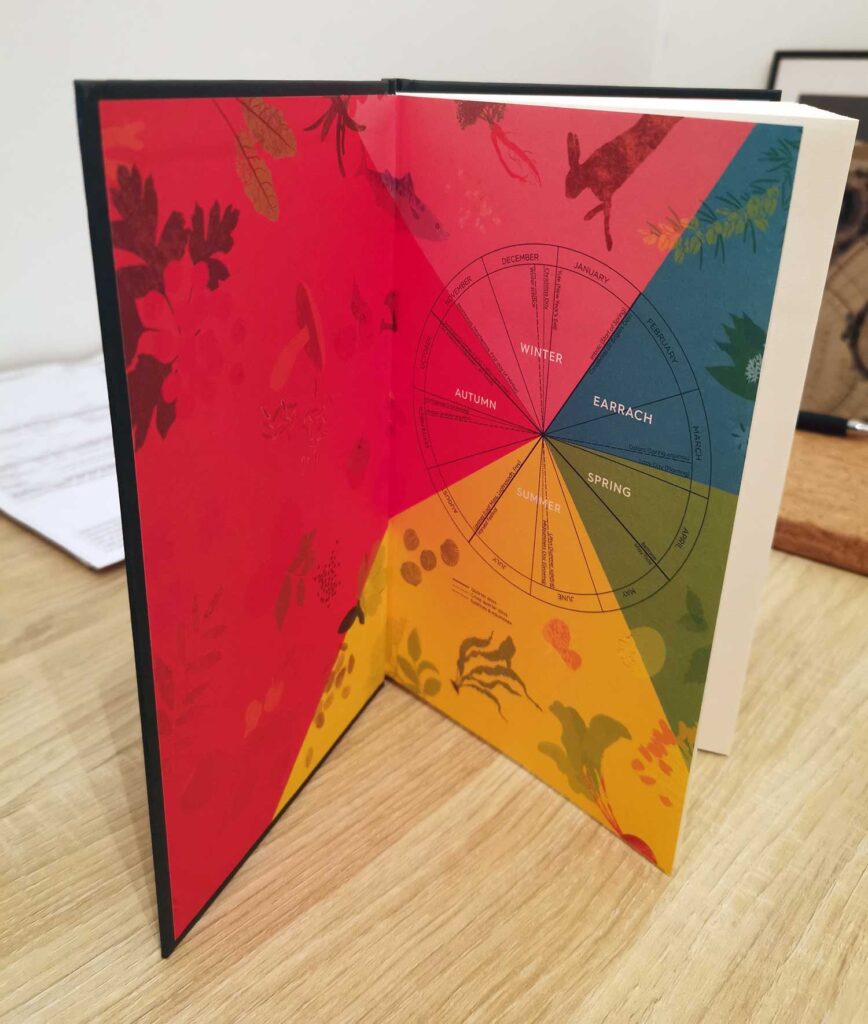
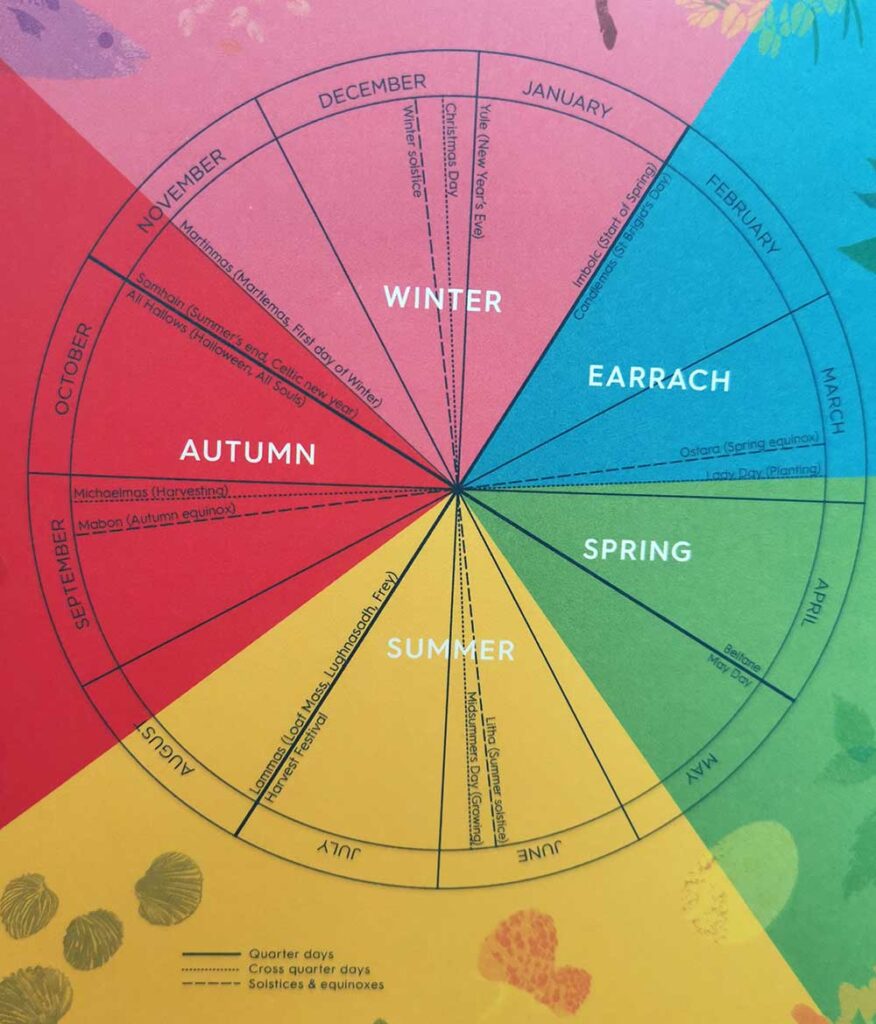
There was a fabulous drawing on the inside cover depicting the 5 Celtic seasons of Winter, Earrach, Spring, Summer and Autumn. This really struck me not only because it looked beautiful in it's colours, but also because I'd never come across it before. Whilst not judging; this seemed to be a good sign for that ancient knowledge I was hungering after.
The Premise
The author, Mo Wilde, is a forager, research herbalist and ethnobotanist. After being subject to the endless consumer-driven snake oil of Black Friday and the struggle with the pandemic lockdowns in 2020, she decides, quite emphatically and determinedly, to embark on a quest rooted in her beliefs: she's going to eat only wild foods that she forages, hunts or fishes for an entire year.
I get the sense in doing this, Mo is challenging herself to the extreme by ‘practising what she preaches.' In part, due to a need to feel some sense of self actualisation, but also because I believe she really, really loves our natural world.
I think aside from her own personal exploration of her abilities, she sees this quest as a way she could work harmoniously and gratuitously with nature, or Gaia, as she refers to it, in her perceived battle to ‘save it.'
Save it from what? From us, of course! Those filthy, pesky Anthropocene who seem to rape and pillage the bounty of Gaia with no thought to her suffering – at least that's what mainstream propaganda would have you believe. I'd disagree, but that's a long discussion for another article.
The prospect of writing a book about the experience, I think, is Mo's way of teaching the world by showing it the world. And it's beautiful in it's simplicity.
In her own words:

The Style: Weaving Stories With Wisdom
I found Mo's style of diarising each day (or every few days) sometimes warm and welcoming; and sometimes like the book had transmuted into Wikipedia without me knowing. And not always in a good way.
Regardless, each day gave me a small glimpse into a very wise woman's mind and beliefs that, for the most part, I feel grateful to have shared.
I felt honoured to be invited into her life on the days where she talked of plants; where they grow, how to find them and how to prepare and store them for later. Conversely, I wanted to leave the house every time she went from Wise Witch Woman to Extinction Rebellion advocate.
And I use the Wise Witch Woman moniker with the greatest of respect as, in her own words, “her knowledge and sensitivity of the herbs and to the herbs and of medicinal plants would have been seen as a form of witchcraft,” in times past. A trait which I found most appealing about her, if I'm honest.
It is in these moments, where Mo becomes the witch, rather than the academic, that I found most joy and wisdom in the book. I enjoyed her stories of old culture; of Otzi the Iceman and his tattooed acupuncture points, of Celtic Sweat Lodges and Witchcraft.
I also enjoyed the profound revelations, of which there were a few, that commemorated her year of wild.
On The Cusp Of Profound Knowledge
There were at least 3 or 4 moments in the book where I felt that Mo was on the cusp of some profound, revelatory wisdom that was almost within touching distance; but just out of reach.
I'm not even sure why I describe it as ‘just out of reach', because knowledge is knowledge but I think we've been conditioned to only accept ideas if they come with a seal of approval from a government-backed institution – a belief I hope the last 3 years has taught everyone is complete fallacy. Danger lurks where governments dwell.
Could Wild Foods Cure Diabetes?
One of those moments was her account of Matt, her house mate, whose blood indicators prior to starting the wild food diet with her, indicated that he was diabetic. After 3 months of the wild food diet, his blood indicators had returned to normal levels…essentially meaning he would no longer be diagnosed as diabetic.
This led into discussions about sugar and how, on a wild food diet, it simply would not be possible to eat the amount of sugar that we eat in our own diet today (30gm per day per government guidance but the average person eats far more) because sugar is only truly available in the summer months in fruits and berries.
Vegetarians Aren't Possible In The Natural World
A similar revelation started to happen on her thoughts around meat. Mo described herself as a vegetarian when she started the wild food year but as the winter months set in, it became increasingly necessary for her to eat meat to supplement her diet.
She remarks that being a healthy vegetarian would not have been possible in a hunter-gather society.
Weight Loss On The Wilderness Diet
One of the major changes that happened was that Mo went from a size 18 to a size 12 and lost 31kg over the year! She comments how she never thought she'd ever be a size 12 again and talks about how much more energy and vitality she has.
My Favourite Parts Of The Wilderness Cure
It's hard to share my complete thoughts about The Wilderness Cure without in some way alluding to the parts I love the most about it, but I'm conscious I don't want to spoil it for you so you'll just have to make do with a list of highlights that I think make this book worth reading:
- The seasonal (almost day by day) accounts of foraging which act almost like a Forager's Field Guide; sharing what plants to look for; when and where to look for them and in some cases, how to prepare them.
- The health revelations that get discovered during the year.
- The many references to ancient cultures.
- The deep, spiritual insight and connection that the author has to the world around her and her honest desire to protect it and share it at the same time.
- The fleeting moments of profound wisdom that come from a natural home birth, a trip to Poland, an appreciation for the small things in life, and just having to find a way to survive through the seasons on Nature's bounty alone.
- New thoughts and ideas that inspire wonder: like how plants can detect electricity, the Mycorrhizal network or how the chlorophyll in plants is only one molecule different from blood.
My Least Favourite Parts Of The Wilderness Cure
To say it was all easy and pleasant reading wouldn't be true. I found certain parts of the book quite nauseating at times, particularly so in the latter pages when the book felt like it turned from field manual and diary to mild climate propaganda.
There was a distinct chapter or so, around about the time the author gets caught up in latest ‘news releases' about the report from the IPCC in 2021 where I was really disappointed to read, in real time, how her whole manner changed from wise woman to panic-stricken climate alarmist.
This was one of a few parts of the book that I really struggled to read. There were a few of them:
- Discussions around anthropomorphic climate change
- Eating bugs in Poland
- Joining an Extinction Rebellion protest
- Talk of gender and pronouns

My Final Thoughts: Am I Glad To Have It On My Bookshelf?
If I think back to how I found this book; nestled on a “climate change” table in a small independent book store over the holidays amidst a throng of agenda-driven, politically-biased, woke books, it's not surprising to find some of that in The Wilderness Cure.
However, putting this on a “climate change” table doesn't really do this book justice at all. It is much more than an appendix to a globally unravelling narrative around anthropomorphic climate change, it actually contains some real wisdom that can, in my view, help you save the world, if only you would take the time to save yourself first.
Aside from the obvious and practical foraging calendar that The Wilderness Cure offers, it also touches on more than a few profound insights into human nature, and how our perception of what is important and necessary changes our outlook.
This becomes apparent early into the experiment, where, in the second month, despite the struggle to stay fed, Mo writes, “I think the delight of self sufficiency is outweighing the worry and I really don't miss going to the supermarket at all.”
This account is one of a handful that really resonated with me and supports my own outlook that the health and spiritual benefits that arise from undertaking small, meaningful tasks every day is a far greater pursuit than that of material wealth in the shallow trappings of modern society.
Nothing really sums this up better than Mo's own final parting summary, where she resigns herself to an inner sense of peace and knowing that, despite all the doom & gloom surrounding us, makes her believe that the human race will be ok; it will survive.
And she's right.
This is the part of her I like the most; when she puts aside all the scientific papers and peer-reviewed propaganda and goes back to trusting her innate self, her own deep wisdom that comes, not from academia, but directly from her greatest love of all; nature; Gaia.
“Homo sapiens will survive. We are ingenious, flexible and enough of us care passionately. What we need to choose is a way of life on this planet that gives us quality of life. Call me an idealist, but I want to live in a world where 25% of children are not depressed, where there is no hunger and no conflict.
What we, the politically powerless can do now, is to embrace equality, consume less and live simpler lives, seeking out the spiritual over the material.”
Mo Wilde, The Wilderness Cure
It is for this Mo Wilde, and this inner wisdom that I'm glad I have this book on my bookshelf; the foraging field guide is just an added bonus.
The Wilderness Cure Review: Star Rating

Best Place To Buy
Price: £16.14
Publisher: Simon & Schuster Ltd
Publish Date: 23 June 2022
Language: English
Type: Hardback
Pages: 368
EAN/UPC: 9781398508637