
Did you know you can still go foraging in the winter here in the UK? There are still plenty of free, nutritious plants, fruits & nuts you can find in the colder winter months if you know where to look.

When you look at the winter scenery it's hard to imagine that there is any form of life anywhere. But the reality is, even in the cold winter months, plenty of foodie delights can be found for those wise enough to know where to look.
Foraging, harvesting, and processing wild foods is a super simple and free activity that's suitable for all ages. It's also very addictive!
This old-world tradition used to be the only way our ancestors were able to get food, and while nowadays we have a co-op or big box store on every corner and deliveries available at the push of a button, I still believe that it's truly important to not let this ancient wisdom die.
We created an entire section of our website dedicated to reviving the old ways of becoming more self sufficient in food.
It can be really empowering to rekindle the lost connection with nature and to have a better understanding of where your foods come from. Moreover, foraging during the winter months can help provide nourishment, energy, and warmth in a way that is more in tune with your natural cycle.
In my mind, there really isn't anything quite as good as eating or drinking something which I just picked with my very own hands!

My Favourite Foods To Forage In The Winter Time
Below are some of my favourite foods to forage during the U.K. wintertime. At what better time than to go foraging during the winter! So, get your wellies ready, put on your coat, get a backpack and make your way down to the winter woodlands to find some tasty treats.
NOTE: Make sure you research and correctly identify all foraged food before consuming. There are various look-alikes that can be toxic, so you really need to be 100% sure.
1. Trees
Trees and their cones, bark, needles, sap, and branches are the most popular type of winter foraging. They're available to almost everyone as they can be found in pretty much all climates.
Let's take a look at some of the more common trees you can find whilst foraging in the winter here in the UK.
Conifers
Conifers are evergreen trees that are known for their needle-like leaves and are found in many different regions around the world. Most conifer needles are safe to eat, except for poisonous yew trees.
Examples of safe conifers include pine, spruce, fir, and cedar. Foraging these needles can be an easy and rewarding way to get food in the winter, even in the coldest climates:
- Pine: There are several species of pine in the UK, including Scots pine, Corsican pine, Maritime pine, and Monterey pine. All are safe to eat and can be identified by their needle-like leaves, reddish-brown to grey bark, and egg-shaped cones.
- Spruce: Spruce trees are recognizable by their short, triangular-shaped needles and egg-shaped cones. There are several species of spruce in the UK, including Norway spruce, Sitka spruce, and white spruce. All are safe to eat.
- Fir: Fir trees are easily identifiable by their flat, soft needles and cone-like fruit. The most common species of fir in the UK are Douglas fir and Noble fir, both of which are safe to eat.
- Cedar: There are several species of cedar in the UK, including Atlantic white cedar, Eastern red cedar, and Western red cedar. All are safe to eat. Cedar trees are recognizable by their evergreen needles and woody, cone-like fruit.
You can identify a poisonous yew tree by looking for a few tell-tale signs. They have short, dark green needles with a glossy finish and their bark is usually a reddish-brown colour. The needles are usually arranged in pairs and are curved at the ends. The berries of the yew tree are also a distinctive feature, usually a bright red colour.

Birch branches and bark
Birch is another tree that you will find when foraging in the winter in colder climates, including the U.K.
Small branches, twigs, and bark can all be used as tea. Furthermore, the inner bark also serves as a substitute for flour. It's important to remember to not take too much bark from one single Birch tree as it can harm growth.
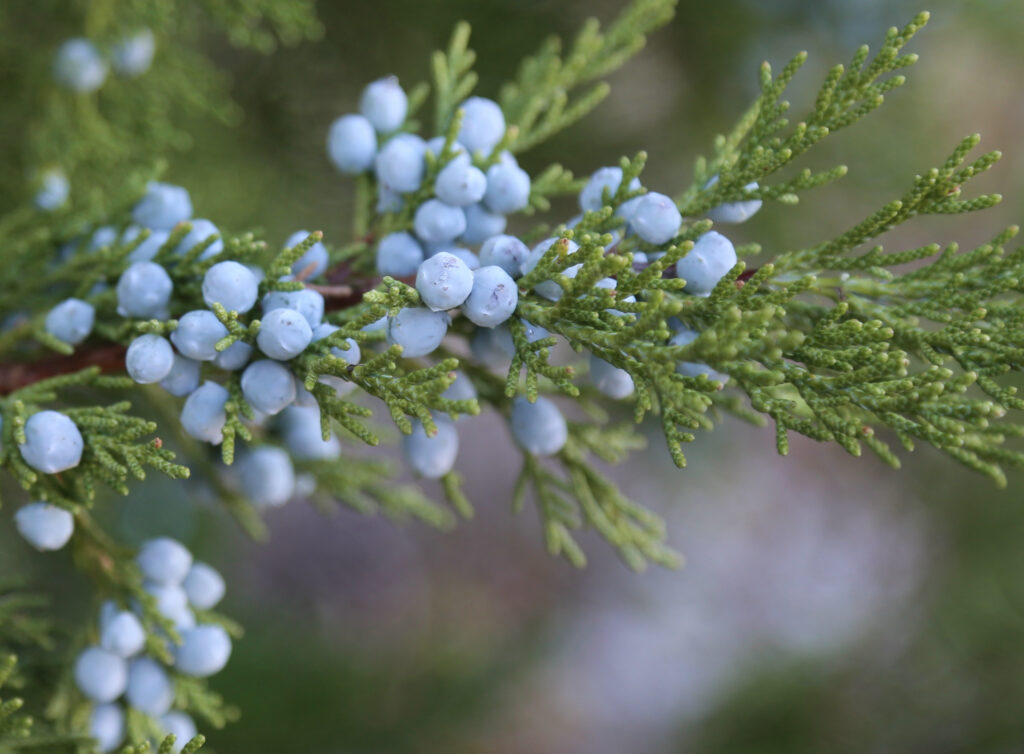
Juniper Berries
Unbeknown to most, juniper berries aren't actually berries in fact they're a fleshy type of pine cone with a unique flavour and scent. They are commonly used as the main flavouring for gins.
2. Leaves and Flowers
There aren't that many evergreen leaves that can be found during the colder months in the U.K., let alone flowers. But, there is one worth mentioning!
Watercress
This plant absolutely loves colder water and will often thrive all winter long. Watercress tastes a little peppery and can serve as a great addition to salads.
Watercress is a leafy green vegetable that is easily identifiable by its vibrant green color and its small, distinctive leaves. It can be found growing in watery areas such as ponds, streams, and rivers, and it has long been used as a medicinal herb.

Early Spring flowers
Because there aren't many leaves or flowers to forage during winter, I've decided to include this section. In milder climates you can find chickweed, nettle, wild violets, yarrow, and dandelion, among others, growing all winter long.
For more specific information about Nettle and how to harvest it safely, read our dedicated guide. You can also read about the extra health properties of yarrow from our herbs for self healing library if you're looking for ways to be more self sufficient in health.
When the U.K. experiences milder winters, it's worth going for a nice hike to see if any of these can be found. Otherwise, they will start to show up toward the end of January or the beginning of February.
3. Roots
Roots are a great winter foraging food! These three roots are great to know about as they're extremely calorie-rich and offer some medicinal properties as well.
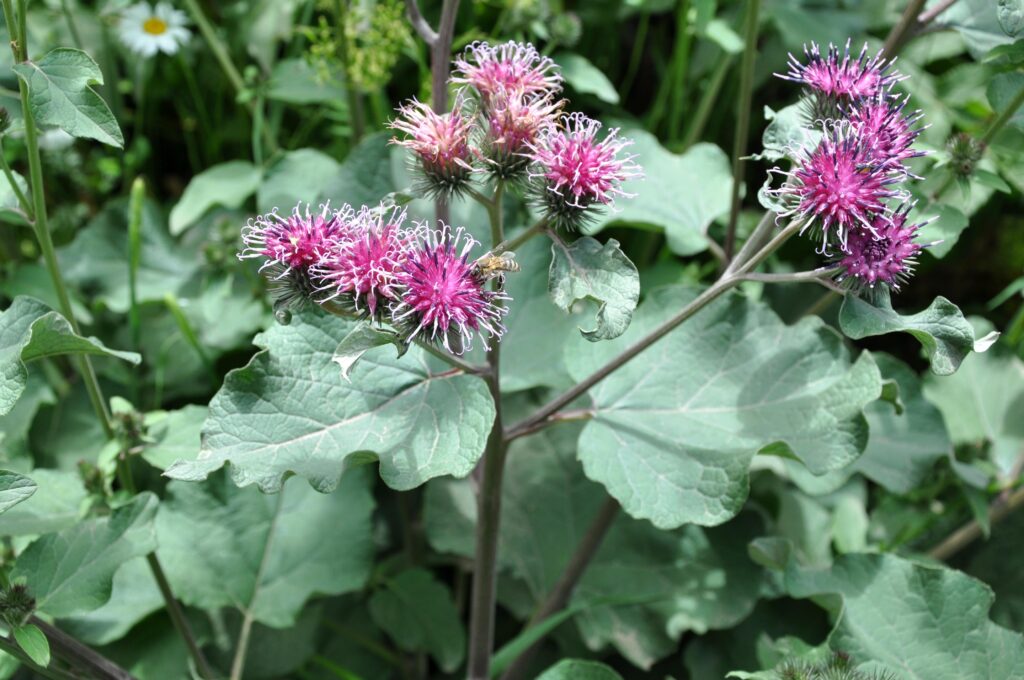
Burdock
Burdock root comes from a thistle. It's often eaten, yet, can also be dehydrated and used as tea. It's considered a good source of inulin, which is a prebiotic fibre that helps digestion. Also, this popular root contains phytochemicals, antioxidants, and flavonoids that are known to offer a long list of health benefits.
Burdock is a biennial plant with large, heart-shaped leaves and purple thistle-like flowers. It has large, dark-brown to black seed-heads which are the most distinctive feature of this plant. The stem is stout and covered in short, stiff hairs. The leaves are alternate and strongly veined, with coarsely toothed margins. The flowers are purple to pink in color and grow in a cluster at the end of the stem.
Chicory
This root grows almost everywhere and can be foraged during winter as long as the ground isn't frozen over. Most people ground it up and use it as a coffee substitute. Similarly to burdock root, chicory is a great source of inulin. It also has mild laxatives and anti-inflammatory properties.
Chicory can be identified by its bright blue flowers and long, pointed leaves. The leaves can be curly or lance-shaped, and they typically have a slightly bitter flavor. The flowers of chicory are typically a deep blue or purple and are clustered together in a small ball. The flowers can also be white, pink, or even red. The roots of chicory are thick and fleshy, and often have a slightly sweet flavor.

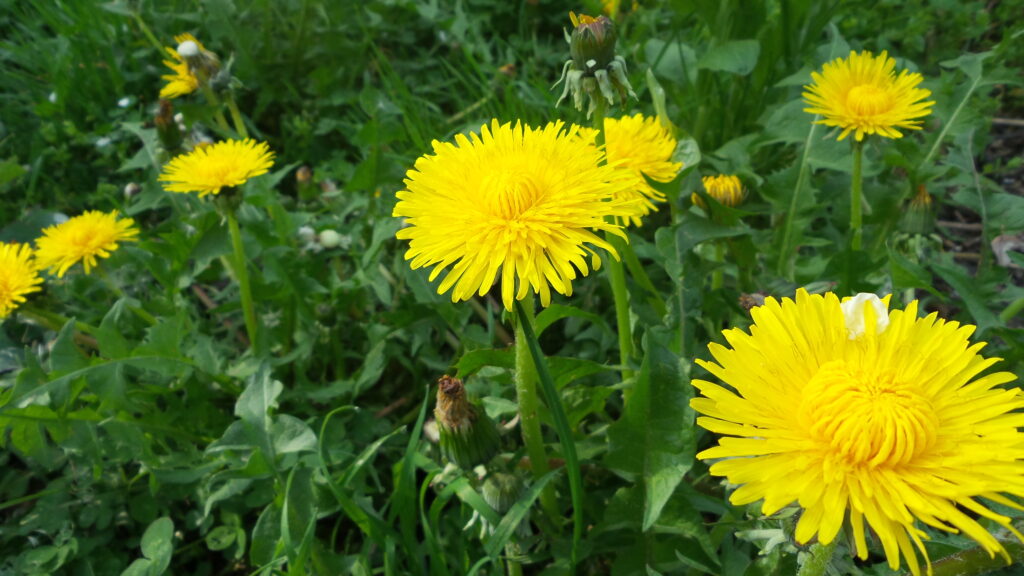
Dandelion
This root can also be harvested through the colder winter months as long as the ground isn't covered in snow. Dandelion root is highly medicinal, and you can use it to make digestive bitters, teas, tinctures, coffee alternatives, flavouring agents in soups, etc.
Dandelions are easily identified by their bright yellow flowers with a single hollow stem. The flowers are made up of many small petals, and the center of the flower contains a tuft of white or light-colored bristles. The leaves of a dandelion are long and generally have a jagged edge. They are usually a bright, medium green in color and grow in a rosette-like pattern around the stem.
4. Seeds and Nuts
Some seeds and nuts can last through winter, whether or not other animals have got to them first is a different story!
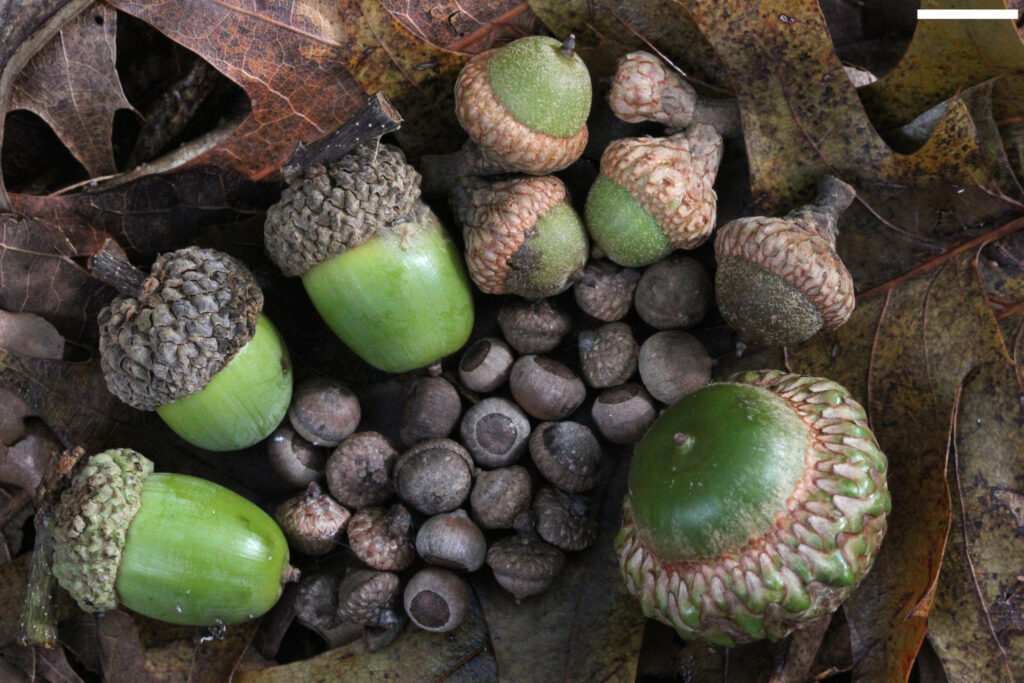
Acorns
One of the most popular nuts to forage in the U.K. are oak tree acorns. They come into season during the autumn months, and unless the squirrels have got to them first you're usually still able to find them in wintertime. These nuts need to be processed for them to be edible, but once done the flour tastes amazing.
Acorns can be identified by their distinctive shape and size, which typically range from 0.5 to 2 inches in length. They usually have a pointed tip, with a rounded base, and a ridged surface. The color can vary from light brown to dark brown and sometimes even a reddish hue. The caps of the acorns can vary in shape, size, and texture, and may have a few different colors.
Pine nuts
When foraging for pine nuts you'll need to search for cones that are dislodged or slightly open. If they're not, make sure to place the pine cone near a heat source such as a fireplace for a couple of days. This will help open the cone up to reveal the pine nuts. Although pine nuts can be consumed raw most people tend to roast them first.
Chestnuts
This tree isn't actually native to the U.K. but has been around since the ancient Romans introduced it many centuries ago. They're a classic winter treat! When foraging, you'll need to keep an eye out for their spiny casings on the floor in woodlands.
5. Berries
While berries aren't known to grow during the winter time, there are some that will stay on branches and bushes throughout the snowy and colder months. If they freeze they can end up a little mushy in texture, but that doesn't mean they can't be used for syrups, sauces, and jams.
Rose Hips
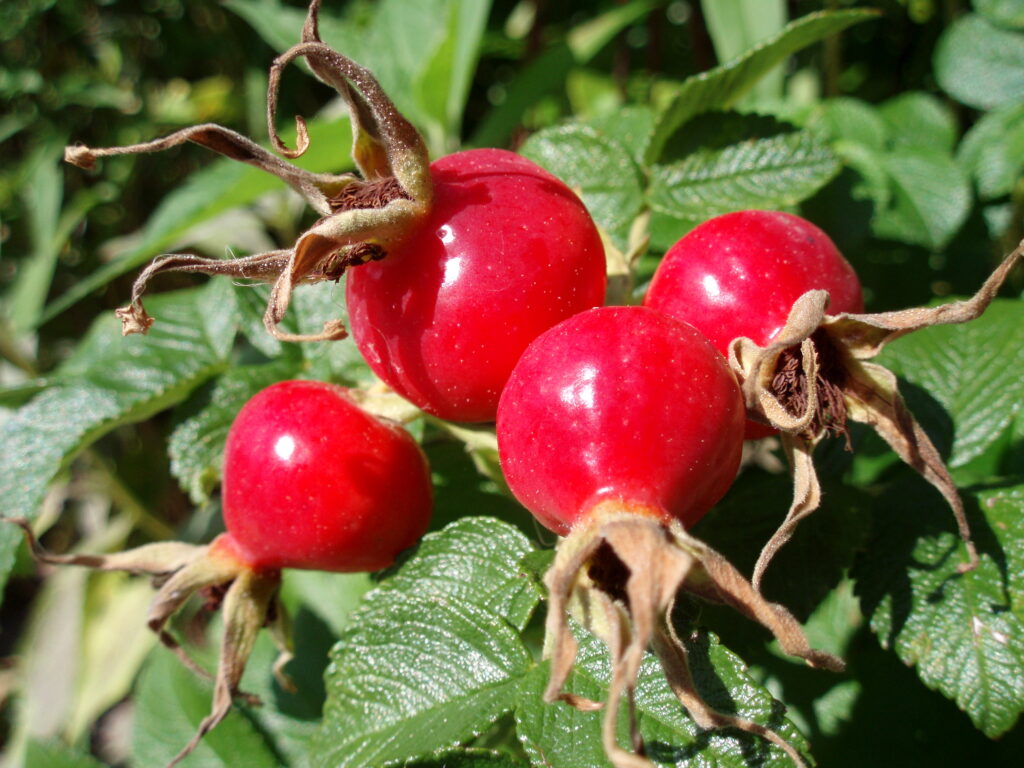
These well-known berries are the fruit of the rose flower, and can be found both in cultivation and the wild. They start fruiting in the autumn months but sometimes will last through the winter. These magnificent berries are packed with vitamin C and are a great ingredient for making jelly, jam, and even tea.
Rose hips are the round, red fruit of the rose plant, and can be identified by their bright red color and the small hairs that cover them. Their shape is often described as being similar to a small apple. Rose hips can vary in size, with some being as small as a pea and others being as large as a cherry.
Hawthorn Berries
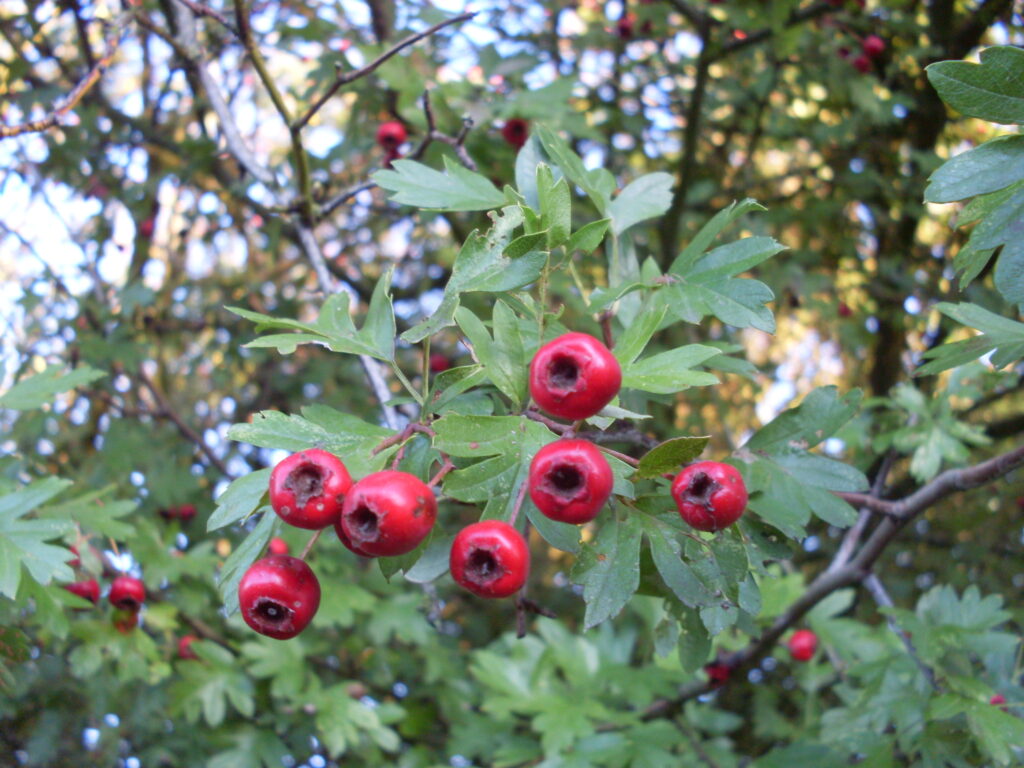
There are various varieties of hawthorn berries, and some will continue to fruit during the colder winter months. Some hawthorn berry varieties don't taste great, but the good thing is that none of them is toxic, with exception of the seeds.
Whatever you do, make sure to not eat the seeds! These berries contain high levels of pectin and taste great when processed into jams or jellies.
Hawthorn berries are small, round, and usually have a deep red hue. When identifying hawthorn berries, look for a bright red color, juicy flesh, and a hard seed. The berries can also be identified by their distinctive five-pointed shape.
Cranberries
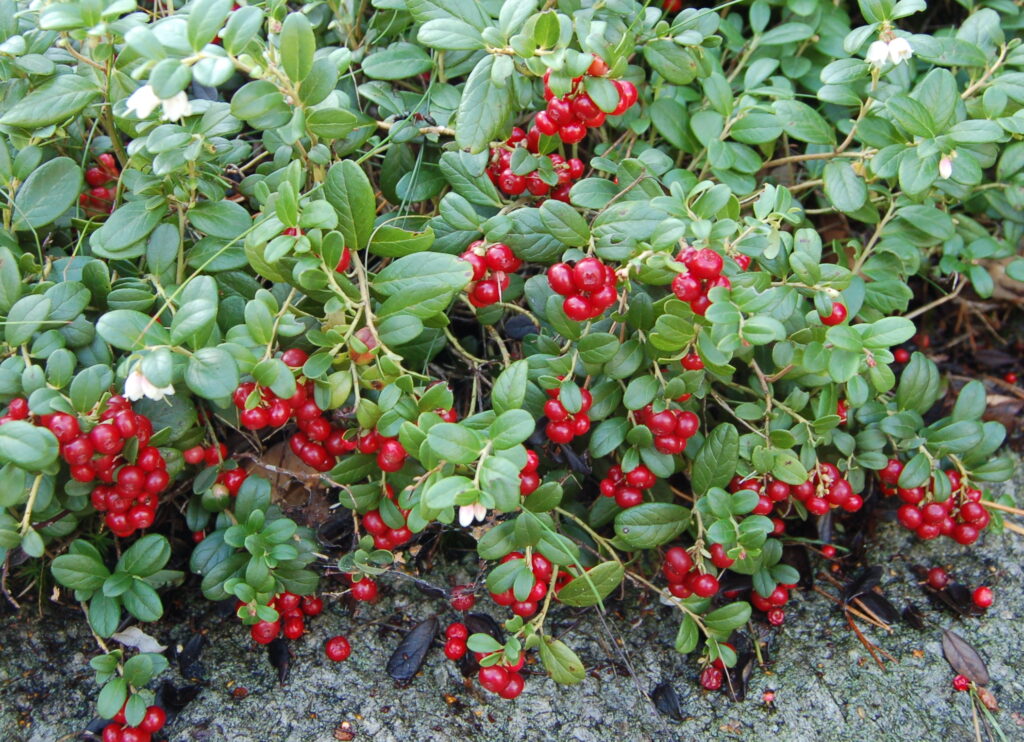
In the U.K. there are two types of wild native cranberries, Vaccinium microcarpus (Small cranberry) and Vaccinium oxycoccus (Northern Cranberry). Cranberries are known to handle the cold well and will last throughout most of the winter. Cranberries are popular with many winter foragers.
Cranberries can be identified by their small size, bright red color, and tart taste. The berries are round or oval, and the skin is usually smooth and glossy. When ripe, they are usually an intense red, but can range in color from light pink to deep purple. The taste can range from tart to sweet, depending on the variety and ripeness.
6. Mushrooms
Many edible mushrooms can be foraged in the winter in U.K., especially mushrooms that grow above the snow and frost line on trees. While some won’t endure and outlast hard frosts, some will.
Here are a few of my favourite mushrooms to forage:
Velvet Shank Mushrooms
Velvet shank mushrooms, also known as Flammulina velutipes, are a type of edible mushroom that is native to Asia. They are commonly known as enoki mushrooms or enokitake in Japan, where they are widely cultivated. They do, however, appear in the UK also and are a real treat when found.
Velvet shank mushrooms can be identified by the following characteristics:
- Thin, delicate stems: Velvet shank mushrooms have thin, delicate stems that are pale yellow to white in colour. They are typically about 5-15 cm in length.
- Small, umbrella-shaped caps: Velvet shank mushrooms have small, umbrella-shaped caps that are pale yellow to white in color. They are typically about 1-2 cm in diameter.
- Mild, slightly sweet flavour: Velvet shank mushrooms have a mild, slightly sweet flavour that is distinctive but not overpowering.
- Crunchy texture: Velvet shank mushrooms have a crunchy texture that is distinctive and pleasing.
Velvet shank are often grown (or found) in the winter in UK growing on logs, in sawdust, or in bags of straw or other materials.
Oyster mushrooms
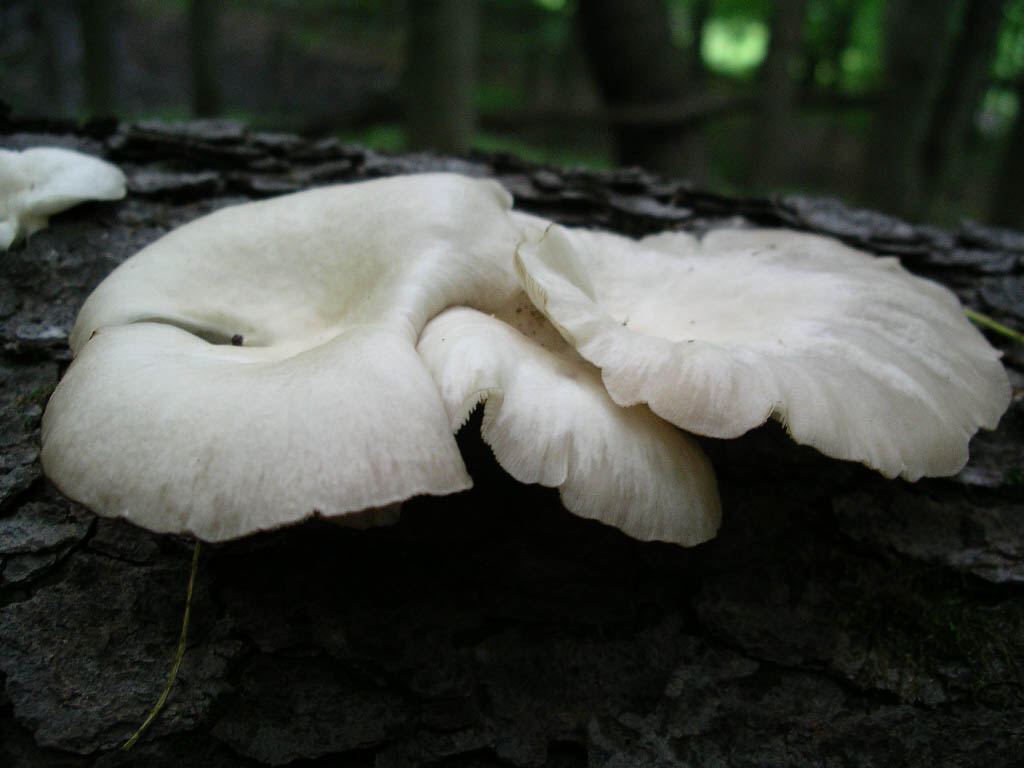
They grow on dead wood and logs, and can normally be found pretty much all year round. They don't tolerate big freezes, but I've foraged them in late winter before so it's always worth keeping an eye out for them.
Oyster mushrooms can be identified by their white to grayish-brown color, fan-like shape, and soft flesh. They typically have curved gills on the underside of the cap and a short, stubby stem. The edges of the cap are typically wavy or scalloped, and the mushroom may appear to be growing in overlapping clusters. The smell of Oyster mushrooms is often described as a pleasant, mild odour.
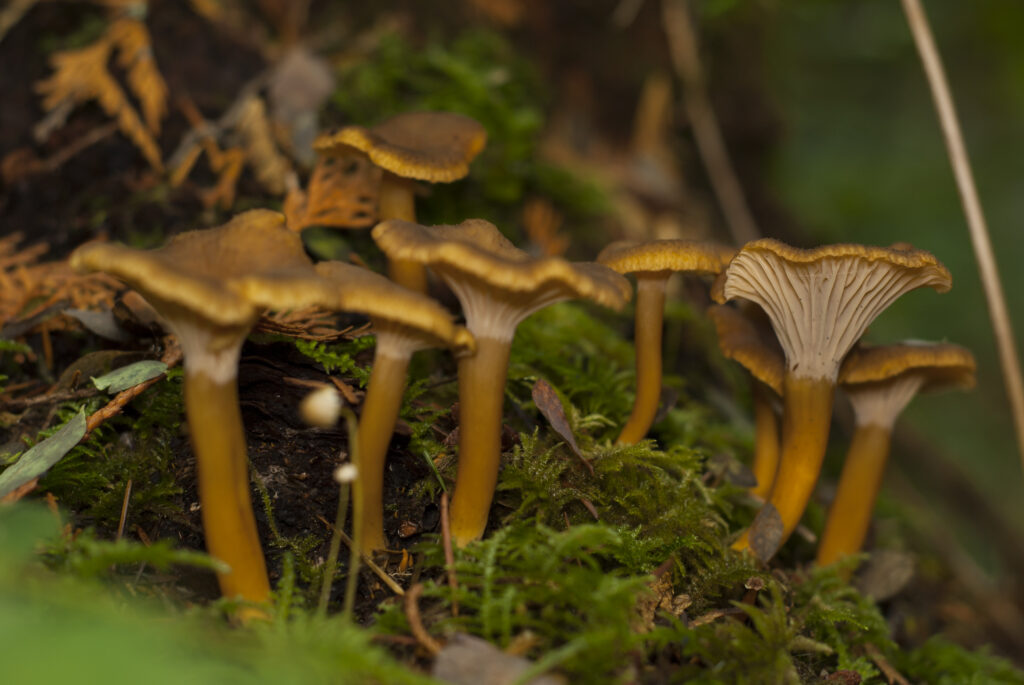
Yellow Foot Chanterelles
These mushrooms are more commonly known as winter chanterelles, and can be foraged during the colder months. When it comes to identifying these mushrooms there are two main things to look for, they have fake gills and hollow stems.
Yellow Foot Chanterelles can be identified by their bright yellow, funnel-shaped caps, yellowish-brown gills, and yellow, forked stems. The caps can range in size from 1-4 inches in diameter, and the gills will be closely spaced and will have a soft texture. The yellow foot chanterelle has a mild and nutty flavor, and its aroma is often compared to apricots.
Lastly, if you're planning a coastal road trip this winter then you'll also be able to take full advantage and forage. Take a bag and try to find some mussels or cockles.
From February onwards, you can also harvest Alexander, which is more commonly known as horse parsley – the stalks and leaves taste like celery and can be used in stews and soups.
Read our guide to foraging for food in the city if you're in an urban setting and need more specific advice in that context.
Before you go
I hope this article will not only help you but also inspire you to go foraging in the winter! I find that people are oftentimes amazed at just how many options are available right on their doorstep, as many assume that during the colder winter months everything dies back and foraging isn't possible. But that couldn't be farther from the truth!
The most important part of foraging is ultimately being present and keeping a lookout for amazing winter finds.
Have you ever gone foraging in the winter? Especially in the U.K.? What did you find?
Let me know in the comments section below, I'd love to hear all about your experience.
PS: If I missed any of your favourite winter foraging treats leave a comment below so that others can also take note and we can all learn about what's available together.
Beat The Reset
If you enjoyed this guide, subscribe to my newsletter to receive more content like this, lots of positive news stories and some practical solutions to help you beat the reset.





Loved this article! Thank you so much. The last time I went foraging in the winter in the UK was 10 years ago! We collected a lot of mushrooms and then used them to make paper! Wild! I was on a course with Charles Eisenstein called Wild Economics. 🙂
Thank you, for writing this article.